







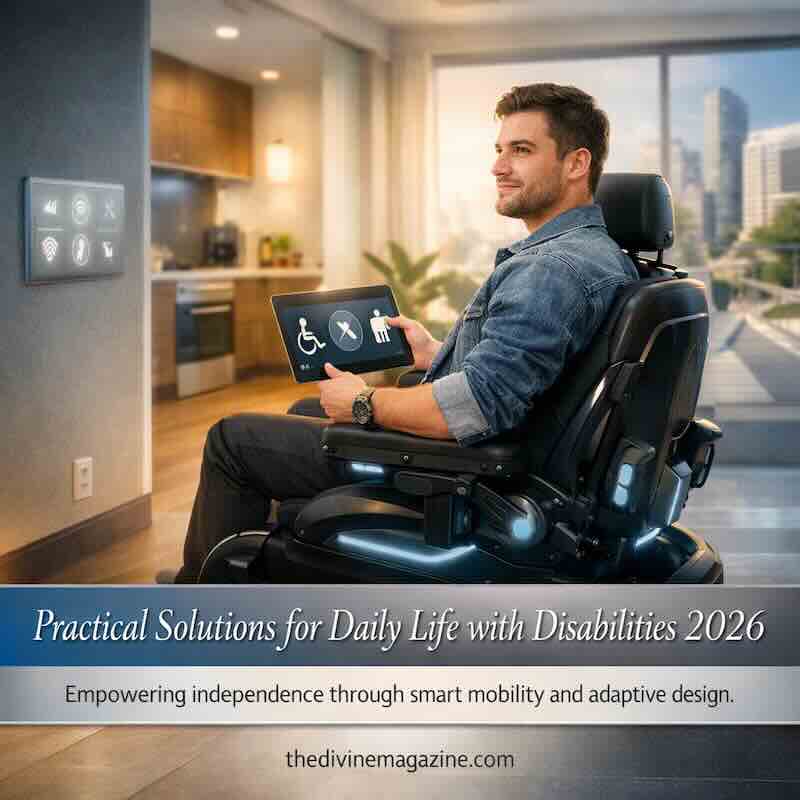
Let’s face it; life loves to throw curveballs at us to make daily life a little more interesting. However, in 2026, as we move toward more inclusive urban design and smarter living spaces, living with a disability still presents unique challenges—especially when your environment hasn’t caught up with modern standards! Yet, with the right combination of high-tech tools and personalized support, individuals can radically enhance their independence and make everyday tasks more manageable.
But what tools are leading the way this year? To help you implement the best solutions for your needs, we’ve created this article to explore practical innovations that are significantly improving the lives of individuals with disabilities, particularly those who rely on powerchairs or power wheelchairs for mobility. From AI-integrated chairs to adaptive smart homes – keep reading to find out more.
Next-Generation Powerchairs
Powerchairs, also known as powered wheelchairs, have evolved into sophisticated motorized devices that provide individuals with mobility limitations greater independence and freedom of movement. In 2026, these chairs aren’t just about transport; they are about integration, often featuring “smart” sensors to help avoid obstacles and provide smoother navigation across various terrains.
Modern powerchairs come in different models, offering customizable features such as adjustable “standing” positions, intuitive joystick controls, and advanced maneuverability for tight indoor spaces. Investing in a suitable powerchair like the range of power wheelchairs from Mobility Solutions can significantly enhance mobility and make daily life more accessible.
Providing everything from rugged outdoor powerchairs to ultra-lightweight mobility aids for daily use, they offer a comprehensive range of products designed to make day-to-day lives more manageable. Consider visiting their website to browse their latest 2026 catalog, read updated customer reviews, and discover how their modern solutions could help you gain a better quality of life today.
Assistive Technology & AI Communication
Assistive technology has seen a massive leap forward with the integration of AI. Augmentative and alternative communication (AAC) devices, such as speech-generating devices and communication apps, now feature more natural, emotive voices and predictive text that learns a user’s unique vocabulary. For those exploring these options, the American Speech-Language-Hearing Association provides excellent resources on the latest in AAC efficacy.
These devices allow affected individuals to utilize text-to-speech capabilities or picture symbols via a mobile application to facilitate real-time communication. By incorporating AAC technology into daily life, individuals can effectively interact with others, participate in higher education or the workplace, and express their needs with newfound precision.
The 2026 Smart Home Adaptation
Adapting the living environment is no longer just about hardware; it’s about “connected living.” While suitable home modifications like installing ramps, stairlifts, and widening doorways remain foundational, the addition of voice and eye-tracking smart home systems has revolutionized accessibility. These systems can automate lighting, temperature, and security, allowing individuals to control their entire environment without physical switches. For more on funding and planning these changes, the Disability Rights UK site offers updated guidance on housing grants and accessibility rights.
Ergonomic Assistive Devices
From self-leveling utensils to 3D-printed custom grips, the market for assistive devices has become incredibly specialized. These include adaptive kitchen tools for easier meal preparation, reachers to retrieve items safely, and specialized dressing aids. These tools focus on self-sufficiency, ensuring that personal care and daily chores don’t require external help unless necessary.
Conclusion
Independence is not a “one-size-fits-all” concept; it is built through a combination of the right physical equipment and the latest digital innovations. As we progress through 2026, the barrier between disability and daily tasks continues to shrink thanks to more responsive powerchairs and smarter assistive technologies. By staying informed about these advancements and adapting your environment to suit your unique needs, you can navigate life’s curveballs with confidence and autonomy.
Frequently Asked Questions
Q: Are powerchairs difficult to transport in a standard vehicle?
A: Many modern powerchairs are designed to be “boot-ready,” either folding down or being easily disassembled. However, for larger models, a vehicle with a specialized ramp or hoist may be required.
Q: Can smart home technology be integrated with my wheelchair?
A: Yes! Many 2026 powerchair models feature Bluetooth connectivity that can interface directly with smart home hubs, allowing you to open doors or turn on lights directly from your chair’s control panel.
Q: How do I know which AAC app is right for me?
A: It is best to consult with a Speech and Language Therapist. They can perform an assessment to determine if you would benefit more from symbol-based systems or text-to-speech software based on your specific communication style.
Q: Is there financial assistance for home adaptations?
A: Depending on your location, there are often government grants (such as the Disabled Facilities Grant in the UK) or non-profit organizations that can help subsidize the cost of essential home modifications.