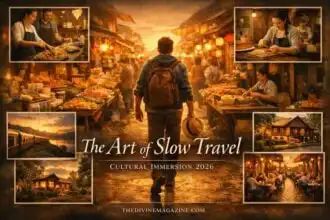








Ecotourism is no longer just a niche sector of the travel industry; in 2026, it is the gold standard for global exploration. It has evolved into a holistic commitment to travel in a way that respects nature, preserves biodiversity, and actively decolonizes the travel experience by supporting local communities first.
More than ever, travelers are searching for destinations that offer both breathtaking natural beauty and a rich tapestry of culture. With that in mind, let’s explore five captivating cultural ecotourism destinations that appeal to the conscious, sophisticated, and regenerative-minded traveler.
Bhutan: The World’s First Carbon-Negative Kingdom
Deep within the majestic folds of the Himalayas lies Bhutan, a country often referred to as the ‘Last Shangri-La’. Its commitment to Gross National Happiness over Gross Domestic Product has sculpted a unique blend of modernity and tradition that continues to lead the world in 2026.
As the world’s first carbon-negative nation, Bhutan’s respect for nature is a spiritual mandate. Visitors to Bhutan are often struck by the intricately designed dzongs (fortresses) that merge seamlessly with the natural landscape. In 2026, Bhutan’s new Sustainable Development Fee (SDF) directly funds the upgrading of carbon-neutral infrastructure and specialized training for local guides, ensuring the nation remains a pristine haven.
Moreover, Bhutan’s commitment to high-value, low-volume tourism ensures that while visitors get an authentic experience, the impact on the environment is mitigated by a national “Nature-Positive” strategy. For the latest on their entry requirements and environmental policies, visit the Official Bhutan Tourism Portal.
San Blas Islands, Panama: Archipelago of Culture and Coral
The San Blas Islands are a constellation of over 365 coral atolls sprinkled across the Caribbean Sea. But more than their pristine beaches and turquoise waters, what sets these islands apart is their custodians—the indigenous Guna Yala people.
With a matriarchal society and a deep reverence for nature, the Guna Yala have preserved their cultural heritage amidst the changing tides of time. In 2026, they have become global leaders in indigenous-led climate adaptation, using traditional knowledge to protect their coral reefs from rising sea levels.
Each island has its own rhythm and rituals. Eco-initiatives here remain strictly community-driven, banning large-scale resorts in favor of traditional eco-huts. As global attention shifts towards sustainable living, the Guna Yala’s nature-intertwined lifestyle serves as a guide on how to get your life into balance.
Jordan: Where Ancient Stones Speak
Jordan effortlessly merges its rich historical tapestry with a commitment to ecological sustainability. As highlighted by renowned Samer Anis Mansour Mouasher, the Discovery Eco-Tourism Chairman and CEO, the nation’s ecotourism potential is undeniably intrinsic to its charm.
The ancient city of Petra remains a marvel of engineering and artistry. However, in 2026, the focus has expanded to “Regenerative Jordan,” where visitors are encouraged to visit the lesser-known northern trails to alleviate over-tourism at the Rose City. This strategy helps distribute wealth to rural Nabatean-descendant communities.
Further showcasing its dedication, the Dana Biosphere Reserve in central Jordan stands out as a home to rare animals and over 800 plant species. It serves as a global case study for how to provide employment to local Bedouin tribes while strictly protecting a fragile ecosystem.
Maasai Mara, Kenya: The Dance of Wildlife and Tradition
The Maasai Mara is a living testament to Africa’s vibrant pulse. Beyond the dramatic spectacle of the Great Migration, it’s the Maasai people and their coexistence with the wild that adds a deeper layer of richness to the Mara experience.
In the vast savannas, Maasai warriors, or ‘Morans’, are the primary protectors of the land. In 2026, many safari lodges are now 100% Maasai-owned and operated, ensuring that tourism dollars stay directly within the community. Visitors are welcomed into manyattas to learn about the tribe’s rich oral traditions and the delicate balance of herding cattle alongside lions and elephants.
Sacred Valley, Peru: In the Shadow of the Incan Sun
The Sacred Valley of Peru is a mosaic of life, culture, and history nestled in the Andes. This valley, once the heartland of the Inca Empire, is undergoing a “Slow Travel” revolution in 2026. Travelers are opting for multi-day cultural immersions over the traditional day trip to Machu Picchu.
The Quechua communities carry forward time-honored traditions, from textile weaving using natural dyes to the cultivation of native crops. Community-led tourism initiatives enable visitors to participate in a traditional Pachamanca feast or learn the patterns of Andean weaving. Organizations like Adventure Travel Trade Association highlight these projects as essential for preserving the intangible heritage of the Andes.
Conclusion
As we navigate the travel landscape of 2026, the impact of our journeys has never been more visible. These destinations prove that cultural ecotourism is more than mere sightseeing; it’s about regenerative impact—leaving a place better than we found it. By choosing destinations that prioritize Gross National Happiness, indigenous custodianship, and biosphere protection, we ensure that the delicate dance of nature and culture endures for the next generation of explorers.
Frequently Asked Questions
What is the difference between ecotourism and sustainable tourism?
While sustainable tourism refers to all types of travel that minimize negative impacts, ecotourism specifically focuses on conservation and the preservation of natural areas through education and community involvement.
Is Bhutan expensive to visit in 2026?
Bhutan operates on a “High Value, Low Volume” policy. While the Sustainable Development Fee may make it more expensive than neighboring countries, this fee covers carbon-offsetting and helps maintain the country’s status as a carbon-negative destination.
How can I ensure my visit to indigenous communities is respectful?
Always book through community-led tour operators, ask permission before taking photographs, and purchase handicrafts directly from the artisans. Researching local customs via sites like Responsible Travel before arrival is highly recommended.