







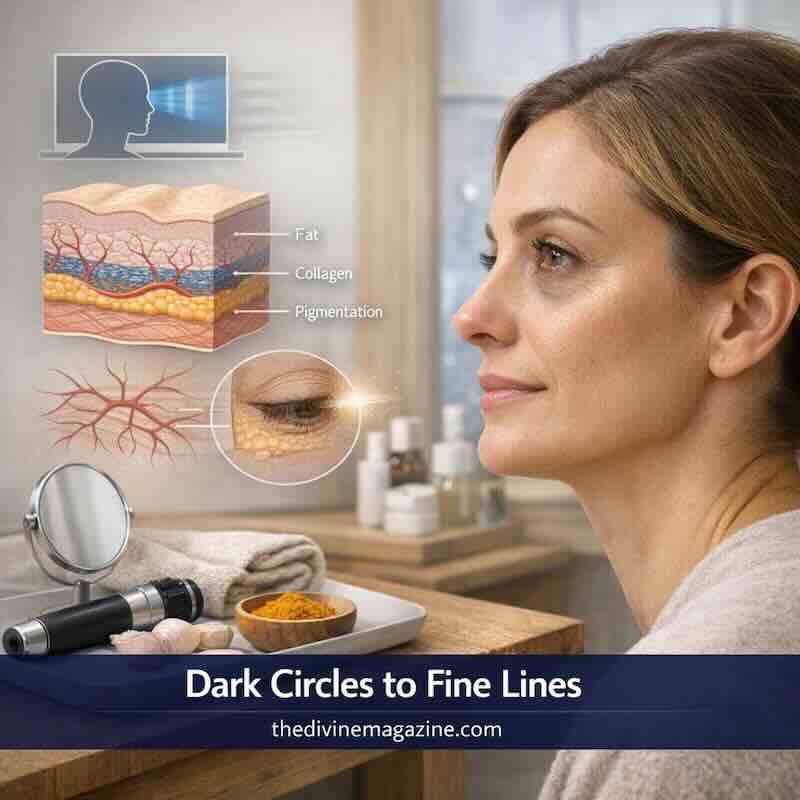
In 2026, the intersection of longevity science and aesthetics has transformed how we view periocular health. As a person ages, the skin around the eyes undergoes structural changes that give rise to common concerns such as dark circles, excessive skin (dermatochalasis), eye bags, and dynamic wrinkles.
Modern diagnostics now show that dark circles aren’t just about fatigue; they are often a combination of genetic hyperpigmentation, vascular congestion, and the 2026 “digital strain” phenomenon. Addressing these concerns is no longer just about vanity—it is about maintaining visual health and a revitalized, healthy appearance through consistent, evidence-based care.
Why is the eye area changing? The 2026 Perspective
The skin around the eyes remains the thinnest on the human body, but new research highlights how Exposome factors—the sum of environmental exposures—accelerate breakdown. A lack of supportive adipose tissue means the “orbital fat pads” can shift or protrude, leading to bags. Key accelerators include:
- Digital Ageing: Prolonged exposure to HEV (High Energy Visible) light from 2026-era ultra-bright displays contributes to “Inflamm-ageing,” breaking down collagen faster than traditional UV alone.
- Glycation: High-sugar diets create advanced glycation end-products (AGEs) that harden elastin, making eye-rubbing more damaging to the skin’s “snap-back” quality.
- Circadian Disruption: It isn’t just “lack of sleep”—it is the quality of REM sleep. Poor sleep hygiene prevents the glymphatic system from flushing toxins from the eye area, leading to chronic puffiness.
- Environmental Pollutants: Micro-particulates in urban air can penetrate the thin eye barrier, triggering oxidative stress.
Maintaining a Youthful Eye Appearance
In 2026, we utilize a “Total Eye Health” approach. While SPF and hydration remain the bedrock, new habits include Circadian Skincare—products that sync with your body’s natural nighttime repair signals.
Advanced Topical Solutions
| Ingredient Class | 2026 Standard | Primary Benefit |
|---|---|---|
| Retinoids | Encapsulated Retinaldehyde | Collagen synthesis with zero irritation. |
| Peptides | Neuropeptides | Mimics “botox-like” smoothing effects topically. |
| Antioxidants | Ectoin & Ferulic Acid | Neutralizes blue light and pollution damage. |
Specialist treatments for the eye area
When topicals reach their limit, 2026 clinical interventions offer precision results with minimal downtime:
Liquid Eye Lift & Regenerative Fillers
Beyond traditional surgery, the Liquid Eye Lift uses structural hyaluronics to mask hollows and reposition the brow without a single incision.
Polynucleotides (The 2026 Gold Standard)
Replacing older skin boosters, Polynucleotides (derived from salmon DNA) actually signal the skin cells to repair themselves, making it the most effective treatment for thinning, “crepey” under-eye skin.
Precision Blepharoplasty
For significant sagging, surgical blepharoplasty remains the most definitive solution. In 2026, laser-assisted techniques ensure faster healing and invisible scarring.
Conclusion
Caring for the eye area in 2026 requires a synergy of high-tech topicals, lifestyle discipline, and professional intervention. By neutralizing the effects of blue light, maintaining the skin barrier, and utilizing regenerative injectables, a refreshed and vitalized look is more achievable than ever before. Take the next step toward ocular radiance by consulting a specialist for a personalized longevity plan.
Frequently Asked Questions
Q: At what age should I start using specialized eye products?
A: Most dermatologists in 2026 recommend starting “prejuvenation” in your mid-20s, focusing on antioxidants and moisture to delay the first signs of environmental damage.
Q: Can dark circles be completely cured?
A: It depends on the cause. Vascular circles can be improved with caffeine and cold therapy, while hollow circles are best treated with structural fillers or polynucleotides. Pigment-based circles require specialized brighteners like Tranexamic acid.
Q: Is blue light really damaging my eyes?
A: Yes. Studies in 2026 confirm that HEV light penetrates deeper into the dermis than UVA/UVB, leading to long-term collagen degradation and hyperpigmentation.