

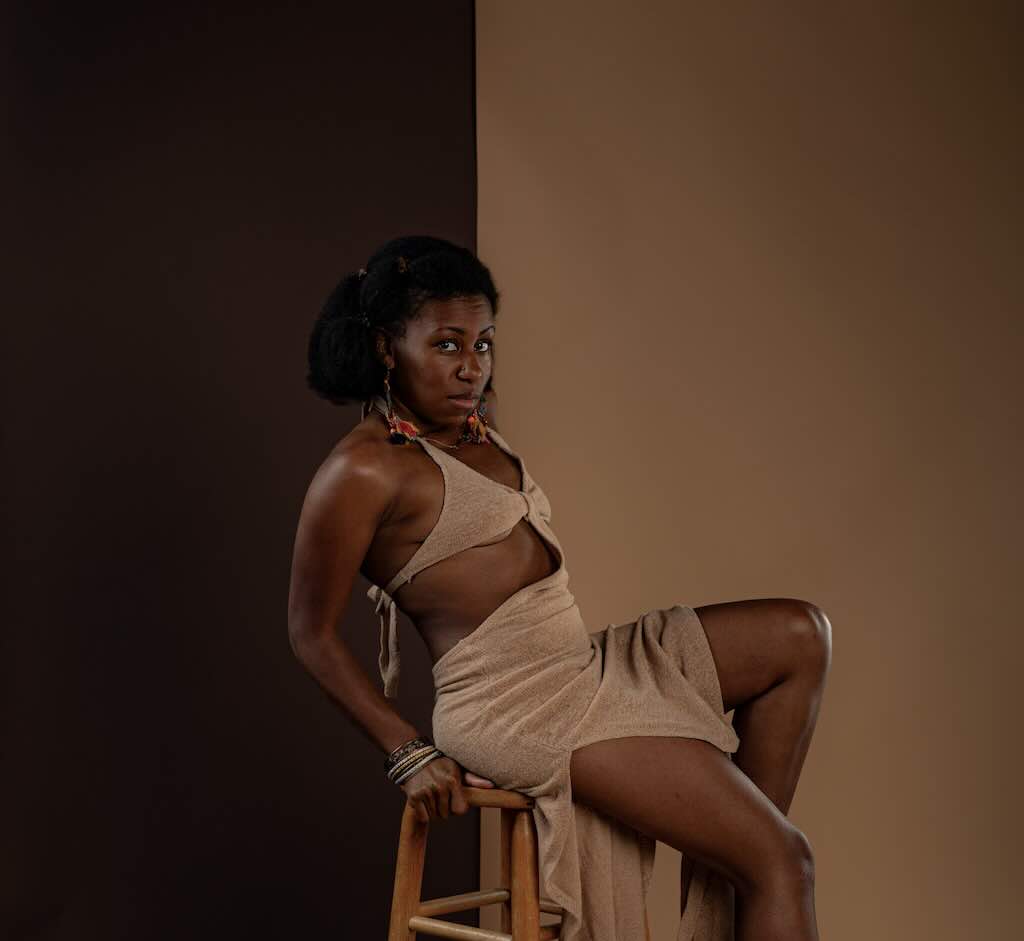



A decade after first unleashing “Jewel Case” into the world, Hayley and the Crushers return to the track that shaped their mythology — older, louder, and far more self‑aware. Re‑recorded in Detroit with a lineup sharpened by miles of touring and a few dozen drummers, the song now carries the weight of everything the band has survived: the California glitter, the Midwest grit, the late‑night chaos, the sobriety‑tinged clarity, and the stubborn joy that defines the Crusherverse. In this candid conversation, Hayley Cain unpacks the evolution of a signature closer, the strange alchemy of nostalgia and growth, and the wild, sweaty, zero‑gimmick energy that fuels their new era.

The Final Version: You’ve called this the “third and FINAL” version of “Jewel Case.” What specifically did you feel was missing from the 2016 original that you finally captured in this new Detroit recording?
In 2016 we weren’t fully formed yet! Like many bands’ first album efforts, it wasn’t recorded super well, really on a hope and a prayer. That said, the energy and enthusiasm was there (and this is always the most important part, because it means a band has struck on something vital). I can say it’s pretty gratifying being able to record the song Jewel Case again, ten years later, at least a dozen drummers later! It sounds grown up, but it also sounds like our first practice at heart. I believe that we retained the party, just elevated the sound.
The Signature Closer: “Jewel Case” has closed your live sets for nearly a decade. How has the meaning of the song changed for you now that you’re “born to be mild” rather than just “wild”?
I had a pretty intense party girl era in my teens and into my late 20s, when I started the Crushers. That sort of lifestyle wasn’t quite as cute when I entered my 30s, of course. So the song “Jewel Case” is a bit of a relic that points to a time in my life that is forever with me, though I don’t carry its weight anymore. On its face, the song is a cautionary tale about going off the deep end, but also, ironically, it turned out to be a really fun party song (hence why we still end our set with it). The world works in mysterious ways. I think songs sometimes have a way of showing us what we’re subconsciously circling. For me, when I wrote it, I knew I had to slow down and I knew I wanted to commit myself to this new band. A decade later, the band is still here, and I’ve grown, too! But I still party. In many ways, approaching the world sober, or “raw dogging reality” is way more hardcore than any party drug or late night rave.
The Music Video: The new video trades studio polish for “pure chaos and sweat.” Why was it important to visually represent the band as a “closing-set frenzy” rather than a staged performance?
We’re too punk for pop and too pop for punk. Some of our records are really polished, really candy-coated. No apologies for this, we love playing with lush soundscapes just as much as we love a wild and raucous live show. Our new single Jewel Case allowed us to bring those two elements of our band together in one visual explosion. Grit, glitter, chaos, sweat. In the video, it’s all there: Zero tricks, zero gimmicks. No plot. No effects. Just a rock and roll band sweating to the oldies, as Richard Simmons used to say.
Geographic Sound: You’ve mentioned that this new music “straddles the line” between California and Detroit. How does the “city grit” of Detroit manifest in your guitar tones compared to the “poolside glitter” of your early days?
There is a relaxed, groovy vibe that comes from living and making music near the Pacific Ocean (which I have, my whole life), and there’s something undeniably cute and quaint about a town where you can still go see a drive-in movie on a Saturday night (that’s exactly what San Luis Obispo, CA is). Detroit has been confrontational and real, revealing both how sunny and Californian our sound DNA is, but also showing us new ways to grow sonically and as a band. The city of Detroit has allowed us to expand and embrace an intensity that can only come from leaving everything you know in the dust. We came to Detroit for adventure and to shake up the music and tour more of the country beyond what we already knew (the West Coast). I think our recent music reflects that bolder fish-out-of-water vibe. We’re grateful for everything Detroit has given us. It’s been a wild ride, and the touring potential has been amazing.

The Midwest Lineup: You’ve talked about building an “army” of musicians across the country. How does the energy of the Detroit lineup (with Ryan Deliso and Gabe Masek) differ from the California “Crushers” when you’re on stage?
The songs are a roadmap, the band is the van. There’s always different passengers (band mates) on the road. So the snacks and music on the radio might change, but the destination is always the same. We love our bandmates like family, and for the most part, they can never get rid of us once they join. Once a Crusher, always a Crusher! I could write a whole novel about how each member of the Crushers, from California to Detroit, has given something unique to this band. All I will say here is that our current 2026 lineup is really solid and magical. Always a pleasure to work with our new drummer Stacy Binelli and our lead guitarist / engineer Ryan Deliso. Drummer Gabe (we call him Gabe 2.0, as he is our second), had to bow out to live his life. We gave him a handmade award thanking him for his two years of excellent service!
The “Jewel Case” Metaphor: In the context of the album, does the title Jewel Case refer more to the fragility of a creative person entering a new scene, or the idea of protecting something precious (like your DIY spirit)?
Neither. the song references doing lines of an illicit substance off a CD jewel case, so take that as you will. As a songwriter, I liked how “jewel case” sat next to the word “head case.” When I say “head case” I am not making light of being mentally ill. That would be rich! It’s more about those crazy nights my friends and I had back in LA in the early-to-mid 2000s, punch drunk on 4Loko and punk music blaring out of the speakers of my 1968 Oldsmobile 88, loud and hot! It’s amazing that we didn’t get into more trouble, now that I look back. Although it’s true some of us didn’t make it out alive.
Songwriting Partnership: You and Dr. Cain have been bandmates for over a decade. You’ve described your styles as “poetic” vs. “literal”—can you give an example of a song on the new record where those two worlds collided in an unexpected way?
A good song needs bones and heart. Dr. Cain comes from a background of early East Bay punk and classic country music; ironically, both scenes have a history of storytelling and taking the listener along for a ride, from point A to point B. I have always been more of the literary heart with the emotional resonance piece of the puzzle, and am a fan of early LA punk bands like X, that work on poetry and emotion. I can easily find a melody that fits a feeling–that is something I really do automatically as I write. When both of our POVs and strengths come together, I know it makes the song stronger. Context and depth live together in our music.

“Unsubscribe from the Underground”: This track touches on “old heads” looking down on newcomers. Having been “hometown heroes” in San Luis Obispo and now being “new” in Detroit, how do you navigate that gatekeeping?
I have lived through a few different scenes, from South Bay CA punk to beachy bluegrass to the Detroit underground. Experiencing these scenes at different stages of my life (teens vs adult, early 20s vs. late 30s) I have lived through some very universal experiences, from getting on my high horse with a “we’ve been here longer than you” snottiness to “wow, I hope people accept me and my art into this new space.” That’s how I could write from that place naturally on the song “Unsubscribe.” I have stapled hundreds of my own zines and and put on DIY shows, supporting artists who were new to the scene, and I’ve also massively benefited from people with established projects / venues and bands that began before I was born.
Gatekeeping is a symptom of an underlying rot, and we need to be wary of it. It comes from a sense of lack, a sense of grasping and the idea that art is a zero sum game. We can all fall victim to those pitfalls in life, but It’s up to all of us to look around and see who is under, above and adjacent to us and lend a hand when we can. It’s the “old heads” that pull in the young ones, and let them shine, that really keep scenes alive. I am grateful for the ones who came before me who continue to leave the door ajar. This is the legacy of DIY punk, and I will carry that torch till I’m that “old weird lady at the show.”
Kitten Robot Collaboration: Working with Josie Cotton and Paul Roessler brings a heavy dose of L.A. punk royalty to your sound. What is the most surprising piece of “prog rock” or “jazz” influence Paul tried to sneak into a Crushers track?
It’s not so much that Paul “sneaks in” his eclectic taste. In fact, he is really very concerned with not putting his finger-prints on the music unless the artist absolutely begs him to (we often have to urge him to do more–more backing vocals, more keys etc.). His philosophy comes from a sense that a band should sound like a band and that their ideas are important, always. Even when they are dumb ideas (we have had a few). He is not the kind of producer who says “no.” Instead, he says “yes and,” going boldly forth into the unknown. If that isn’t prog, I don’t know what is. He is a sonic explorer, and with co-producer John Miller, we have found a good balance of freedom and structure. It’s the only way a “punk” band that routinely uses glockenspiel can thrive! We’re grateful to have these talented guys on the spaceship zooming through The Crusherverse with us. (In this analogy, label founder/president Josie Cotton is driving the spaceship and label manager Bruce Duff is riding shotgun.)
The “Crusherverse”: You often describe your band as a “Wonderland” of joy. In an era of “dark adulting,” how do you maintain that sense of playfulness without feeling like you’re pandering to nostalgia?
I don’t think playfulness has to be youthful or even “nostalgic.” Playfulness can exist in daily life if you choose to unleash it, through music, dance, laughter or whatever. I think we know this instinctively when we see a very older person who has a ton of mischief in his/her eyes. Look at older surfers and how they carry themselves (Dr. Cain is one). We’re all the masters of our own reality, and music is just a portal into a new dimension. It just so happens that our reality (what we lovingly call “The Crusherverse”) is really, really colorful and really, really fun. But we’re biased, of course!
Hayley and the Crushers are:
Hayley Crusher Cain – guitar and vocals
Dr. Cain ESQ (aka Reid Cain) – bass
Ryan Deliso – lead guitar
Stacy Binelli – drums