






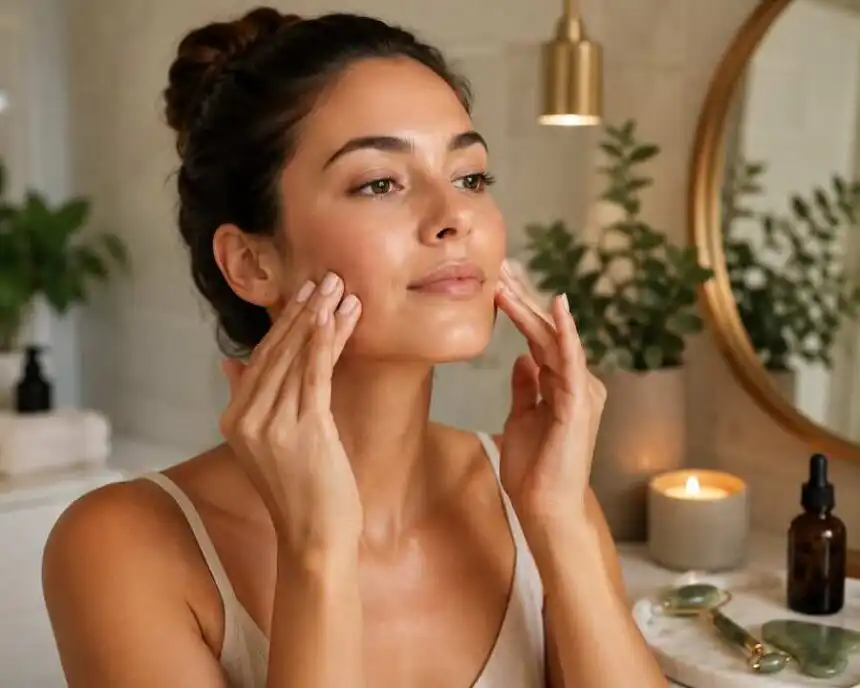
The appeal of a non-surgical facelift is easy to understand. No operating room. No lengthy recovery. Instead, the bathroom mirror becomes the setting: clean skin, a few drops of facial oil, cool fingertips moving slowly across the jaw and temples.
- Think Refresh Rather Than Facelift
- Start With Slip, Not Pressure
- A Quiet Jawline Routine
- The Forehead Needs an Even Lighter Hand
- What About Gua Sha and Facial Rollers?
- Microcurrent Is a Different Category
- Healthy Skin Still Depends on the Less Glamorous Things
- Know When Your Skin Wants to Be Left Alone
- A Better Definition of the Non-Surgical Glow
- Questions About Facial Massage and Non-Surgical Treatments
But the language around facial massage can run ahead of what the technique can realistically do. Massage may temporarily reduce puffiness, relax facial tension and leave skin looking refreshed. It cannot reposition deeper facial tissues or reproduce the structural changes of a surgical facelift. That distinction makes the routine more useful, not less.
Think Refresh Rather Than Facelift
Facial massage sits comfortably within a skincare ritual because its immediate effects can be pleasant: warmth, relaxation and a temporarily less puffy appearance. What it should not be sold as is permanent facial lifting.
Skin aging involves changes in collagen, elastin, fat, bone and other supporting structures. Moving your fingertips across the surface cannot reverse all of those processes. A more realistic goal is softer tension, gentle manipulation of superficial tissue and a few quiet minutes devoted to your skin.
Start With Slip, Not Pressure
Clean hands and clean skin come first. Then apply enough moisturizer or facial oil to allow your fingers to move without dragging the skin. Lightweight squalane or jojoba-based products can work well for some skin types, although the formula matters more than following a particular trend.
If you are choosing skincare alongside the routine, brands such as Paula’s Choice and The Ordinary offer different textures and formulations. Choose according to your skin rather than assuming an oil is automatically suitable because it is described as natural.
Pressure should feel comfortable. Facial massage is not a deep-tissue workout, and more force does not mean better results. Persistent redness, tenderness or irritation is a reason to stop.
A Quiet Jawline Routine
The jaw is an area where people often hold tension, particularly after hours spent concentrating at a screen. Rather than trying to physically reshape it, use massage as a short release.
- Apply enough product for your fingers to glide comfortably.
- Place two fingers near the center of the chin.
- Move slowly along the jaw toward the ear using light, comfortable pressure.
- Release your hands and repeat rather than aggressively dragging the skin back and forth.
A few deliberate passes are enough. There is little value in turning a calming ritual into an endurance exercise.
The Forehead Needs an Even Lighter Hand
Warm the product between your fingers, then move from the center of the forehead outward toward the temples. Keep the motion slow. You can finish by resting your fingertips lightly at the temples for a moment rather than repeatedly stretching the skin.
The effect is less about erasing expression lines and more about creating a relaxed finish to the routine. In practice, that is a healthier expectation for any massage technique.
What About Gua Sha and Facial Rollers?
A smooth stone or roller can make facial massage feel cooler and more controlled, but neither is mandatory. Your hands are already capable tools. If you do use an accessory, keep it clean, provide adequate slip and avoid scraping or pressing hard enough to hurt.
Tools can be especially appealing in the morning when cool contact temporarily makes a puffy face feel fresher. That immediate cosmetic change should not be confused with permanent alteration of facial anatomy.
Microcurrent Is a Different Category
At-home microcurrent devices should not be grouped casually with manual massage. Products from companies such as NuFACE use electrical current and come with specific operating instructions and safety considerations.
Follow the manufacturer’s directions and contraindications rather than improvising a routine. If you have a medical condition, implanted electronic device, are pregnant, or are uncertain whether a device is appropriate for you, seek professional advice before use.
Healthy Skin Still Depends on the Less Glamorous Things
A five-minute massage can feel luxurious, but the foundations of skin care remain remarkably ordinary. Gentle cleansing. Moisturizer suited to your skin. Daily sun protection. Avoiding unnecessary irritation.
That routine may not produce the instant theatre of a before-and-after video, yet consistency matters more than aggressive manipulation. The Mayo Clinic’s skin-care guidance offers a useful broader perspective on protecting and caring for skin as it ages.
Know When Your Skin Wants to Be Left Alone
There are evenings when massage is better skipped. Inflamed acne, irritated skin, sunburn, active rashes and recently treated skin may not appreciate additional friction. The same caution applies after cosmetic procedures: follow the instructions provided by the clinician who performed the treatment.
Persistent swelling, pain or unexplained changes in the skin should be assessed rather than massaged away.
A Better Definition of the Non-Surgical Glow
Facial massage does not need miraculous claims to earn a place beside the cleanser and moisturizer. Done gently, it can become a tactile pause in the day: warm oil between the fingers, slower movements, tension easing around the jaw.
Keep expectations proportionate. If you want relaxation and a temporarily refreshed appearance, a simple massage ritual may be worth trying. If you want meaningful correction of skin laxity or deeper structural aging, speak with a qualified dermatologist or appropriately credentialed cosmetic professional about what different treatments can realistically achieve.
Questions About Facial Massage and Non-Surgical Treatments
Can facial massage replace a surgical facelift?
No. Facial massage cannot reproduce the structural tissue repositioning achieved through facelift surgery. Its effects are considerably subtler and may include temporary changes in puffiness and a refreshed appearance.
Do I need to massage my face every day?
No. There is no requirement to perform facial massage daily. If you enjoy it and your skin tolerates it, incorporate it at a frequency that feels comfortable rather than chasing a fixed number of sessions.
Which oil should I use?
Choose a product compatible with your skin type and use enough to prevent friction. Some people prefer squalane or jojoba-based products, while others do better with a conventional moisturizer. Stop using anything that causes irritation.
Will gua sha permanently sharpen my jawline?
Do not expect a gua sha tool to permanently restructure the jaw. Temporary reductions in facial puffiness can alter how contours appear, but that is different from changing underlying facial anatomy.
Are at-home microcurrent devices the same as facial massage?
No. Microcurrent devices use electrical current and have their own instructions, contraindications and safety requirements. Follow the device manufacturer’s guidance carefully.
When should I see a dermatologist?
Seek professional advice for persistent irritation, unexplained swelling or other concerning skin changes. A dermatologist can also explain evidence-based options if your goal goes beyond what skincare and massage can reasonably achieve.