







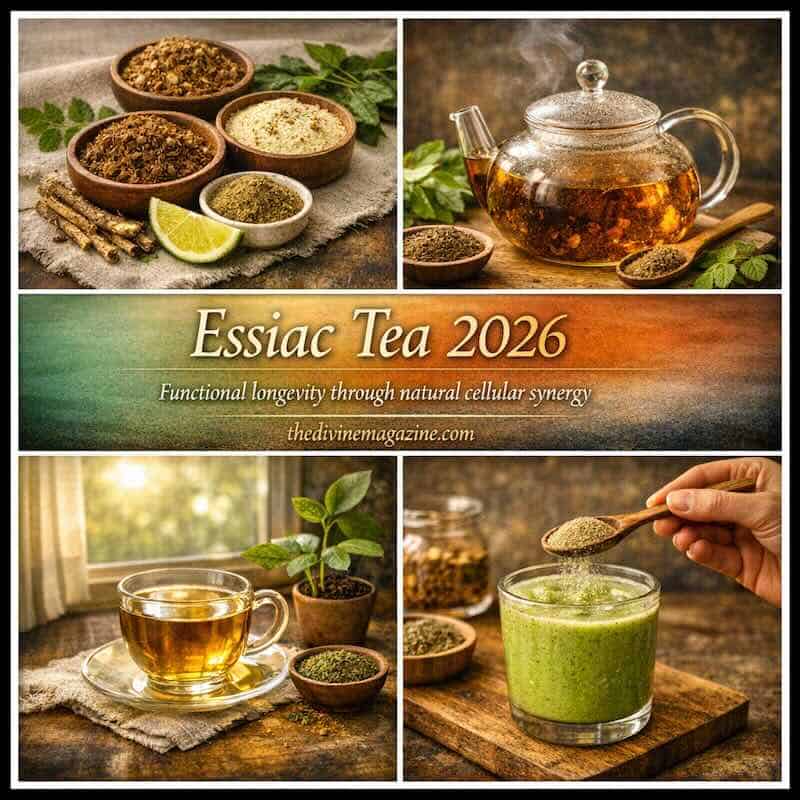
Essiac tea stands as an outstanding body cleanse, crafted from carefully selected plants, and has proven its efficacy for over fifty years. As we move through 2026, the shift toward “functional longevity” has brought this ancient blend back into the spotlight for those seeking a synergistic approach to cellular health.
Admired for its potential cleansing abilities, this natural remedy ranks among the preferred choices of naturopaths throughout America. The tea was named after Rene Caisse—”Essiac” being her surname spelled backward—who had extensive experience working with cancer patients. In collaboration with Dr. Charles Brusch, physician to President John F. Kennedy, she experimented with the original recipe, eventually adding four more herbs to create this fantastic solution. The recipe’s roots trace back to the Ojibway tribe of Northern Canada. Presently, this blend finds widespread use globally, sought after by millions seeking natural paths to vitality. These premium-grade herbs, cultivated in Europe and the USA, are now often transformed into a potent “superfood powder” or live extracts to preserve bioavailability.
Composition of Essiac Tea
The best Essiac tea consists of eight certified organic herbs, forming an exceptional herbal blend. This 8-herb formula is widely considered more comprehensive than the original 4-herb version. The blend includes blessed thistle, organic watercress, turkey rhubarb root, slippery elm inner bark, sheep sorrel, organic red clover, kelp, and burdock root.
Original Four Herbs of the Ojibway Indians
Organic Burdock Root: Supports the liver and kidneys while improving digestion. In 2026, it is highly valued for its prebiotic qualities, feeding the modern microbiome.
Sheep Sorrel: A powerful source of vitamin C, potassium, sodium, and manganese, it plays a vital role in deep tissue cleansing.
Slippery Elm Inner Bark: Rich in mucilage, it creates a soothing effect on the digestive tract, aiding in nutrient absorption.
Turkey Rhubarb Root: Supports digestion and acts as a traditional aid to stimulate appetite and bowel regularity.
Modern Additions by Nurse Caisse & Dr. Brusch
Red Clover: Frequently used in modern stress management, it supports cellular health and bone density and provides relief for menopausal symptoms.
Blessed Thistle: Known for supporting gallbladder and liver function, it is often studied for its role in liver regeneration.
Organic Kelp: A sea-based superfood rich in iodine and vitamin K, essential for bone health, inflammation management, and endocrine support.
Organic Watercress: Abundant in vitamins K, C, and A, it is a dense source of iron and calcium that fuels natural detoxification pathways.
Holistic Benefits of Essiac Tea
Organic Essiac Tea offers a multi-system approach to wellness. Its primary benefits include immune system enhancement, natural detoxification of the liver and kidneys, and support for the lymphatic system. Modern research highlighted by the National Cancer Institute discusses the traditional use and botanical properties of these specific herbs. Furthermore, the blend provides adaptogenic stress management, preserves DNA integrity against oxidative stress, and provides isoflavonoids for hormonal balance. It is a rich source of bioactive compounds like polyphenols and phenethyl isothiocyanate (PEITC).
Usage and finding the Best Essiac Tea
Essiac tea is now available in advanced formats, including liquid extracts, fine powders, or traditional tea bags. It can be seamlessly integrated into daily rituals, such as morning smoothies or warm infusions. For maximum efficacy, it is recommended to consume Essiac on an empty stomach. Crucially, if using the powder form, do not strain the herbs; consuming the whole herb sediment ensures you receive the full spectrum of phytonutrients.
When shopping in 2026, purity is paramount. Look for brands that are certified organic, non-GMO, and gluten-free. Avoid products containing fillers, chemicals, or artificial preservatives. To ensure you are getting the therapeutic grade used by Rene Caisse, prioritize herbs cultivated in the US or Europe under strict organic protocols. For those interested in the rigorous standards of herbal supplements, the U.S. Pharmacopeia (USP) provides excellent resources on herbal quality and safety.
Conclusion
In an era where environmental toxins are more prevalent than ever, Essiac tea remains a steadfast ally for natural detoxification. By combining the ancestral wisdom of the Ojibway people with the clinical refinements of Nurse Caisse and Dr. Brusch, this eight-herb blend offers a comprehensive shield for the body. Whether you are looking to support your liver, boost your immune response, or simply maintain your daily vitality, Essiac tea provides a time-tested, plant-based solution for the modern age.
Frequently Asked Questions
Q: Is the 8-herb blend better than the 4-herb blend?
A: While the 4-herb blend is the historical “base,” the 8-herb formula was developed by Nurse Caisse and Dr. Brusch to provide more comprehensive support for the blood, liver, and lymphatic system. Most modern naturopaths prefer the 8-herb version for a deeper cleanse.
Q: Why should I not strain the tea?
A: Many of the beneficial compounds, particularly the lignans and soft fibers in Burdock and Slippery Elm, remain in the herbal sediment. Consuming the “sludge” or sediment maximizes the tea’s healing potential.
Q: Can I take Essiac tea with other medications?
A: While Essiac is a natural herbal blend, it is potent. It is always best to consult with your healthcare provider—especially if you are on blood thinners or have a history of kidney stones (due to the oxalic acid in Sheep Sorrel).
Q: How long does a typical Essiac cleanse last?
A: Many people use it as a daily tonic at a lower “maintenance” dose. For a targeted cleanse, a period of 12 weeks is often recommended to allow for full cellular turnover.