
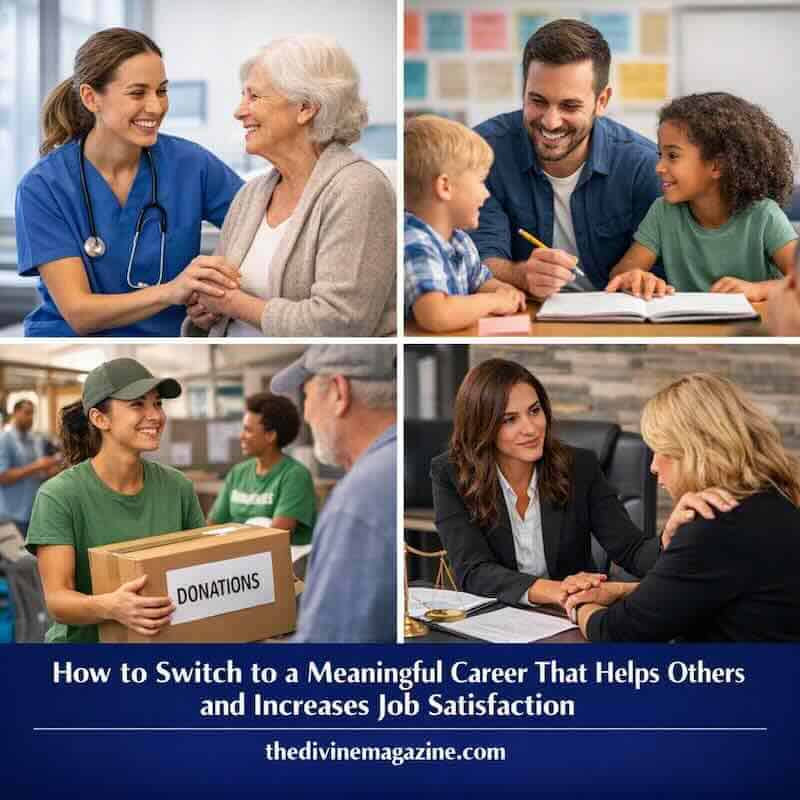
Feeling unfulfilled by your career? If your work no longer gives you a sense of purpose or value, it might be time to explore a path where your skills directly improve other people’s lives. In 2026, more professionals than ever are pivoting into meaningful, impact-driven roles that prioritize people over profit.
How to know it’s time for a change
If you’re consistently unhappy or unmotivated at work, start by identifying what’s really wrong. Is it your employer, your industry, or the nature of your role itself? If you’ve realized that no version of your current career will feel fulfilling, that’s a strong sign it’s time to change direction.
Feeling drained, bored, or emotionally checked out, losing interest in hobbies, envying other people’s jobs, or staying only for the paycheck are all red flags. When your work no longer aligns with your values, exploring a career focused on helping others can restore your sense of purpose and energy.
Shifting your focus from “What do I get?” to “Who can I help?” often leads to deeper job satisfaction, better mental wellbeing, and a renewed sense of achievement.
Retrain for a career you’ll love
It’s never too late to retrain. Whether you’ve always dreamed of becoming a nurse, teacher, counselor, or social worker, there are flexible learning options designed for adults and career changers. The modern job market expects people to change paths multiple times, and continuous learning is now the norm.
Retraining doesn’t erase your past experience—it enhances it. Employers value people who take initiative, invest in new skills, and bring real-world perspective to a new field. Your communication, leadership, organization, or technical skills can all transfer into roles that center on helping others.
More and more people are heading back to school or enrolling in online programs. For inspiration, explore some of the best careers worth going back to school for, and check platforms like Coursera or edX for flexible study options.
Find out your options
There are many career paths where helping others is at the core. The key is to find a role that matches both your values and your strengths.
Healthcare
Healthcare remains one of the most impactful sectors for people who want to make a difference. From caregivers and medical administrators to nurses and therapists, these roles directly support people at their most vulnerable moments.
Nursing, in particular, is both demanding and deeply rewarding. Nurses comfort patients before surgery, support families during difficult diagnoses, and provide essential aftercare in homes and hospitals. Despite the pressures highlighted during the COVID-19 pandemic, the demand for nurses is higher than ever, and training options have expanded.
You can explore accelerated and online nursing pathways—click here to see one example of an online accelerated BSN program. You can also browse broader healthcare roles on sites like U.S. Bureau of Labor Statistics – Healthcare Occupations.
Law
Law careers are often rooted in protecting people and communities. Family lawyers help safeguard children in difficult home situations, while human rights lawyers advocate for refugees, marginalized groups, and those facing injustice. These roles can be emotionally intense, but they offer the chance to create real, lasting change.
If you’re curious about this path, organizations like Amnesty International and Human Rights Watch highlight the kind of work human rights professionals and legal advocates do every day.
Other people-focused careers include teaching, social work, emergency services, counseling, customer support, and scientific research that improves public health or the environment.
Use your existing skills to help others
Your current skills may already be more valuable than you think. If you work in engineering, product design, or technology, you could channel your expertise into tools that improve healthcare, accessibility, or quality of life. Getting a patent for medical device innovations you’ve created can be both impactful and rewarding.
Start by listing your top skills—communication, problem-solving, design, analysis, leadership—and ask: “Where could these make someone else’s life easier, safer, or better?” That question alone can open up entirely new career directions.
Look for work with a charity or nonprofit
Charities and nonprofits need people with all kinds of backgrounds: fundraisers, marketers, lawyers, project managers, accountants, retail staff, and more. Working in this sector lets you contribute to a mission you care about while still using your professional strengths.
Many nonprofits are recognized as top employers for culture and purpose. You can explore opportunities on platforms like Idealist or CharityJob if you’re based in the UK.
Volunteer in your free time
If a full career change isn’t realistic right now, volunteering can still give you the sense of purpose you’re craving. There are many ways to find places to volunteer, from local charities and community centers to online mentoring and support roles.
Volunteering doesn’t always mean big time commitments. A weekly phone call to an isolated older person, walking a neighbor’s dog, picking up groceries for someone in need, or helping at a local food bank can all make a huge difference. If you want to go bigger, you could organize a community event, fundraiser, or awareness campaign.
Volunteering benefits you too. Social connection and a sense of contribution are linked to better mental health, reduced loneliness, and improved wellbeing. It can also strengthen your CV—employers increasingly value candidates who demonstrate empathy, initiative, and community involvement.
For more ideas, explore platforms like VolunteerMatch or your local government and charity websites.
Conclusion
Deciding to switch careers—or even just how you spend your time—is a big step, but if you feel called to help others, it’s worth exploring seriously. There are fulfilling work opportunities that can make your life more meaningful, improve your work–life balance, and reconnect you with a sense of purpose.
Whether you retrain, move into the nonprofit sector, use your skills in a new way, or start by volunteering, every step toward a more meaningful career counts. Helping others isn’t just good for the world—it’s good for you too.
Frequently Asked Questions
Is it too late to change careers in my 30s, 40s, or 50s?
Not at all. Many people switch careers later in life, especially into purpose-driven roles. With online learning and flexible programs, it’s easier than ever to retrain while working.
Do I need a degree to work in a helping profession?
Some roles, like nursing or teaching, require formal qualifications. Others, such as support work, nonprofit operations, or customer-facing roles, may focus more on experience, soft skills, and training on the job.
How can I test a new career path before fully committing?
Volunteering, job shadowing, informational interviews, and short courses are great ways to explore a field before investing in a full qualification.
Will switching to a helping career mean earning less money?
Not always. Some helping professions pay very competitively, especially with experience or specialization. It’s important to research salary ranges, growth opportunities, and benefits in your chosen field.
Where can I find meaningful job opportunities?
Check job boards that focus on mission-driven work, such as Idealist, nonprofit job sites, healthcare networks, and education or public sector portals.
This guest post was written by Varun Kelaiya.
Varun Kelaiya is a digital marketer turned blogger at LetMeTellNow. He writes about marketing, technology, and evolving career trends, and is passionate about how meaningful work can transform both individuals and communities.
43 views