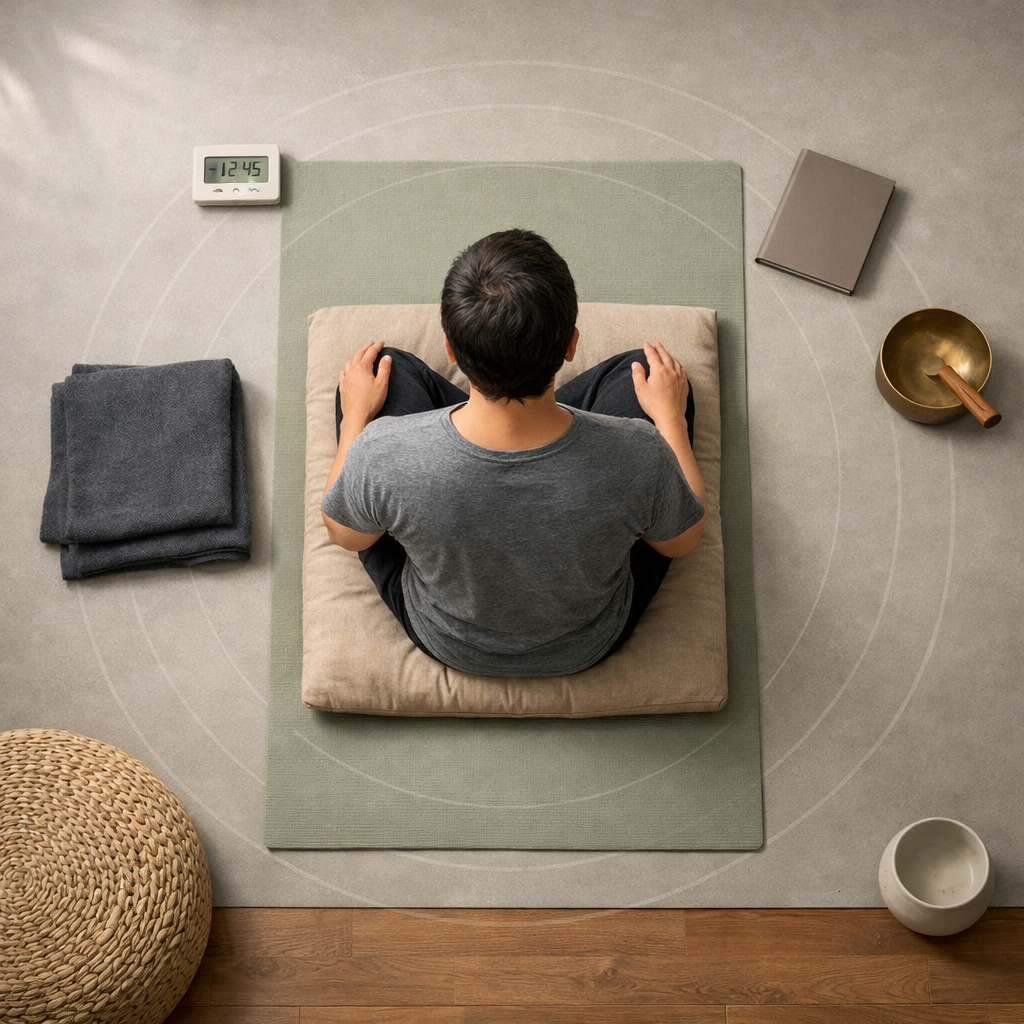
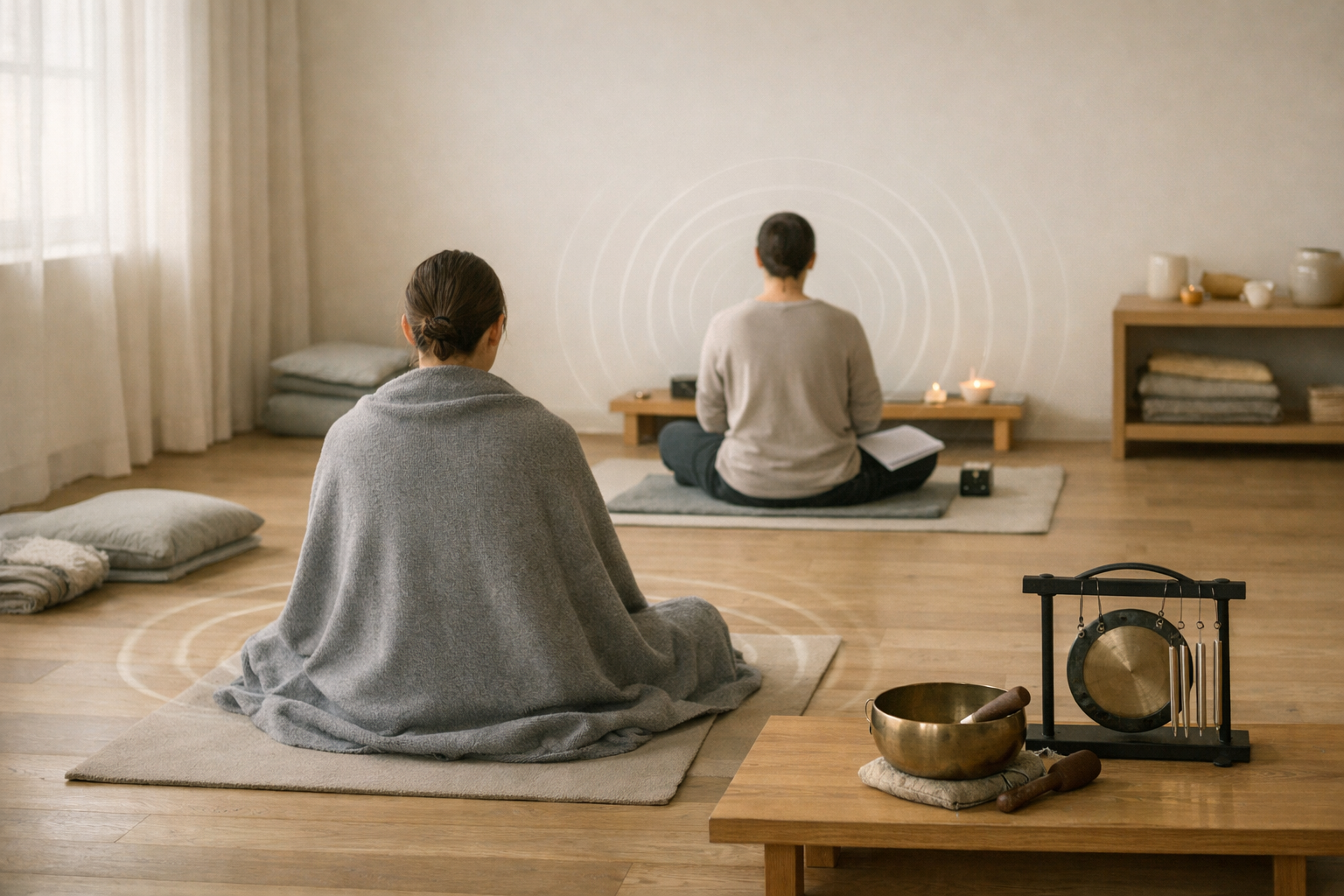
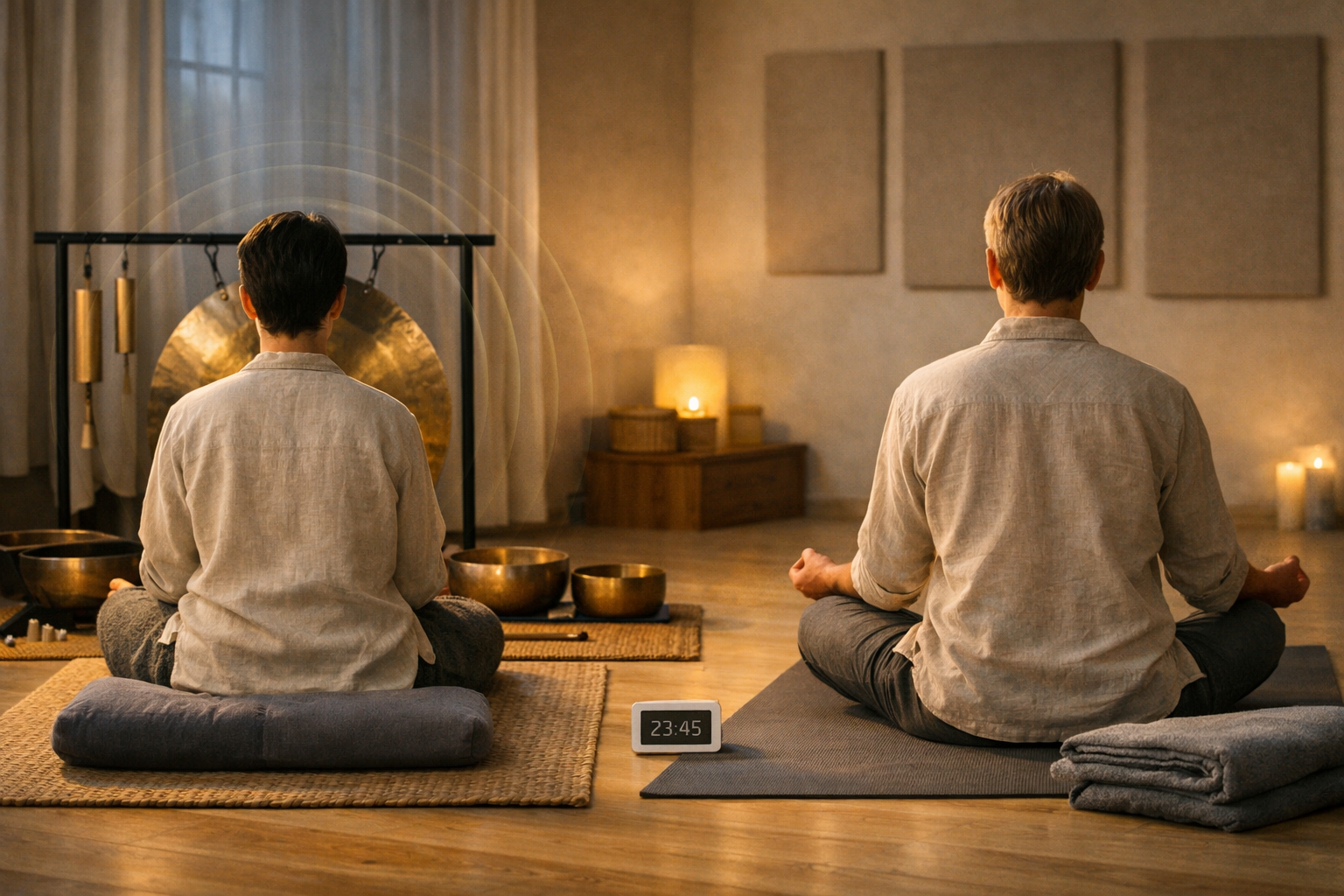
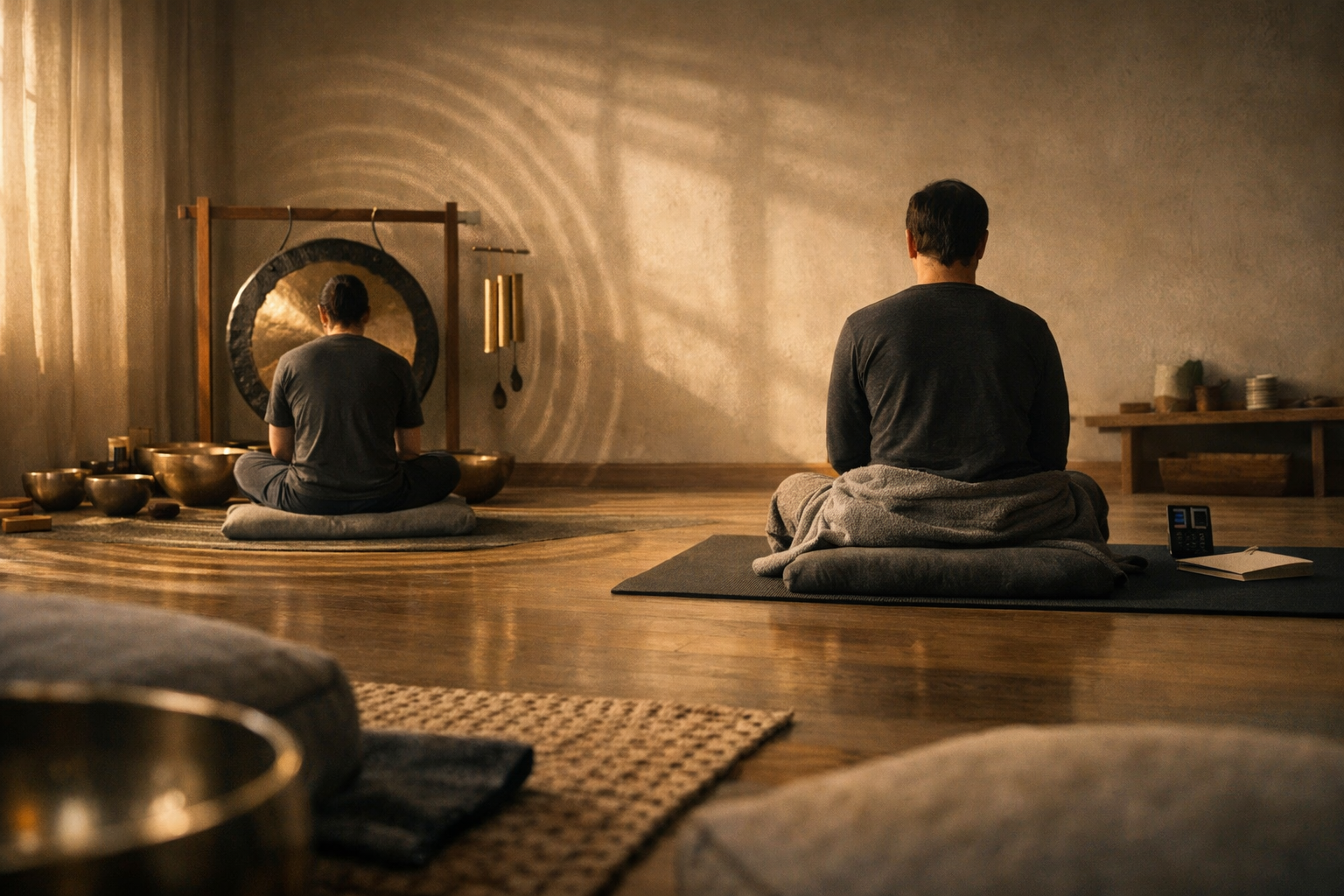
A sound bath often costs roughly $20 to $60 for a group session, while meditation costs nothing beyond a quiet place and a few minutes. That price difference matters, but it doesn’t settle the sound bath vs meditation question. The better choice depends on whether you need an accessible reset today or a portable skill you can repeat for years.
Sound baths use sustained tones from instruments such as singing bowls, gongs, and chimes. Meditation trains attention through breath, body sensations, thoughts, or a guided voice. Both can support relaxation, but they ask different things from your mind.
Sound Bath vs Meditation: The Short Answer
A sound bath is usually the easier entry point for an overstimulated beginner because the changing tones give your attention something external to follow. Meditation is usually the better long-term habit because it costs nothing, travels anywhere, and directly trains awareness. Choose a sound bath for guided relaxation; choose meditation for repeatable mental training.
Neither practice is an instant cure for anxiety or insomnia. A single session might leave you calmer, but lasting change depends on regular practice, realistic expectations, and the cause of your distress. If panic, severe anxiety, or persistent sleep disruption affects daily life, a licensed mental health or medical professional is a better next step than either wellness practice alone.
The main difference is the direction of attention. During a sound bath, attention moves toward external sound and physical sensations. During meditation, attention is deliberately observed and redirected, often toward the breath or a chosen anchor.
Feature
Sound bath
Meditation
Typical setting
Group studio session or private room
Home, workplace, outdoors, or transit
Typical time
About 45 to 90 minutes
About 5 to 20 minutes for a beginner
Typical cost
Roughly $20 to $60 per group session
Free, unless using an app or teacher
Main attention anchor
Tones, vibrations, and body sensations
Breath, body, thoughts, or a guided voice
Beginner challenge
Staying present with strong or unfamiliar sound
Remaining with an anchor when the mind wanders
Long-term portability
Limited by access to sessions
High; no equipment is required
A sound bath is not completely passive. You still notice sound, adjust your position, and decide what to do when thoughts arise. The difference is that the sound provides more structure than a silent practice.
When a Sound Bath Makes More Sense
Reach for a sound bath when silence feels demanding or your attention is scattered after work, travel, or prolonged screen use. Lying down while listening to singing bowls can reduce the number of decisions you must make during the session.
The format can also suit people who struggle with guided instructions. You don’t need to remember a sequence of breathing cues or evaluate whether you are meditating correctly. You follow the sound, notice the body, and allow attention to settle.
When Meditation Wins
Meditation is the stronger choice when your goal is a habit you can use in a hotel room, office, or airport. A five-minute practice before breakfast requires no booking, instrument, or commute.
It also gives you a way to study mental reactions directly. If irritation appears during a meeting, the skill is not limited to a studio floor. You can notice the reaction, feel the breath, and choose your next action with more space.
Why Combining Them Can Work
The practices can support each other without becoming interchangeable. A sound bath may make it easier to settle before a short meditation, while meditation can help you stay aware during a sound bath instead of drifting into automatic distraction.
Try a 45-minute sound bath followed by five minutes of quiet sitting if you already enjoy both formats. Keep the meditation brief enough that the pairing remains practical rather than becoming a rare monthly ritual.
What Actually Happens During a Sound Bath?
During a sound bath, a facilitator plays sustained tones while participants usually lie down or sit comfortably for about 45 to 90 minutes. The sound becomes an attention anchor, and the body may respond with slower breathing, reduced muscle tension, or drowsiness. The aim is relaxation through sensory attention, not passive treatment.
The phrase “bath” describes immersion in sound, not water. Common instruments include metal or crystal singing bowls, gongs, chimes, drums, and sometimes a human voice. Each produces a different texture, volume, and pattern, so one session can feel gentle while another feels intense.
A useful mental model is guided sensory rest. You notice the tone as it begins, changes, and fades. When thoughts pull you into planning or worry, the sound gives you a route back to the present moment.
Singing Bowls and Attention
YouTube content
This embedded content is blocked until you allow Marketing services.
Singing bowls create tones with a long decay, meaning the sound continues after the initial strike or friction. That gradual change gives the mind a moving object to track instead of a fixed point. Some people find that easier than watching the breath.
Research on this is still developing, but a 2023 study exposed participants to Tibetan singing bowls and recorded measurable shifts in stress-hormone levels, self-reported anxiety, and brainwave activity after a single session (Popular Science). A separate 2025 systematic review of clinical trials found more mixed results — singing bowl therapy reduced pain intensity in one trial but showed no significant effect on blood pressure across the studies reviewed (ScienceDirect), a reminder that the evidence base is real but still early.
The effect is not the same for everyone. High tones, low vibrations, or sudden gong strikes may feel unpleasant, especially for people with migraines, tinnitus, sensory sensitivity, or trauma-related reactions. Ask the facilitator about volume and instrument choice before the session.
The Body Position Matters
Most group sessions use mats, blankets, and cushions, but comfort affects attention. A cold room, an unsupported neck, or a painful hip can keep the nervous system alert. Bring layers and choose a position you can maintain without forcing stillness.
Lying down can also lead to sleep. That is not a failure, but it changes the practice. If you fall asleep within ten minutes, you received rest rather than sustained mindfulness, and you should avoid treating the session as a substitute for adequate nighttime sleep.
Sound Is a Prompt, Not a Cure
The relaxation response involves a shift away from active threat monitoring and toward lower physical arousal. Slow breathing, stillness, and a predictable environment may support that shift, but sound alone does not guarantee it.
A sound bath is an immersive listening practice that uses sustained tones as an anchor for attention and relaxation.
Approach the session as a structured pause. Expecting it to remove anxiety permanently creates pressure that works against the quiet you came to find.
How Meditation Trains the Mind Differently
Meditation is a repeated practice of placing attention on an anchor, noticing when attention wanders, and returning without adding criticism. The anchor might be breathing, walking, body sensations, or a guided voice. The return is the training, not the absence of thoughts.
A beginner may sit for 10 minutes and spend most of that time planning dinner, replaying a conversation, or checking imagined notifications. That does not mean the session failed. Each moment of noticing and returning builds familiarity with attention.
Meditation also exposes the difference between an uncomfortable thought and an urgent instruction. You can observe “I need to solve this now” as a mental event rather than immediately obeying it. That distance is useful, but it develops through repetition rather than one impressive session. The National Center for Complementary and Integrative Health notes that mindfulness meditation may help reduce symptoms of anxiety, depression, and stress, though effects vary by study and individual (NCCIH).
Mindfulness Is Wider Than Sitting
Mindfulness means bringing deliberate, present-moment attention to an experience with less automatic judgment. It can happen while washing dishes, walking to a train, or drinking coffee, although formal meditation gives the skill a more consistent training period.
A two-minute practice at a desk might involve feeling both feet on the floor, noticing three natural breaths, and hearing nearby sounds. The exercise is simple, but it turns ordinary moments into opportunities to recognize distraction before it controls behavior.
Breathwork Changes the Entry Point
Breathwork uses deliberate breathing patterns, while meditation may simply observe the breath without changing it. Slow, comfortable breathing can help some people settle; forceful or rapid patterns may feel activating and are not a universal relaxation tool.
For a cautious starting point, breathe normally and lengthen the exhale slightly for five cycles. Stop if you feel dizzy, panicked, or short of breath. People with respiratory or cardiovascular conditions should ask a clinician before using demanding breath techniques.
Guided Meditation Reduces Guesswork
A guided meditation provides spoken instructions, often through an app, recording, or teacher. It can be useful when silent practice feels vague, especially during the first few weeks.
Choose a recording that lasts five to 15 minutes and uses plain instructions rather than promises of instant transformation. A shorter session you repeat four days in a week is more useful than a 40-minute recording you avoid because it feels demanding.
Which Practice Is Better for Stress Relief?
For immediate stress relief, I’d recommend a sound bath if you can access a comfortable, well-run session and find sound calming. For ongoing stress management, meditation is the better foundation because it teaches you to notice tension while it is happening. Immediate relaxation and long-term regulation are different outcomes.
A sound bath can reduce the number of active choices in a stressful moment. You lie down, listen, and receive a predictable structure. That format may suit someone who has spent the day making decisions and cannot tolerate another self-directed task.
Meditation asks for more active participation. You must recognize distraction, return to an anchor, and sometimes sit with discomfort. The effort can feel frustrating at first, yet that effort is why meditation transfers more directly to daily situations.
A Worked Choice
YouTube content
This embedded content is blocked until you allow Marketing services.
Imagine you have 30 minutes before bed after a tense workday. If your body feels wired and your mind keeps jumping between tasks, a 10-minute guided meditation may provide enough structure without requiring travel.
Now imagine you have a free Saturday and the same tension has built for several weeks. A 60-minute sound bath could offer a deeper pause, especially if you rarely rest without a screen. Use the session as recovery, then keep a short meditation habit during the week.
Stress Relief Has Limits
Neither practice removes the source of stress. A sound bath cannot repair an unsafe relationship, and meditation cannot create time in an overloaded schedule. They can change how you meet a problem, but practical changes may still be necessary.
Stress that brings chest pain, fainting, severe panic, or thoughts of self-harm needs professional attention. Wellness sessions belong alongside appropriate care, not in place of it.
The Most Practical Pairing
A strong routine uses meditation for frequency and sound baths for occasional sensory rest. Try five to 10 minutes of meditation on ordinary days and a sound bath when you want a longer guided reset.
A simple calendar makes the difference visible. Mark each meditation session for two weeks, then assess whether the practice fits your schedule rather than judging it by one unusually calm or difficult day.
Can Either Practice Improve Sleep?
Both practices may support sleep by reducing pre-bed stimulation, but neither guarantees faster sleep or uninterrupted rest. Meditation is easier to use at home, while a sound bath may help when tension is high and you benefit from a structured, quiet environment. Treat sleep support as a possible effect, not a promise. Meditation is designed in part to trigger a physical relaxation response that counteracts the stress response — calming breathing, reducing heart rate, and slowing brain waves in ways that can support falling asleep (Sleep Foundation).
A sound bath held late in the evening can make you drowsy through stillness and repetitive sound. That does not mean the sound has a special power to cure insomnia. Light exposure, caffeine, pain, medication, room temperature, and sleep timing often matter more.
Meditation can fit into a bedtime routine without adding travel or cost. A body scan, slow breathing observation, or guided meditation may help you stop rehearsing tomorrow’s tasks, even if sleep does not arrive immediately.
Use Sound Carefully at Night
Keep volume comfortable and use a timer if you listen to recorded bowls or ambient sound at home. Continuous audio through the night may disturb sleep for some people, particularly if the recording changes volume or includes sharp high tones.
A 15-minute session before turning off the light is a reasonable experiment. If you wake feeling more alert, switch to silence or a quieter practice rather than assuming you need a longer recording.
When Meditation Becomes Another Task
Some people turn sleep meditation into a performance test. They monitor every breath, wonder whether they are relaxed enough, and become more alert through evaluation. The practice should reduce effort, not create a new scorecard.
If counting breaths increases pressure, use a body scan or gentle guided voice instead. If any technique makes you feel trapped or panicked, open your eyes, change position, and stop.
Persistent Insomnia Needs More
YouTube content
This embedded content is blocked until you allow Marketing services.
Sleep problems lasting weeks can have causes that a sound bath or meditation cannot address. Loud snoring, gasping during sleep, restless legs, persistent pain, and medication changes deserve discussion with a healthcare professional.
Keep a basic sleep record for seven days if you seek help. Note bedtime, wake time, awakenings, caffeine, and practice duration. That information is more useful than saying only that you “sleep badly.”
How to Choose a Safe, Useful Session or Routine
Start with the format you can repeat without strain. For a sound bath, look for a facilitator who states the session length, instrument types, volume expectations, and accessibility details. For meditation, choose a teacher or recording that explains the practice without claiming to treat every condition.
Ask about modifications before paying. A reputable studio should allow sitting instead of lying down, ear protection, stepping outside, or leaving quietly. A typical group session may cost roughly $20 to $60, so confirming the policy protects both your money and your comfort.
Check Your Sensory Needs
Sound baths are a poor fit when loud or unpredictable sound reliably triggers symptoms. Earplugs can reduce volume, but they do not remove vibration or sudden changes. If you have tinnitus, epilepsy, significant hearing sensitivity, or a trauma history, speak with a qualified clinician before trying an intense session.
Meditation has its own edge cases. Quiet attention can bring distressing memories or body sensations into focus. Choose a guided, eyes-open, walking, or shorter practice if sitting alone feels destabilizing.
Build a Low-Friction Experiment
Try meditation for five minutes on four separate days before deciding that it does not work. Use the same chair and a timer, and stop at five minutes even if the session feels imperfect. Consistency gives you clearer information than one long attempt.
Then try one sound bath lasting about 60 minutes, if the cost and setting suit you. Record how you felt immediately afterward and the next morning. Look for practical changes such as easier transition into the evening, not a dramatic personality shift.
Judge the Practice by Function
Ask whether the practice helps you recover, focus, sleep, or respond to stress with less automatic behavior. A pleasant experience is valuable, but pleasure alone does not show that the method fits your needs.
For wellness trend coverage and grounded lifestyle guidance, thedivinemagazine.com can offer useful context around practices that sit between culture, sound, and everyday care. Keep your own standards clear: no session should require grand claims to be worthwhile.
A Four-Week Plan for Making the Choice
Use the first week to establish a baseline rather than chase a result. Note your sleep timing, general tension, and how often you feel mentally scattered. Then meditate for five minutes on four days, using breath observation or a short guided meditation.
In week two, increase only if the first week felt manageable. Ten minutes on four or five days is enough to test portability. Practice once in a less-than-perfect setting, such as a quiet office or hotel room, because real life rarely provides ideal silence.
Week three is the right time for one sound bath. Choose a 45- to 90-minute group session, ask about volume, and arrive with layers and water. Notice whether the sensory format helps you settle or leaves you overstimulated.
Week four compares function, not excitement. Continue the meditation schedule and review the sound bath experience. Keep meditation as the baseline if you want a lasting habit; add sound baths when the guided sensory format genuinely helps.
A simple record works better than elaborate tracking. Write down the date, minutes practiced, stress level before and after, and sleep quality the next morning. Four weeks will not diagnose a health condition, but it can reveal whether the method fits your time, budget, and nervous system.
If meditation consistently increases distress, switch formats rather than forcing it. Try walking meditation, open eyes, shorter sessions, or professional guidance. If sound repeatedly causes headaches or agitation, stop attending and choose a quieter approach.
Frequently Asked Questions
Is a sound bath better than meditation for beginners?
A sound bath is often easier for beginners who feel overwhelmed by silence because the tones provide an external focus. Meditation is still the better first choice if cost, travel, or schedule matters, since a five-minute practice needs no booking or equipment.
How often should I attend a sound bath?
Start with one session and assess your response over the following day. If it feels supportive, attending once every few weeks is a reasonable practical rhythm, but there is no need to schedule frequent sessions if a short home meditation meets the same need.
Can I meditate during a sound bath?
Yes. You can use the sound as your meditation anchor, notice when attention wanders, and return to the next tone. If the volume, vibration, or lying position feels uncomfortable, open your eyes, change posture, use earplugs, or leave.
What should I do if meditation makes my anxiety worse?
Stop the session and orient to your surroundings by opening your eyes, naming objects in the room, or walking slowly. Try a shorter guided or eyes-open practice later, and seek professional support if meditation repeatedly intensifies panic, intrusive memories, or distress.
We use essential technologies to run Divine Magazine and optional services for analytics and marketing. You can accept all, reject optional services, or choose your preferences.
DIVINE PRIVACY
Privacy Preferences
Essential
Required for core site operation, security and remembering your privacy choices.