






SPOTLIGHT
MAGAZINE
Featured Artist
AMOS & RIOT NIGHT
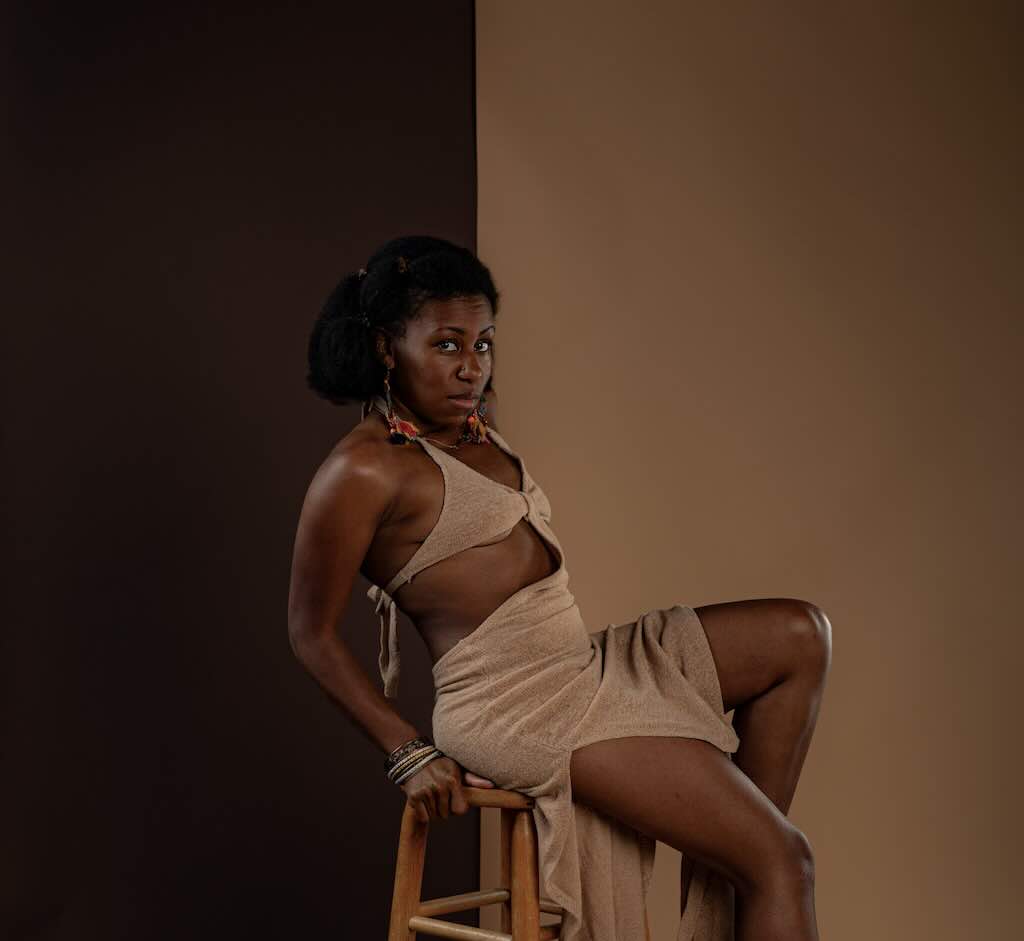
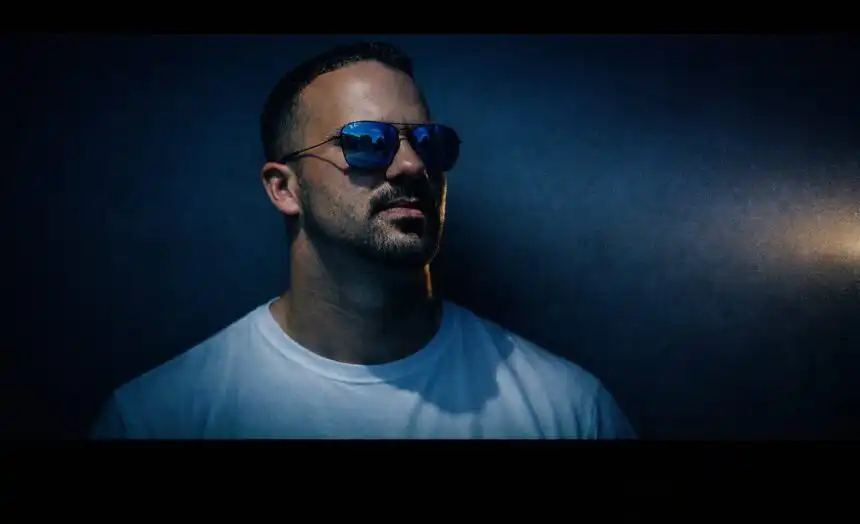
Written in the aftermath of profound personal loss, AMOS & RIOT NIGHT returns with “Pieces” — a soaring meditation on grief, heartbreak, and the slow work of rebuilding. Co-written with Lucy Starr and shaped alongside producer Grant Trowbridge, the track marks one of his most personal releases to date, out now via Future Sound of Egypt.
WORDS — DIVINE MAGAZINE · 2026
Some records are built in a studio. Others are built in the weeks after everything falls apart, and the studio is just where the pieces finally land.
That’s the story behind “Pieces,” the new single from Liverpool producer David McClelland, known to the Trance world as AMOS & RIOT NIGHT. Over the past few years, McClelland has become a steady presence on the genre’s biggest labels — Future Sound of Egypt, Vandit, Armada, Pure Trance — earning support from Armin van Buuren, Paul van Dyk, Aly & Fila and, most recently, Tiësto. But “Pieces” is a different kind of release. It isn’t built for the peak-time moment alone. It’s built from loss.
Where the Song Began
In April of last year, McClelland’s grandmother passed away. The day after, his then-partner told him he wouldn’t attend the funeral, unwilling to change plans to be there. Days later, the relationship ended entirely. “It felt like I had been hit by a double hammer blow,” McClelland says, “and my world around me had just crumbled.”
Grief rarely announces itself politely, and McClelland didn’t try to explain it away. He turned to the studio instead, working through the aftermath the only way that made sense to him — one melody, one lyric, at a time.
The Line That Became the Song
Before there was a chorus, a drop, or even a second lyric, there was one line: I’m picking up the pieces. McClelland wrote it without knowing what would come next. It stayed the emotional center of gravity for everything that followed.
He brought the idea to Liverpool-based singer-songwriter Lucy Starr, and together they shaped the song’s core. Rising UK producer Grant Trowbridge joined later to build out the club mix — his first release on Future Sound of Egypt, a label McClelland has called home for six years. For the production, McClelland and Trowbridge leaned into the darker, driving textures of early Simon Patterson records, layering razor-edged basslines with Arturia’s JUP8000-V — a nod to the Roland JP8000 that helped define Trance’s melodic era in the first place.
Why It Matters Now
“Pieces” was largely written within two months of the events that inspired it. It’s being released over a year later — and that gap matters. Time has turned a raw first draft into something closer to reflection. McClelland is candid about the fact that the rebuilding isn’t finished: “Even now, I’m still learning how to rebuild and start over.”
That honesty is what separates “Pieces” from a standard uplifting Trance single. The genre has always known how to chase euphoria. What’s rarer is a record willing to sit in the weight that comes before it — and let the drop feel earned rather than automatic.
The Bigger Picture
The release also marks a moment for the two artists standing alongside McClelland. Grant Trowbridge continues to build a catalogue across Pure Trance, Borderline and Black Hole, with early support from Armin van Buuren and Solarstone. Lucy Starr, meanwhile, is carving out her own path between indie songwriting and Trance vocal work, having previously charted at #10 on Beatport’s Trance Main Floor chart with “Calling Out For You,” her first collaboration with McClelland.
For AMOS & RIOT NIGHT — five Beatport Trance Top 10s deep, with festival sets at Luminosity Beach Festival, Gatecrasher, Trance Sanctuary and Shine Ibiza behind him — “Pieces” isn’t a departure from form. It’s a continuation of what’s made his music resonate in the first place: melody built on something true.

“Pieces” was born during one of the most difficult periods of your life. When you listen back now, over a year later, what emotions surface for you?
Yeah, it’s been a poignant experience for this to be released now, over a year after writing this record in the immediate aftermath of what had happened. Some of those raw feelings do still come back every now and then, even after this song’s been released. But I would say that in recent months, I’ve slowly learned how to move on, and I feel like I am truly ‘living’ again. There were points last year where I was doing amazing things, like performing out in China for the first time and visiting Greece with my family, but I didn’t wholly appreciate them until several months later. During that time, I just felt like I was ‘existing’ and running on autopilot.
Only now when looking back at these moments can I truly step back and think ‘wow, all these things actually happened.’ Even as I write this from Dublin after coming back to support my family, looking back there’s a lot that maybe I did take for granted, especially growing up. But when looking back at times I’ve experienced, either solo or with my family from years gone by, those moments do come back, and I now realise how incredibly lucky I was to have experienced so much growing up. For that, I owe everything to my family.
You described the moment of losing your grandmother and your relationship ending as a ‘double hammer blow.’ How did those experiences reshape your relationship with music and creativity?
Hard to say if it truly has reshaped my relationship with music, though I would say those experiences really did shape my own life and outlook on certain things. If both events had happened at different points in time, then maybe I could have handled everything differently. It hurt more the fact that both events happened days apart, but this could happen to absolutely anyone. I would say that creatively, it allowed me to be more vulnerable in a way that I never really considered in the past and open a part of me that may often be kept closed.
The lyric “I’m picking up the pieces” became the heart of the song. What made that line feel powerful enough to build an entire track around?
David: At that point, I was just learning how to slowly pick up the pieces from all that had gone on and at least try and move on. Has it been easy? No, definitely not. But I needed to learn how to move on from all of it. When me and Lucy first got together to discuss ideas for what became ‘Pieces’, this was the first lyric I’d presented and like you said, it ultimately became the heart of the song and we built on this as the main refrain. The way Lucy delivered that performance was just awe inspiring and really set the tone for how me and Grant approached the production. She’s able to really deliver those moments of vulnerability but also with an equal power that cannot be matched.
Lucy: I’d say it perfectly summarises what you’ve been doing in the aftermath of everything. You’re rebuilding, healing, moving forward, trying to regain normalcy.
The production draws inspiration from early Simon Patterson—dark, driving, razor‑sharp. What made that sonic direction feel right for a song rooted in heartbreak and rebuilding?
David: One thing I always admired about Simon’s earlier records circa 2007-2014 was his ability to really take listeners on a journey and the emotions that were evoked musically through both the musical ideas themselves, as well as his sound selection, were heavily influential on this particular record. Timeless records like ‘Us’, ‘Mood Swing’, ‘Dissolve’, ‘Miss You’ – ones where you would be pounded by a relentless bass before being lifted right up to euphoria to the highest of highs. Those heartbreaking melodies and the way they opened up, then to be launched back into oblivion.
David, you mentioned using Arturia’s JUP8000‑V to channel the spirit of the JP8000. What role did that synth play in shaping the emotional tone of the track?
When Arturia released that synth last year, it felt like I could really lean into that classic tone that was very much associated with those timeless Trance tracks. So many other soft synths have tried (and failed) to really emulate the feel of the JP8000, and no one had truly nailed it… until now. I did have an old Roland SH201 years ago, but I regrettably sold it. Maybe I should try and get one again? I digress.
As much as I would personally love to own a JP8000, they’re extremely rare to get hold of in decent nick, plus hardware synths can be very costly! With Arturia’s emulation – the JUP8000-V, I was able to truly lean into to tones that I never had access too before and wanted to really channel, so combined with Grant’s production style, this felt like a real game changing option to use and it was a no brainer. Now, we’re starting to see a bit of a resurgence in Trance and other software companies appear to be hopping on the ‘supersaw bandwagon’ if you will. Gimmick if you ask me. None have really come close to the quality that Arturia are so renowned for, especially by integrating both the iconic features of the JP8000 with Arturia’s own technology.
The song balances melancholy with euphoria—grief with forward motion. How did you ensure the production didn’t overshadow the emotional vulnerability at the core?
Yeah, that’s always a challenge as I do have to consider the dance floor and the audience in mind somewhat. A lot of it comes down to sound choice at the end of the day, but to me the real heart of this record lies within the songwriting itself. Whenever I now work on vocal-based records, I always begin with the songwriting and the lyrics, as that is what the audience/listeners will be connecting with. The production should be as a means of enhancing the already brilliant work if the foundations have been laid out properly.
Too often, I hear many records that sound great technically, but musically don’t quite hit the spot and lyrically, really fall flat. Especially with a lot of vocal tracks, the songwriting appears to be secondary and is often seen as an afterthought. Often time, the vocalists/songwriters brought in are often sent near-finished productions for toplines to be written over, which while it’s a great starting point, it can be extremely limiting and restrictive. Also, can be very distracting. Whereas I start from writing to a piano, then working on the song from there. Once I’m happy with the songwriting, I can then start to build the club mix from there, as has been the case here, but also on previous vocal records of mine including “Calling Out For You” (with Lucy), “Different View” (with Ren Faye), “Because of You” (with Brendan Bartels and Luke Cusato) and “Strangers” (with Claire Willis). I never forget something that Dolly Parton once said in an interview years ago that if you can get the songwriting spot on and it can stand on its own, then it can be worked into almost any style.
Lucy: With this, I think the emphasis is on it being a strong lyrical track that we’re really proud of so we put a lot of effort into creating relatable lyrics and there are parts where production is a lot more stripped back to allow the lyrics to shine/message to really come through etc. Like the quieter piano parts.
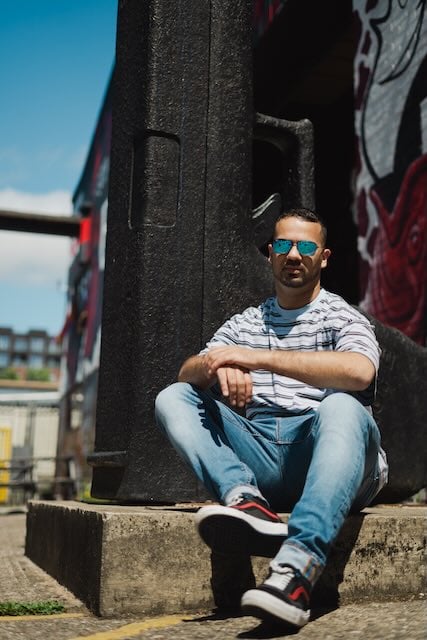
David, you’ve called Future Sound of Egypt your artistic home. What does releasing such a personal record on that label mean to you at this stage in your career?
I’ve always admired Aly & Fila’s work and especially the stuff that was released on FSOE when I first started out production. From day 1, they were always the ones I wanted to work with. I kept sending material to them for years and years, constant knock-backs, but I never gave up. I kept learning and improving my production quality, then finally that moment came in 2020 when I had my debut release with them alongside Robbie Graham. I mean less said about 2020 the better, right, considering it was a total write-off of a year.
That aside, I’ve built up a really great relationship with Fadi, Stu and the rest of the FSOE team that I’ve become really close with them. I’ve also had the privilege at performing for flagship events in London that FSOE themselves had ran in collaboration with Trance Sanctuary. Both of those felt like full circle moments for me as I was playing alongside not only my production and music heroes in Trance, but also artists who I now consider colleagues and friends more importantly. Aly & Fila have also been one of my biggest supporters over the last decade musically, so I really do owe a lot.
“Pieces” is ultimately about rebuilding. What does rebuilding look like for each of you today—personally, creatively, or emotionally?
So, for me, rebuilding is now about being consistent, both in my musical output and for showing up for others. I’m actively working on plenty of new music as we speak, but there’s two more singles to come from me this year including a return to FSOE in October, as well as a return to Nocturnal Knights in September. Personally, I’m still learning how to rebuild and develop better relationships. I’ll admit I do often beat myself up at times and maybe am too modest for my own good. But that’s just me. Rebuilding also looks like getting myself back out there and regaining my confidence with a whole new outlook compared to where I had been before. Maybe, not take things for granted and learn to treasure each moment while it lasts.
Lucy, you and David developed the songwriting together in Liverpool. What did those early sessions look like emotionally and creatively?
David and I work so well together during our songwriting sessions. It involves us being at his home studio and discussing the concept of the song and the themes we want to explore. We naturally start to draw upon our own life experiences and what we want to express sonically. We find we can relate to a certain experience, especially one as powerful and universal as a difficult breakup and losing a loved one! We always start with piano chords, finding a chord progression and writing lyrical ideas. We bounce ideas back and forth and are very honest with each other about whether we like it or not!
Lucy, your background is in indie singer‑songwriting. How did stepping into Trance again—after “Calling Out For You”—challenge or expand your vocal identity?
I find that trance music really allows my vocals to shine and I love how ethereal the genre is. Trance music truly does take me away to another world when I sing. I find that it expands my vocal identity by challenging me to find appropriate harmonies. I sometimes have to rein myself in as I can be guilty of wanting to add too many harmonies sometimes, haha! Sometimes less is more and it’s about finding where they most compliments the beauty of the trance production and allowing both elements to shine – vocals and music!
“Pieces” is ultimately about rebuilding. What does rebuilding look like for each of you today—personally, creatively, or emotionally?
I find that rebuilding looks emotionally like allowing yourself to mourn a stage of your life that doesn’t exist anymore and taking the lessons that you have learned from the experience to apply to the future. I like to ensure to that I don’t make the same mistakes again but it is also important to be gentle with yourself as at the time, you didn’t always know if a situation would turn out to be good or bad e.g a relationship turning sour. Personally, I like to form new associations like exploring new places, meeting new people, creating love in other areas of your life and filling it with as much joy as possible.
Grant, this track marks your debut on Future Sound of Egypt. How did stepping into the FSOE universe influence your approach to the club mix?
This was actually pretty difficult for me. Most the music I had produced before is darker and not necessarily the sound you hear on FSOE. Version one of ‘Pieces’ was actually more in the sounds I’m known for. Although it sounded decent, we ultimately decided it probably wasn’t the right direction for the vocal. With David’s history of releasing on FSOE, I met him in Liverpool and we worked on changing the melody to what it is now. FSOE was always on my list of target labels when I started producing so it’s awesome to finally release on the label.
Grant, you’ve quickly become one of the UK’s rising Trance producers. What did collaborating with David and Lucy teach you or push you toward creatively?
After David and Lucy’s first track ‘Calling Out For You’, I knew I really had to up my game on the production side. It was my favourite vocal track of 2025 so I knew it would be a challenge to produce something not only equally as good but also try and improve on it. This was also my first time doing an original vocal track so it really pushed me to learn new skills that I hadn’t needed making instrumental music. Luckily for me, Lucy’s done a great job on the vocals. It was really easy working them both. Due to my location, unfortunately we never all got to meet but we all shared ideas and opinions via messages which was all channeled in to the track that it is today.
Hopefully the 3 of us can work together on something again in future
https://www.facebook.com/amosriotnight
https://www.instagram.com/amosriotnight
https://www.facebook.com/GrantTrowbridgeMusic
https://www.instagram.com/grant_trowbridge_music
https://www.facebook.com/lucystarrmusic
https://www.instagram.com/lucystarrmusic