






Some trips are remembered through monuments. Others return through taste: olive oil poured over warm bread in Tuscany, the restrained seasonality of a Kyoto meal, coffee in a Melbourne laneway or something unexpectedly wild on New Zealand’s West Coast.
Food can reveal geography, migration, agriculture, ritual and everyday life in ways that sightseeing alone cannot. The most rewarding culinary trips are therefore not simply about collecting famous restaurants. They create a closer connection between what is on the plate and the place that produced it.
Editor’s note: This guide has been updated for late 2026 with refreshed destination information, verified culinary references and the removal of unsupported food-tourism statistics and outdated accommodation claims.
1. Cook With a Local Chef in Tuscany, Italy
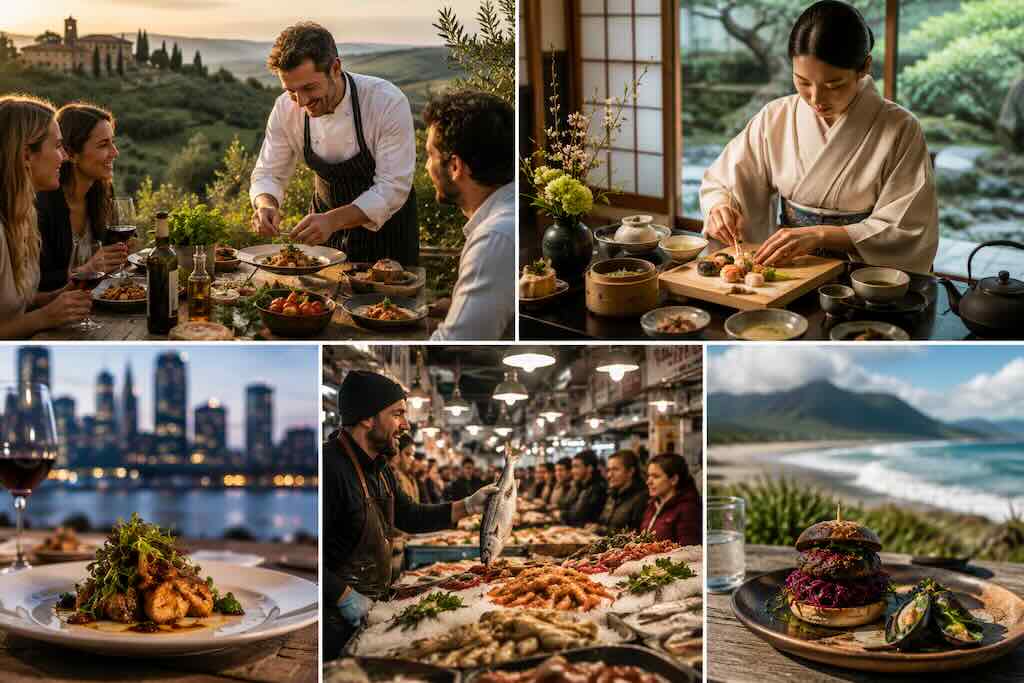
Tuscany makes the relationship between landscape and food unusually visible. Vineyards run across hillsides, olive groves surround old farmhouses, and local cooking frequently relies on ingredients and techniques that make sense within this agricultural setting.
The region’s official tourism platform, Visit Tuscany, highlights wine, olive oil, truffles, regional breads, cheeses, cured meats and other products as central parts of Tuscan food culture.
A private cooking session or meal prepared by a local chef can turn that context into something tangible. Instead of simply ordering pasta in a restaurant, you can see how a few ingredients are handled, ask why a particular dish belongs to the region and understand how seasonality changes what appears on the table.
Travelers who want to build an entire day around food can also explore Tuscany’s wine and olive oil routes, which connect agricultural producers, landscapes and local traditions.
Divine’s guide to the most impressive markets in Italy offers another way to experience the country’s food culture closer to its ingredients.
Where to stay: The original recommendation, Villa Fienile Da Primo, remains a useful starting point when comparing self-catering accommodation. Verify current facilities, availability and booking terms before reserving, particularly if a kitchen or outdoor dining area is essential to your plans.
2. Take a Cooking Class in Kyoto, Japan
Kyoto offers a very different lesson in culinary travel. Here, seasonality, presentation, craft and hospitality are deeply connected.
The Kyoto City Official Travel Guide describes a food culture shaped by more than a thousand years as Japan’s capital, along with Buddhist traditions, local agriculture, water, tea culture and the crafts associated with presenting a meal.
Kyo-kaiseki may be the refined expression visitors recognize most readily, but Kyoto’s food identity also encompasses shojin ryori, obanzai, tofu dishes, wagashi sweets, matcha and sake.
A cooking experience provides a way into that culture without pretending that a single afternoon can make anyone a master of Japanese cuisine. The city’s official tourism site currently lists hands-on culinary activities ranging from Japanese home cooking to rice preparation and other food-centered cultural experiences.
The important distinction is between watching and participating. Cutting, wrapping, seasoning and tasting create memories with texture: the steam from rice, the resistance of a knife through vegetables, the quiet precision of arranging food before it reaches the table.
Where to stay: The original article recommended Shinwaen. Check its current location, room options and travel time against the specific Kyoto activities you plan to book before treating it as a base for the city.
3. Build Your Own Restaurant Tour in Melbourne, Australia
Melbourne is better approached as a collection of food neighborhoods than as one neat restaurant district.
The city’s culinary identity reflects generations of migration alongside contemporary Australian cooking. The official Melbourne tourism guide points visitors towards everything from fine dining and food trucks to Italian food around Lygon Street, Vietnamese cooking around Victoria Street and Lebanese food along Sydney Road.
Rather than restricting yourself to a predetermined tour along the Yarra, build a day around neighborhoods. Begin with coffee, walk through the laneways, choose lunch somewhere that reflects one of the city’s migrant food traditions, then save dinner for a restaurant you have deliberately booked.
This approach makes the city itself part of the meal. You notice how dining rooms fit into old buildings, how cafés occupy narrow lanes and how dramatically the atmosphere changes between neighborhoods.
Where to stay: Oaks Melbourne Southbank Suites was included in the original guide. Check current room configurations, kitchen facilities, rates and cancellation conditions directly before booking.
4. Taste Your Way Around Pike Place Market in Seattle
Markets compress a city’s food culture into a walkable space. Produce, seafood, prepared dishes, baked goods and conversations with vendors all happen within a few steps of one another.
Pike Place Market is Seattle’s best-known example. Rather than arriving with the sole objective of finding one famous snack, give yourself time to browse.
Look at what is seasonal. Talk to vendors when they are not busy. Share smaller portions if you want to taste several things. A market becomes considerably more interesting when it is treated as a living food district rather than a backdrop for photographs.
This is also where culinary travel becomes wonderfully ordinary. Not every meaningful food experience requires white tablecloths or a reservation made months ahead. Sometimes it is a piece of fruit, warm pastry or seafood eaten while watching ferries move across Elliott Bay.
Where to stay: An earlier version recommended Pine Street Apartments by Stay Alfred. That recommendation has been removed because it should not be relied upon as a current accommodation option. For a market-focused visit, compare currently operating properties within comfortable walking distance of Pike Place Market and Seattle’s central waterfront.
5. Go Wild in Hokitika, New Zealand
Some culinary trips are about refinement. Hokitika’s Wildfoods Festival has built its reputation around curiosity.
The West Coast event began in 1990 and developed into a celebration of unconventional food, local character and the region’s willingness to experiment. The official Hokitika Wildfoods Festival describes the event as a showcase for wild food and West Coast stories rather than simply a collection of unusual things to eat.
The 2026 festival took place on March 14. If you are planning ahead, the next edition is scheduled for March 13, 2027 at Cass Square in Hokitika. Check the festival directly before arranging flights or accommodation because event details can change.
The appeal lies partly in surrendering the familiar. You may encounter ingredients or combinations you would never normally order, surrounded by live entertainment and the deliberately playful atmosphere that has become part of the event’s identity.
Where to stay: The original guide recommended Drifting Sands. Verify its current operating status, accommodation options and festival-period availability before making plans.
How to Plan a Better Food Trip
The best culinary itinerary leaves room between reservations.
- Book one anchor experience: a cooking class, special restaurant, market tour or festival can give the day structure.
- Research the regional food: knowing a few local ingredients and dishes makes menus easier to understand.
- Visit markets early: they often reveal more about everyday food habits than heavily promoted visitor restaurants.
- Leave meals unscheduled: spontaneous discoveries are difficult when breakfast, lunch and dinner have all been booked in advance.
- Ask about dietary requirements: contact classes, tours and festivals directly when allergies or medical dietary restrictions require reliable information.
If you want to understand how ingredients and techniques travel between cultures, Divine’s journey through global food flavors provides useful context before departure.
Conclusion
Food travel works because eating is never isolated from place. A Tuscan olive oil carries the landscape that produced it. Kyoto’s cooking reflects seasonality and craft. Melbourne’s dining scene tells stories of migration. Seattle’s market connects visitors with producers and traders, while Hokitika turns local resourcefulness into something playful.
Choose the destination, but pay attention to what surrounds the plate. The market stall, kitchen, farm, neighborhood and person preparing the food often become the part you remember.
FAQ
What are good destinations for a food-focused trip?
Tuscany, Kyoto, Melbourne, Seattle and New Zealand’s West Coast offer very different culinary experiences, ranging from cooking classes and agricultural traditions to markets, multicultural dining and food festivals. The best choice depends on whether you prefer cooking, restaurants, markets or events.
How can you find local cooking experiences while traveling?
Start with official destination tourism organizations and established local operators. The original guide also referenced Eatwith and Traveling Spoon; check individual hosts, inclusions, reviews, cancellation terms and dietary arrangements before booking through any marketplace.
Can food festivals accommodate allergies and dietary restrictions?
Do not assume they can. Options and cross-contact procedures vary between events and individual vendors. If avoiding an ingredient is medically important, contact the organizer before buying tickets and confirm arrangements again with the food vendor before eating.
Is a cooking class worth booking while traveling?
It can be particularly rewarding when the class explains local ingredients, techniques and food traditions rather than simply reproducing a recipe you could make anywhere. Small-group and hands-on formats can provide more opportunity to ask questions.
How far ahead should you book a culinary experience?
Popular restaurants, small cooking classes and annual festivals may require advance planning, particularly during peak travel periods. Markets and casual neighborhood exploration usually allow considerably more spontaneity. Check the individual operator rather than relying on a universal booking rule.