





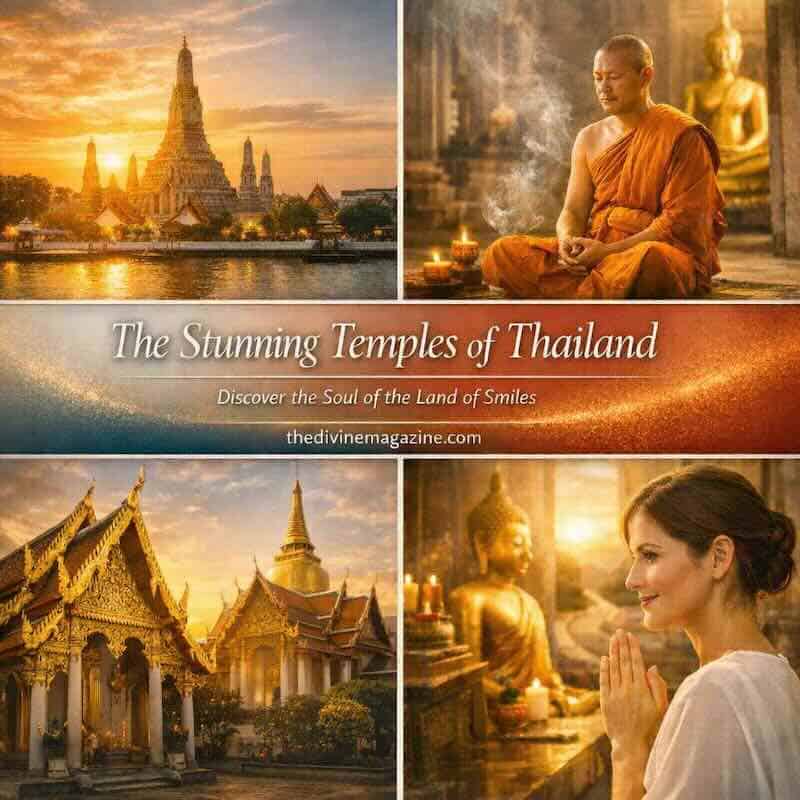
One of the top tourist destinations in the world, Thailand welcomes millions of visitors every year who never fail to be charmed by the country’s rich history, culture, and cuisine.
There’s something for everyone in the Land of Smiles, and you just need to take your pick of the many attractions and activities available to foreign guests. You can party on a beach, dance the night away in a club, shop til you drop in a mall, eat spicy food until your eyes water, or do numerous other fun things. But to know the true soul of Thailand, you’ll need to dig deeper and explore its spiritual side. And what’s a better way to do that than to visit the many, many stunning temples that dot this fascinating Southeast Asian nation?
Wat Phra Kaew
Widely regarded as the most sacred Buddhist temple in the country, its official name is Wat Phra Si Rattana Satsadaram. It is famously known as the Temple of the Emerald Buddha, and the complex features several buildings found within the Grand Palace in Bangkok. It’s the home of the Emerald Buddha, a gold-covered statue made of a semi-precious green stone. The temple’s construction began in 1783 during the reign of the first king of the Chakri dynasty, and successive Thai kings have contributed to its restoration and embellishment.
Wat Pho
A temple complex located in the Phra Nakhon district of Bangkok, it’s also known as the Temple of the Reclining Buddha. Thailand’s largest collection of Buddha images can be found within it, along with a school of Thai medicine. Wat Pho is one of the country’s oldest temples and is considered to be the place where traditional Thai massage originated. It also served as the earliest location for public education in Thailand and features plaques inscribed with illustrations and text about medicine, massage, and other subjects.
Wat Benchamabophit
Found in the Dusit district, Wat Benchamabophit is also known as the Marble Temple. The design was created by Prince Naris, the half-brother of King Chulalongkorn. It features a marble courtyard, Carrara marble pillars, and two large lions guarding the entrance to the main prayer hall. Gold and lacquer crossbeams decorate its interiors while fifty-two Buddha images can be found inside the cloister. The Benchamabophit National Museum is also located in the area.
Wat Arun
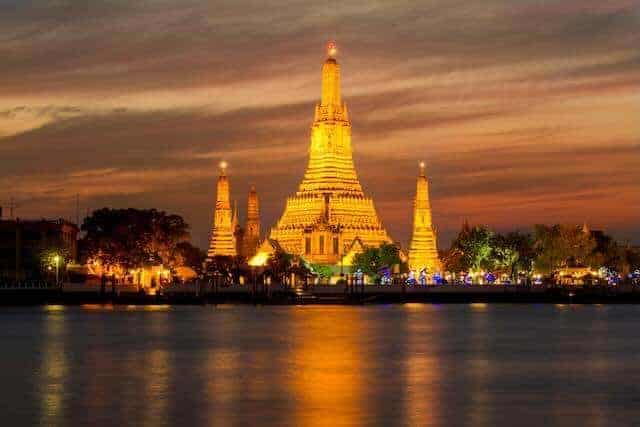
Wat Arun derives its name from Aruna, a Hindu deity commonly associated with the rising sun. It’s one of Thailand’s most iconic landmarks due to its distinctive spire or prang decorated with colorful pieces of porcelain. During the Buddhist festival of Kathina, which is a time of giving for Theravada Buddhists, the Thai king traditionally travels to the temple in a procession of royal barges before presenting new robes to Wat Arun’s monks.
Wat Niwet Thammaprawat
This building is unique among Thailand’s Buddhist temples because it was constructed in the Gothic Revival style with a Gothic altar and stained glass windows. Designed by Joachim Grassi, an Italian architect, the temple was commissioned by King Chulalongkorn in 1876. The king’s reign saw the construction of many Western-style buildings due to the modernization that was happening in the country at that time.
The Significance of Temple Architecture
To truly appreciate these structures, one must understand that a Thai temple (or Wat) is more than just a building; it is a cosmological map. The central spire, known as a Prang or Chedi, often represents Mount Meru, the center of the universe in Buddhist cosmology. The intricate carvings and mythical creatures, such as the Naga (serpent) and Garuda (bird-human), serve as spiritual guardians. For a deep dive into the artistic styles of different eras, such as Sukhothai or Ayutthaya, the Fine Arts Department of Thailand offers extensive digital archives.
Wat Phra Si Rattana Mahathat
Located in Thailand’s Phitsanulok province, the temple is renowned for housing the Phra Phuttha Chinnarat, a gold-covered Buddha statue known as the King of Victory. It’s highly regarded as the most classically beautiful Buddha figure in the country and has a lot of Thai worshippers. Inside the temple grounds, you’ll discover the Phuttha Chinnarat National Museum, showcasing a collection of ancient artifacts.
Wat Phra That Doi Suthep
Often referred to as Doi Suthep after the mountain where the temple is located, it’s considered to be a very sacred site by many Thai people. An impressive view of Chiang Mai can be seen from the temple. There are many legends about the temple’s original founding, one of which involves a white elephant who died on the spot where the temple was built while it was bearing a sacred relic.
These are only some of the numerous Buddhist temples in Thailand that you can visit. Since temples are holy places, guests are requested to behave appropriately and follow proper etiquette. Here are some of the things you need to be mindful of when you are visiting a temple:
- Dress appropriately in long sleeves, knee-length skirts, or trousers, and avoid wearing cropped or sleeveless tops and other revealing clothes.
- Take off your footwear and place it on a shoe rack typically found near the entrances before going inside any chapels.
- When entering a chapel, don’t step on the threshold or the doorway’s raised lower edge. This threshold is believed to help prevent evil from going inside the temple.
- Put your mobile phone on silent mode so any alerts or alarms won’t disturb worshippers while they’re praying or performing other religious activities.
- Don’t make any loud noises when you’re exploring the temple, and if you must speak to your companions, do so in a low, respectful tone. Make sure that you’re mindful of your speech when inside the temple grounds.
- Follow the rules on any signage you see and don’t take photographs of any restricted areas. Don’t take photos of worshippers or other visitors, as it violates a person’s privacy. Don’t take selfies with a Buddha statue, too, as this is considered disrespectful.
- Don’t deface or destroy any features such as statues, walls, and artifacts inside a temple. Don’t try to access any areas where you are prohibited from entering as well.
- Don’t litter while you’re inside a temple complex and always dispose of any garbage in the appropriate bins.
- Don’t bring any drugs, narcotic substances, cigarettes or tobacco, alcoholic beverages, or other illegal materials inside the temple grounds.
Conclusion
Exploring Thailand’s temples is an exercise in both visual awe and cultural respect. These sites are not merely museums of the past but living centers of faith that continue to shape the Thai identity. By observing the proper etiquette and taking the time to understand the symbolism behind the marble, gold, and porcelain, your visit will transform from a simple photo opportunity into a profound connection with the spirit of the country. For the latest travel advisories and temple opening hours, travelers should consult the Tourism Authority of Thailand (TAT) Newsroom.
Frequently Asked Questions (FAQ)
Do I need to pay an entrance fee for Thai temples?
While many neighborhood temples are free to enter, major tourist sites like Wat Phra Kaew, Wat Arun, and Wat Pho charge an entrance fee for foreign visitors. These fees typically range from 50 to 500 Thai Baht and go toward the maintenance of these historic sites.
Can I enter a temple if I am wearing shorts?
Generally, no. Shoulders and knees must be covered. However, many of the larger temples offer sarong or “fisherman pants” rentals at the entrance for visitors who are not dressed appropriately.
What is the best time of day to visit temples?
The early morning (between 8:00 AM and 10:00 AM) is ideal to avoid the tropical heat and the largest crowds. Late afternoon visits often provide beautiful lighting for photography, especially at Wat Arun during sunset.
Are you excited to start your journey of spiritual discovery in one of Thailand’s beautiful temples? Then book a flight today and make your reservations to stay in a residence hotel in Bangkok. Let the Land of Smiles charm you with its hospitality.