







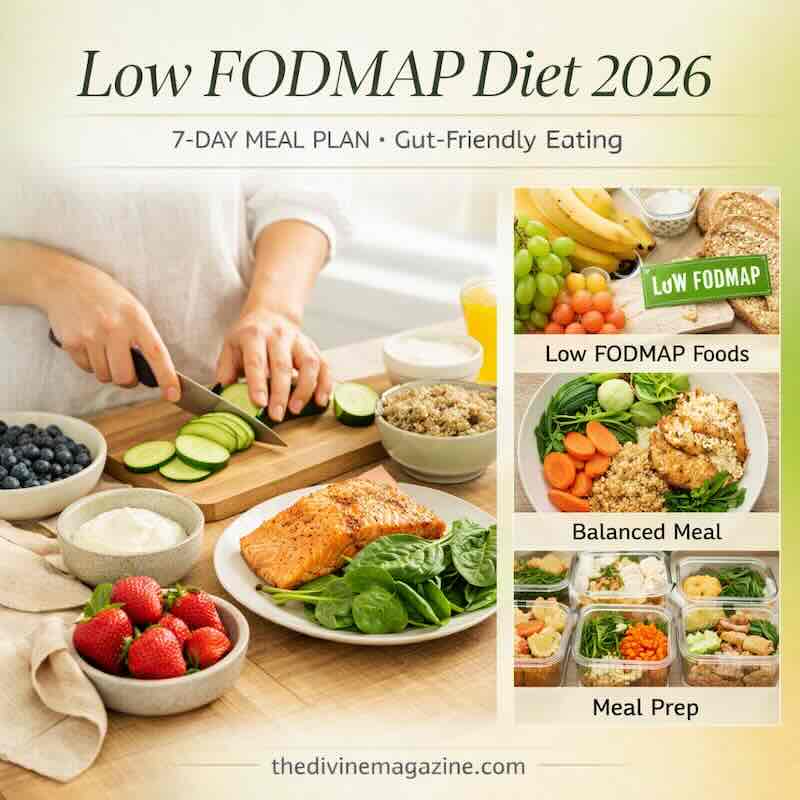
In 2026, the low FODMAP diet remains one of the most evidence-based nutrition strategies for people living with irritable bowel syndrome (IBS) and functional gut disorders. For many who regularly experience bloating, cramping, or unpredictable digestion, a structured low FODMAP approach can significantly reduce symptoms and improve quality of life. Clinical research continues to support it as a lifestyle treatment when followed under professional guidance.
- What Is FODMAP?
- Low FODMAP Foods List (2026 Overview)
- FODMAP Foods to Avoid or Limit
- 7-Day Low FODMAP Meal Plan for Beginners (2026)
- Tips to Start a FODMAP Diet Journey (2026)
- Conclusion
- FAQ: Low FODMAP Diet & IBS 2026
- 1. Is the low FODMAP diet safe to follow long-term?
- 2. Do I need a diagnosis of IBS before trying a low FODMAP diet?
- 3. Can I follow a low FODMAP diet if I’m vegetarian or vegan?
- 4. How quickly should I expect symptom relief?
- 5. Are low FODMAP and gluten-free the same thing?
- 6. Can stress and lifestyle affect my FODMAP tolerance?
By adjusting the types and amounts of carbohydrates and fibers you eat, you can actively manage digestive discomfort. Although there are still misunderstandings about what you can and cannot consume, beginning a low FODMAP diet program can feel overwhelming at first. Resources like the Monash FODMAP program and registered dietitians now make it easier to follow safely in 2026.
By removing common irritants for a short period, it may be possible to minimize inflammation and give the gut lining time to recover. Once your symptoms improve, you can use the reintroduction phase to identify which foods your body tolerates, which you can enjoy in moderation, and which are best avoided. This personalized phase is key to making the low FODMAP diet sustainable rather than restrictive.
This article will walk you through the essentials of starting a low FODMAP journey in 2026 — from what FODMAPs are, to a 7-day starter meal plan, to practical tips and FAQs. Always work with a healthcare professional to ensure your diet remains nutritionally complete.
FODMAP content varies among grains, legumes, fruits, vegetables, and dairy products. You might tolerate some foods in small portions but react when you eat larger amounts. Because of this, portion size and individual tolerance matter. Always seek the advice of a healthcare professional or FODMAP-trained dietitian to help you with the diet and ensure you are not nutrient deficient.
The main goal is to reduce foods that are highly fermentable and poorly absorbed in the small intestine, such as certain short-chain carbohydrates. This can help reduce gas, bloating, and discomfort while supporting a healthier balance of gut bacteria. However, the low FODMAP diet is not meant to be a permanent way of eating — it is a structured, time-limited protocol.
Typically, the strict phase is followed for two to six weeks and then specific foods are gradually reintroduced. This process helps decrease IBS or FGID symptoms while giving you a clearer picture of your personal triggers.
What Is FODMAP?
FODMAPs are short-chain carbohydrates (sugars) that the small intestine has difficulty digesting. FODMAP stands for Fermentable Oligosaccharides, Disaccharides, Monosaccharides, and Polyols. When these carbohydrates reach the large intestine, they can be fermented by gut bacteria, drawing water into the bowel and producing gas. For some people, this leads to uncomfortable symptoms such as:
- Cramping
- Diarrhea
- Constipation
- Abdominal bloating and gas
Low FODMAP meal delivery services now offer curated menus for breakfast, lunch, and dinner using only low FODMAP ingredients. These services can be especially helpful in the early stages when label reading and recipe planning feel overwhelming.
Low FODMAP Foods List (2026 Overview)
As long as they are eaten in appropriate portion sizes, a wide variety of foods can fit into a low FODMAP diet. Some vegetables, like garlic and onions, have a high FODMAP content, but can sometimes be enjoyed in modified forms (such as garlic-infused oil). Even low FODMAP foods can trigger symptoms if eaten in very large amounts, so serving size remains crucial. Apps like the Monash FODMAP app can help you check portions in real time.
- Fruits: Oranges, pineapple, blueberries, cantaloupe, grapes, kiwifruit, bananas, and strawberries.
- Low FODMAP veggies: Bok choy, arugula, carrots, garlic-infused oil, eggplant, lettuce, green beans, squash, sweet potato, scallions (green tops only), spinach, tomato, turnips.
- Proteins: Chicken, eggs, fish, pork, beef, and firm tofu.
- Grains: Gluten-free bread, quinoa, corn, oats, and rice.
- Dairy substitutes: Almond, soy, and lactose-free milk.
- Nuts and seeds: Almonds, chia seeds, sunflower seeds, walnuts.
- Legumes: Lentils and chickpeas (small portions).
- Sweeteners: Stevia, maple syrup.
- Spices and herbs: Basil, black pepper, cilantro, coriander, cumin, oregano, parsley, rosemary, thyme.
FODMAP Foods to Avoid or Limit
To get the full benefit of a low FODMAP diet, certain foods should be avoided or limited during the elimination phase. These foods are high in FODMAPs and may trigger symptoms for many people. Always consult your doctor or dietitian before making major changes.
- Foods with high-fructose corn syrup (HFCS)
- Chutney, HFCS-sweetened jams, agave, honey, molasses, garlic/onion powders, salsa, tomato paste
- Foods with isomalt or artificial sweeteners
- High-lactose dairy products
- Fruits: Apples, apricots, blackberries, mango, nectarines, peaches, pears, plums, watermelon
- Beans, chickpeas, soybeans (large portions)
- Cashews
7-Day Low FODMAP Meal Plan for Beginners (2026)
The meal plan below is an example for beginners who wish to start a low FODMAP routine. Adjust it based on your preferences and dietary needs. Always consult a healthcare practitioner or dietitian before making significant dietary changes.
Day 1
- Breakfast: Scrambled eggs with tomato, spinach, gluten-free bread.
- Lunch: Roasted sweet potato, steamed carrots, grilled chicken.
- Dinner: Grilled salmon over quinoa and mixed greens.
Day 2
- Breakfast: Gluten-free oatmeal with almond milk and berries.
- Lunch: Turkey and cheese sandwich (gluten-free) with cucumber.
- Dinner: Chicken fajitas with peppers and zucchini.
Day 3
- Breakfast: Yogurt parfait with fruit and gluten-free granola.
- Lunch: Chicken salad with carrots and mixed greens.
- Dinner: Stir-fried beef with vegetables and rice.
Day 4
- Breakfast: Avocado toast with poached eggs.
- Lunch: Tuna salad with mixed greens.
- Dinner: Grilled shrimp with mashed potatoes (garlic-infused oil).
Day 5
- Breakfast: Smoothie bowl with almond milk and berries.
- Lunch: Tomato soup and grilled cheese (gluten-free).
- Dinner: Baked salmon, brown rice, asparagus.
Day 6
- Breakfast: Gluten-free toast and scrambled eggs.
- Lunch: Mixed greens with grilled chicken.
- Dinner: Gluten-free spaghetti with tomato sauce.
Day 7
- Breakfast: Gluten-free pancakes and fresh fruit.
- Lunch: Chicken wrap with mixed greens.
- Dinner: Roasted potatoes and green beans.
Tips to Start a FODMAP Diet Journey (2026)
For people with digestive problems like irritable bowel syndrome, embarking on a low FODMAP journey can be life-changing. Tolerance varies from person to person, so be patient and follow the process carefully. Keeping a symptom and food diary can be especially helpful.
- Speak With a Healthcare Expert
Before making any dietary changes, consult a physician or qualified dietitian. They can help you decide if the low FODMAP diet is appropriate. For professional directories, see Academy of Nutrition and Dietetics – Find a Nutrition Expert.
- Study Up on the FODMAP Diet
Learn about FODMAP categories, common sources, and suitable alternatives. The Monash FODMAP website remains the gold standard.
- Start the Elimination Phase
For 4–6 weeks, avoid high FODMAP foods while focusing on low FODMAP options. This phase helps you assess whether your digestive discomfort improves. Avoid staying in strict elimination long-term, as it can restrict your diet unnecessarily.
- Consider Consulting With a Certified Dietitian
If you need more support, work with a certified dietitian experienced in the low FODMAP diet. Many now offer virtual consultations, making expert support more accessible in 2026.
Conclusion
If you decide to follow a low FODMAP diet, start simple. Clear your pantry of high FODMAP staples and get comfortable reading labels. Some restricted foods can be used sparingly if they appear toward the end of the ingredient list and fit within your tolerance.
You can also reduce the stress of planning and cooking by using low FODMAP delivery services or pre-planned meal kits. Above all, always consult a medical professional before making changes, and use the reintroduction phase to build a flexible, enjoyable way of eating that works for you long term.
FAQ: Low FODMAP Diet & IBS 2026
1. Is the low FODMAP diet safe to follow long-term?
The strict elimination phase is not intended for long-term use. Most experts recommend 4–6 weeks, followed by reintroduction.
2. Do I need a diagnosis of IBS before trying a low FODMAP diet?
It’s strongly recommended to get a proper medical evaluation before starting a low FODMAP diet. Many digestive conditions share similar symptoms, so rule out other causes first.
3. Can I follow a low FODMAP diet if I’m vegetarian or vegan?
Yes, but it requires careful planning to ensure adequate protein and micronutrient intake. Working with a dietitian is especially helpful for plant-based eaters.
4. How quickly should I expect symptom relief?
Many people notice improvements within 1–3 weeks, but timelines vary. If you see no change after 4–6 weeks, consult your healthcare provider.
5. Are low FODMAP and gluten-free the same thing?
No. The low FODMAP diet focuses on fermentable carbohydrates, not gluten. Some gluten-free foods are high FODMAP, and some gluten-containing foods are low FODMAP.
6. Can stress and lifestyle affect my FODMAP tolerance?
Yes. Stress, poor sleep, and lack of movement can all influence gut sensitivity. Combining diet changes with lifestyle improvements often leads to better outcomes.