






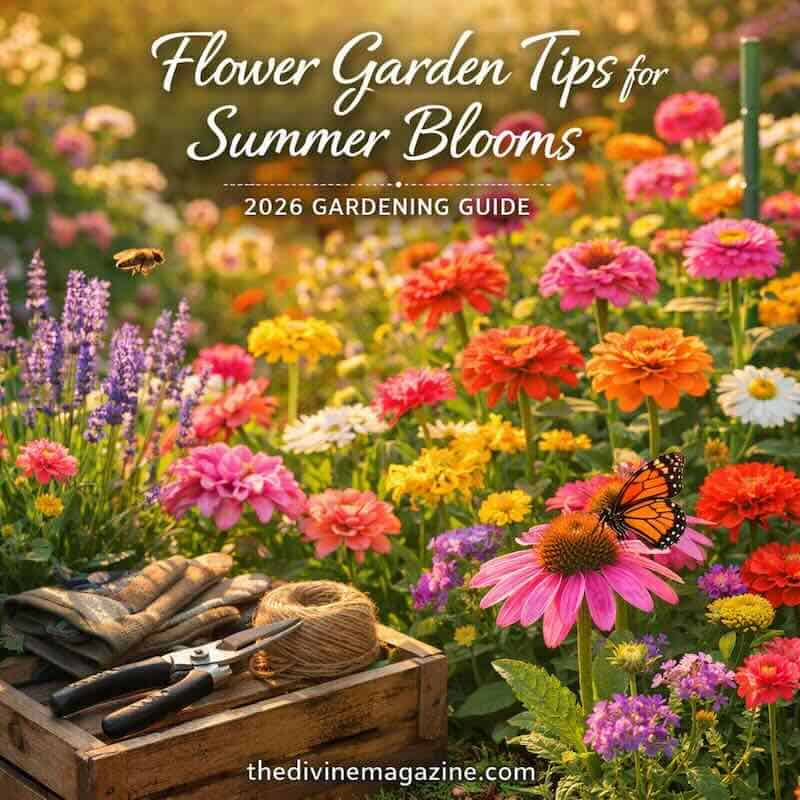

In 2026, flower gardening continues to blend sustainability, biodiversity, and design aesthetics. A beautiful garden doesn’t just happen — it takes planning, care, and a touch of creativity. With the right approach, your flowers can deliver spectacular colors and fragrances all season long while supporting pollinators and eco-friendly practices.
Eight Tips for a Thriving Flower Garden in 2026
1. Choose the Right Flowers for Continuous Blooms
To enjoy vibrant blooms all summer, select a mix of flowers that bloom at different times. This ensures your garden stays colorful from spring through autumn. Check the Missouri Botanical Gardens bloom calendar for timing, and explore Royal Horticultural Society’s flower guide for seasonal combinations.
2. Give Sun-Loving Plants Plenty of Sun
Most flowering plants thrive in full sunlight. Observe your garden throughout the day to identify sunny and shaded areas before planting. Use a simple sketch to mark zones of full sun, partial shade, and full shade. For detailed sunlight mapping, see Garden Design’s sunlight guide.
3. Bring on the Pollinators
Pollinators are essential for healthy gardens. Bees and butterflies help flowers reproduce and maintain biodiversity. Attract them with plants like salvias, lavender, and poppies. For more pollinator-friendly ideas, visit Pollinator Partnership’s planting guides and National Wildlife Federation’s Garden for Wildlife.
4. Fertilize Roses with a Banana
Roses need consistent nutrients to flourish. In addition to rose-specific fertilizer, banana peels provide potassium and calcium that strengthen stems and improve disease resistance. Bury a peel near the roots and cover with soil. For more organic fertilizing ideas, see Gardening Know How’s banana peel guide.
5. Give Heavy Flowers Some Support
Large blooms like peonies and dahlias often need structural support. Use bamboo stakes, metal cages, or twine ties early in the season to prevent drooping. For inspiration, browse Gardener’s Supply plant supports and The Spruce’s staking guide.
6. Deadhead Spent Blooms
Removing faded flowers encourages new growth and keeps plants tidy. Pinch or cut dead blooms just above the highest healthy leaf. Most flowers benefit from deadheading every few days. For technique visuals, check The Old Farmer’s Almanac.
7. Mulch Your Flower Plants
Mulch helps retain moisture, suppress weeds, and regulate soil temperature. Apply about two inches around each plant base. Organic mulches like bark chips or compost improve soil health over time. Learn more at EPA’s composting guide.
8. Water Them Right
Proper watering is crucial. Thick-stemmed plants store water longer, while delicate ones need frequent hydration. Check soil moisture by inserting your finger about an inch deep — if it’s damp, wait before watering. Avoid overwatering, the most common cause of early plant death. For smart irrigation, explore Rain Bird’s home watering systems.
Conclusion
Creating a flower garden in 2026 is about harmony — between color, care, and sustainability. With thoughtful planning, proper sunlight, and eco-friendly practices, your garden can bloom beautifully all season long. Whether you’re nurturing roses or wildflowers, each bloom adds life, fragrance, and joy to your outdoor space.
FAQ
1. What flowers bloom longest in summer?
Geraniums, zinnias, and marigolds offer extended bloom periods and thrive in full sun.
2. How often should I water my garden?
Most gardens need deep watering two to three times per week, depending on soil and climate.
3. What’s the best mulch for flowers?
Organic bark or compost mulch improves soil health and moisture retention.
4. How can I attract more pollinators?
Plant native species and avoid pesticides. Bees and butterflies prefer nectar-rich flowers like lavender and salvia.
5. When should I start planting?
Spring is ideal, but in mild climates, early autumn planting ensures strong root development for next year’s blooms.