






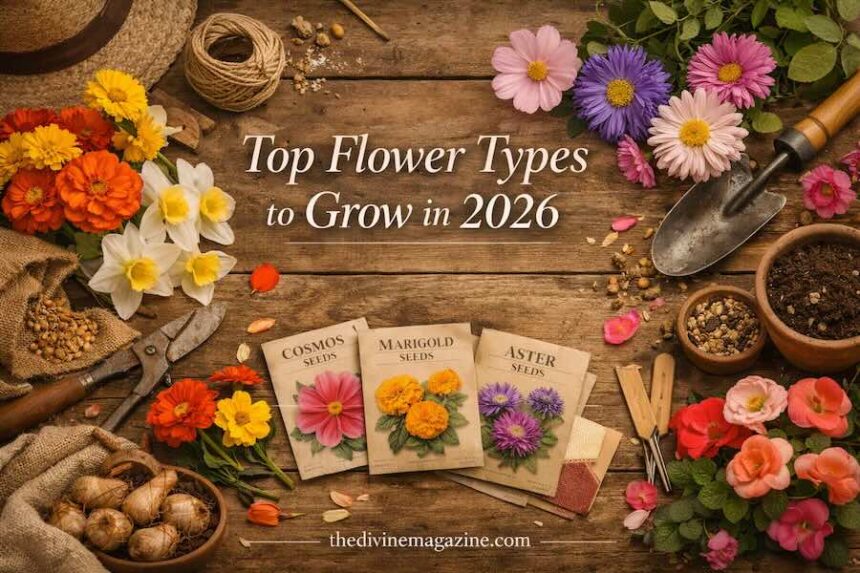

Discover the most popular flowers to grow in 2026 — from winter bloomers to vibrant summer blossoms that bring color and life to your garden.
In this article, you’ll explore the most well-known types of flowers — including those that bloom in winter, flowering hedges, shrubs, and trees. Whether you’re a beginner or an experienced gardener, these selections will help you create a garden that flourishes all year round. For more inspiration, visit Garden Design’s flower guide and Better Homes & Gardens’ plant dictionary.
There are thousands of flower varieties in every size and color imaginable. Annuals bloom in spring and summer, offering vibrant shades of white, red, blue, pink, orange, and yellow. Perennials return year after year, producing stunning blooms that define the seasons. For expert planting tips, check Royal Horticultural Society’s flower guide.
Bulb flowers like tulips and lilies add bursts of color in spring and summer, while orchids, succulents, and flowering shrubs ensure year-round beauty. By mixing different types of flowers, you can enjoy continuous blooms and a dynamic garden landscape throughout 2026.
Growing a variety of flowers also means you’ll always have fresh blooms to brighten your home. Indoor orchids, for example, thrive in controlled environments and produce delicate flowers in a range of colors. Succulents and cacti, though less frequent bloomers, surprise with small, intricate flowers that contrast beautifully with their thick green leaves.
Marigolds
Marigolds are beloved worldwide for their cheerful yellow and orange petals. These summer bloomers from the Calendula family thrive in full sun and well-drained soil. Their layered petals create a lush, textured appearance that adds warmth and vibrancy to any garden. For more on marigold care, see The Old Farmer’s Almanac.
Daffodils
Daffodils, with their trumpet-shaped blooms in yellow or white, are among the easiest flowers to grow. Plant bulbs in autumn and enjoy their return each spring. They thrive in full sun and slightly acidic, well-drained soil. Once established, daffodils require minimal care and will bloom year after year. Learn more at Gardener’s World.
Cosmos
Cosmos are easy to grow and bloom abundantly, attracting beneficial insects like green lacewings that help control garden pests. Choose varieties such as ‘Cosmic Orange’ or ‘Purity White’ for a vibrant display. These flowers thrive in full sun and poor soil, making them ideal for low-maintenance gardens.
Snapdragons
Snapdragons produce tall spikes of colorful blooms that resemble dragon mouths. Though technically perennials, they’re often grown as annuals in cooler climates. Plant them in full sun and well-drained soil for a dazzling summer display. Their wide range of colors makes them perfect for borders and containers.
Aster
Asters are hardy perennials that bloom from late summer into fall, offering shades of purple, pink, and white. They attract pollinators like Monarch butterflies and provide color long after other flowers fade. Asters thrive in full sun and moist, well-drained soil. For butterfly-friendly gardening tips, visit National Wildlife Federation’s Garden for Wildlife.
Nasturtium
Nasturtiums are vibrant, edible flowers that prefer cooler temperatures and bloom well into autumn. They deter pests like squash bugs and aphids, making them a natural companion plant. Their seeds are easy to collect for replanting. Scarify seeds before sowing to improve germination. For edible flower recipes, explore BBC Good Food’s edible flower guide.
Geraniums
Geraniums are summer favorites known for their wide range of colors — red, pink, purple, orange, and white. They thrive in most soil types and bloom from early summer through late autumn. In warmer climates, they can even be grown as perennials. Their five-petaled flowers and veined leaves add classic charm to any garden.
Impatiens
Impatiens are shade-loving annuals that can also thrive indoors. Keep temperatures above 50°F (10°C) and provide bright, indirect light. Morning sunlight helps encourage blooms. You can use metal buildings or garden sheds to protect them from harsh sunlight. For indoor plant care, see The Sill’s plant care guide.
Red Leaf Begonia
Red leaf begonias thrive in both sun and shade, making them versatile additions to any garden. Their waxy, beet-colored leaves and pink or white blooms appear all summer long. Plant them under trees or on shaded patios for filtered sunlight. Feed every two weeks for continuous flowering. For begonia care tips, visit Gardening Know How.
Conclusion
In 2026, cultivating a diverse flower garden is easier than ever. By combining annuals, perennials, and indoor varieties, you can enjoy blooms year-round. Whether you prefer the bold hues of marigolds or the delicate charm of daffodils, each flower adds beauty and balance to your home environment. Gardening not only enhances your outdoor space but also promotes relaxation and creativity — a perfect reflection of modern living.
To explore more about sustainable gardening and seasonal blooms, check Gardenista and Country Living’s gardening section.
FAQ: Flower Gardening in 2026
Q: What flowers bloom best in 2026’s changing climate?
A: Climate‑resilient flowers like marigolds, cosmos, and nasturtiums thrive in warmer conditions and require minimal maintenance. For cooler regions, daffodils and asters remain reliable bloomers that adapt well to shifting seasonal patterns.
- Marigolds
- Daffodils
- Cosmos
- Snapdragons
- Aster
- Nasturtium
- Geraniums
- Impatiens
- Red Leaf Begonia
- Conclusion
- FAQ: Flower Gardening in 2026
- Q: What flowers bloom best in 2026’s changing climate?
- Q: Which flowers are easiest for beginners to grow?
- Q: How can I keep my garden blooming year‑round?
- Q: What flowers attract pollinators and beneficial insects?
- Q: How do I protect delicate flowers from harsh sunlight?
- Q: What are the top flower trends for 2026?
Q: Which flowers are easiest for beginners to grow?
A: Daffodils, marigolds, and geraniums are ideal for beginners. They’re hardy, low‑maintenance, and bloom consistently with basic care. For indoor gardeners, impatiens and orchids are excellent starter options.
Q: How can I keep my garden blooming year‑round?
A: Combine seasonal varieties — plant spring bulbs like tulips and daffodils, summer annuals like cosmos and snapdragons, and fall perennials like asters. Add indoor flowering plants such as orchids or begonias for winter color.
Q: What flowers attract pollinators and beneficial insects?
A: Cosmos, asters, and nasturtiums attract bees, butterflies, and lacewings. These pollinators help maintain ecological balance and improve plant health. For more eco‑friendly gardening tips, visit National Wildlife Federation’s Garden for Wildlife.
Q: How do I protect delicate flowers from harsh sunlight?
A: Use shade structures or garden sheds like metal buildings to filter sunlight. Alternatively, plant shade‑tolerant species such as impatiens and begonias under trees or covered patios.
Q: What are the top flower trends for 2026?
A: Sustainable gardening and native blooms are leading trends. Expect to see drought‑tolerant species, pollinator‑friendly plants, and vibrant color palettes inspired by natural landscapes. Explore Garden Design’s 2026 trends for more ideas.
Grow with intention — your 2026 garden can be both beautiful and sustainable.