






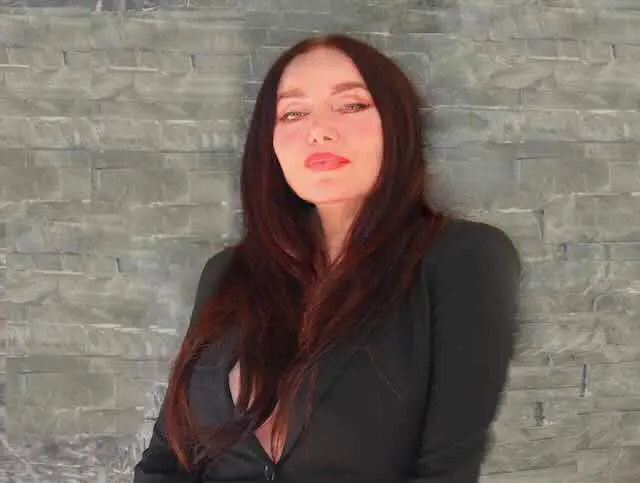
From the smoke-filled rock clubs of 90s Toronto to the sun-drenched, neon-lit studios of Los Angeles, Betty Moon has never played by anyone’s rules but her own. A rare breed of artist who successfully pivoted from major label darling to a fiercely independent mogul, Moon has spent decades defying genres—blending the raw edges of alternative rock with the pulse of electropop and the soul of a veteran songwriter.
Now, five years after the cosmic exploration of Cosmicoma, she is stepping back into the light with her most vulnerable and electric work to date. Her new EP, Strangely Beautiful (arriving April 17), isn’t just a return to form; it’s a total reclamation of her legacy. Led by the sultry, high-voltage anthem “Want Me To,” the project finds Moon turning inward, trading her armor for emotional honesty without losing an ounce of the volume that made her a legend.
The Evolution of Sound
Q: Strangely Beautiful is your first original release since 2021’s Cosmicoma. How has your creative process or your perspective on songwriting changed in those five years?
Betty Moon: Honestly, I don’t think my core creative instinct has changed, but my perspective has definitely evolved. I’ve always been someone who creates in waves, capturing ideas whether I’m at the piano, on a guitar, or jumping into Pro Tools, but over the past few years I’ve become a lot more intentional about how I shape those ideas into finished songs. After Cosmicoma, I spent a lot of time writing, experimenting, and just living life a bit more, which naturally fed into the music. I’ve learned not to overthink things as much, and I just trust that initial spark when a song comes together organically. Some of the best tracks still come together really naturally for me, and I’ve leaned into that more instead of trying to force perfection.
I’ve also embraced the balance between analog and digital a lot more in the studio, using whatever tools help bring the song to life without being too precious about the process. At the end of the day, I still believe a song is never truly “finished,” but I’ve gotten better at knowing when to hit save, let it go, and move on. The process is a bit more refined now, but the heart of it is still the same—I just follow the vibe, trust the moment, and make something that feels real.
The “Sultry” Lead Single
Q: “Want Me To” is described as a high-voltage anthem. What was the specific spark—be it a feeling, a riff, or a lyric—that made you realize this was the right track to lead the new EP?
Betty Moon: “Want Me To” really came from a vibe first, that kind of raw, confident energy that just hits you and doesn’t let go. I remember locking into a groove early on and thinking, “Okay, this feels different… this song feels like it has its own attitude.” Sometimes it starts with a lyric, sometimes a riff, but with this one it was more about the feeling of control and tension in the track. It had that push and pull, that sultry edge, and I knew pretty quickly it had the kind of energy that could lead a project. It’s bold, a little dangerous, and it doesn’t apologize, which is exactly the kind of statement I wanted to make coming into this new chapter.
As I kept building it out in my studio, layering instruments and shaping the production with my co-writer, it just kept elevating. And that’s usually my sign—when a track continues to reveal new layers without me forcing it, that’s when I know it’s something special. It felt like a natural front-runner for the EP because it sets the tone right away and pulls you into the world of the record.
Creative Independence
Q: You’ve been a fearless independent force for years through Evolver Music. In an era where the music industry is constantly shifting, what is the most rewarding part of owning your narrative and your masters in 2026?
Betty Moon: Owning my narrative and my masters has honestly been one of the most empowering parts of my career. The industry is always shifting—the trends, platforms, and the way people consume music—but having that control keeps me grounded in who I am as an artist. The most rewarding part is the freedom. I get to create what I want, when I want, and how I want, without waiting on permission or trying to fit into someone else’s vision. Whether that means dropping singles, building an EP, experimenting with different sounds, or even revisiting and reimagining older material, it’s all on my terms.
It also makes the wins feel that much more meaningful. When a song connects, when fans show up, when streams grow or a track gets placed somewhere, I know it came from a very real, hands-on place. I’ve always believed in understanding the business side just as much as the creative, and owning my masters is a huge part of that. At the end of the day, it’s about longevity. This way, I’m not just part of the system; I’m building something that lasts, both creatively and financially.
The Art of the Cover
Q: You included a cover of Portugal. The Man’s “Live in the Moment” on this EP. What drew you to that specific song, and how did you “Betty Moon-ify” it to fit the vibe of the project?
Betty Moon: I’ve always loved doing covers that actually mean something to me, and “Live in the Moment” was one of those tracks that just stuck. There’s something about the message and the groove that felt really relatable but also open enough to reinterpret in my own way. Plus, the song is flat-out catchy; it’s an ear worm for sure. When I choose a cover, I’m not trying to recreate the original. I want to find what connects with me and then rebuild it through my own lens.
With this one, it was about leaning into the mood and giving it a bit more edge and attitude to match the overall vibe of the EP. We brought it into my world sonically—a little more guitar driven, a little darker, a little more sultry—and we played around with the dynamics so it feels like it lives alongside the original tracks instead of standing apart from them. That’s always the goal, to make it feel cohesive, like it belongs to the same story.
Reflective Lyricism
Q: Was there a specific track on this record that felt particularly difficult—or perhaps cathartic—to write?
Betty Moon: There’s always at least one track on every project that hits a little deeper, and on this EP there were definitely moments where I had to sit with some real emotions to get it right. I tend to pull from personal experiences, whether it’s love, loss, or just navigating life, and sometimes that means revisiting things that aren’t always easy. But I’ve learned that those are usually the songs that connect the most. There’s something really powerful about leaning into that vulnerability instead of avoiding it. I wouldn’t say it was difficult in a negative way, though. It was more cathartic. Once I got into the flow, it felt like I was just letting it out in a very honest, unfiltered way.
Sonic Textures
Q: Were there any new instruments or production techniques you experimented with for the first time?
Betty Moon: I’m always experimenting in the studio; that’s a big part of keeping things exciting for me. With Strangely Beautiful, I definitely leaned a bit deeper into blending digital and analog elements in a way that felt more seamless than before. I’ve been using a lot more plugins and in-the-box production tools alongside tracking real guitars, bass, and drums. I love having that flexibility where I can capture something raw and then reshape it later if I want to. There were also moments where I started building tracks from more of a production standpoint first, rather than just writing on guitar or piano. Starting with a beat, a texture, or even just a sonic mood and then layering instruments on top of that was something I explored more on this record.
From Toronto to LA
Q: How do the energies of Toronto and LA collaborate within your current sound?
Betty Moon: I think both cities are a huge part of my DNA as an artist, just in very different ways. Toronto in the 90s gave me that raw, alternative foundation. It was all about bands, attitude, and carving out your identity in a scene that felt really authentic and a little gritty. That energy still lives in my love for guitar-driven music and that unapologetic edge. Los Angeles, on the other hand, opened things up for me creatively. There’s a different kind of freedom here, more diversity in sound, more access to technology and production, and just this overall mindset of pushing boundaries. I don’t see them as competing as much as collaborating. Toronto gave me the roots, LA gave me the wings.
The Visual Element
Q: Do you write songs with a “cinematic” lens in mind, or does that atmospheric quality happen naturally?
Betty Moon: I think the cinematic side of my music happens pretty naturally, but I’d be lying if I said I’m not aware of it while I’m creating. Having my songs placed in film and TV over the years definitely shapes how I consider the mood, space, and dynamics of each song. When I’m writing or producing, I’m always visualizing something. It might not be a specific scene, but I’m thinking about how a track feels, what kind of environment it lives in, and how it moves emotionally from start to finish. That naturally lends itself to something more atmospheric and cinematic.
The Title’s Meaning
Q: Does “Strangely Beautiful” refer to the world around us right now, or is it more of an internal reflection?
Betty Moon: Strangely Beautiful really lives in both worlds for me. It’s definitely a reflection of what’s going on around us—there’s a lot of chaos, contrast, and unpredictability in the world right now, but there’s also something oddly inspiring about that if you choose to see it that way. At the same time, it’s very personal. It speaks to growth, change, and the complexities of reinventing yourself over and over again, both as an artist and as a person. Not everything about that process is clean or comfortable, but there’s a certain beauty in the evolution, even in the messy parts.
The Vinyl Experience
Q: Why is it important to you that fans have a physical, tactile version of these songs?
Betty Moon: Vinyl just makes the music feel more intentional, plus it’s great to hold a physical version of the final product. I love that it brings back that tactile connection to music. You can hold it, see the artwork, and engage with it in a deeper way. It’s just a different kind of connection that streaming can’t fully replace, and it’ll look great in your record collection, of course.