




Artist Spotlight
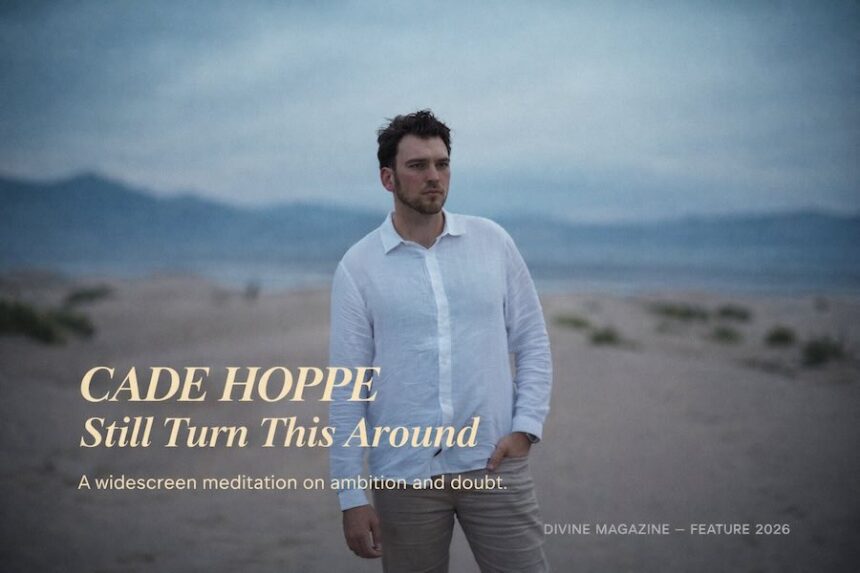
Cade Hoppe
Indie‑Pop / Cinematic Alt‑Pop
Los Angeles, CA (via New York City)
“Still Turn This Around” (New Single)
FEATURE 2026
Entirely self‑produced and emotionally unguarded, Cade Hoppe returns with “Still Turn This Around”—a cinematic meditation on ambition, doubt, and the quiet resilience
Indie‑pop singer, songwriter, and producer Cade Hoppe returns with “Still Turn This Around,” a sweeping, slow‑burn confession that captures the quiet ache of chasing a dream that refuses to let go. Entirely self‑produced and shaped over several years, the track unfolds like a late‑night monologue—equal parts ambition, doubt, and the stubborn hope that forward motion still counts, even when the destination is unclear. As he steps into the world of his forthcoming album Safer at a Distance, Hoppe examines the emotional cost of holding onto a future that never stops shifting, offering a cinematic portrait of an artist caught between who he was, who he is, and who he’s still trying to become.
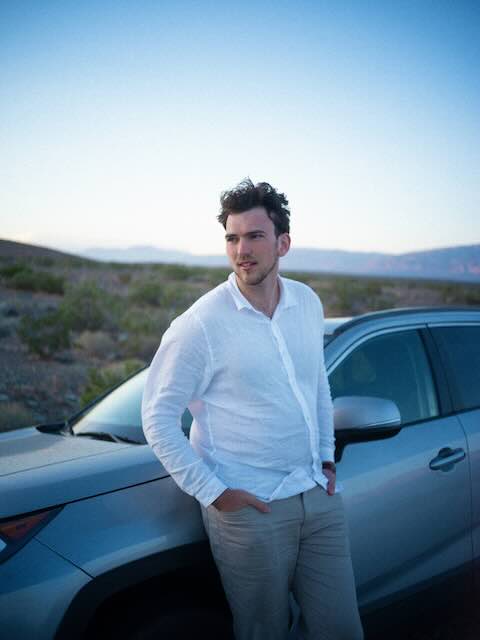
“Still Turn This Around” feels like a conversation with yourself at a crossroads. What pushed this song from idea to something you needed to finish?
Anytime a song feels intensely true, it begs to be finished. But the rawness can be daunting because you want to do it justice and get it right. Like most songs that I end up finishing, I knew I had something in the first few lines.
You’ve mentioned the song was written and rewritten over several years. What changed the most between the earliest version and the one that made the album?
I never actually wrote and rewrote full versions of the song, it was more like slowly chipping away. Two steps forward, one step back. Like sculpting something from a huge block and never wanting to chip too much off at once. Adjustments and readjustments. And it was pretty much written chronologically, so the last pieces to fall into place were the last sections of the song. The funniest lyric to change was “I’m here, but I’m 25 now.” It started as 23 because that’s how old I was when I first wrote it. Then I changed it to 25 when I was 24, anticipating that it probably wouldn’t be released until I was 25. And then it didn’t end up coming out until I was 26, although 26 wouldn’t have sounded as good anyway.
The line about “forward momentum + paralyzing indecision” hits hard. How do you personally navigate that contradiction in your creative life?
I’m a big believer in showing up. You have to have the discipline to show up every day, even if you don’t have it that day. And that’s kind of what I meant when I said that—when you do the work to get the momentum going, you can have days where you just let it carry you. When it comes to making music my profession and continuing to pursue it, I don’t ever really think about turning back completely, it’s more of an intrusive thought. It’s like driving on the road and thinking about how easy it would be to turn into oncoming traffic. You would never actually do it, but it’s crazy to think how easy it would be to change everything in a split second.Hopefully that is a universal experience, but I’m sure I’m also a psychopath.
The track feels cinematic and expansive, yet the subject matter is deeply internal. How did you balance emotional intimacy with that wide‑open production style?
Most of the time, I’m just picking at whatever loose thread I find and following my creative intuition. So it’s not always super conscious until I’m picking up the pieces later and editing. But I do really enjoy the dichotomy of intimate lyrics and an expansive production because then it hits even harder when they align and both get really intimate or vice versa. And ultimately, I think some of the most personal emotions are the heaviest and it makes the most sense to convey them in a more expansive way.
As a self‑producer, what was the hardest emotional truth to translate sonically in this track?
To me, this production has a sort of grounded chaos that was really important to dial in. It’s ever-evolving, expanding and contracting around that continuous kick/snare loop with a thick bass that holds it all together. There’s a desperation, but it’s a quiet one because it’s all happening beneath the surface. A lot of people might describe this song as “chill” if they listened passively, but it’s more intense to me and I hope people can hear that too, even if it’s more subconsciously.
Your sound has always leaned atmospheric, but this single feels especially immersive. Were there any new production techniques or influences that shaped it?
Because I was opening this production up every so often over the course of a few years, I tended to add new elements as I got new gear for the studio. The original piano and drum loop was inspired by my purchase of an upright piano, so it was the first time in years I had unlimited access to a real piano. The other big purchase that influenced the production was my Minimoog Model D a year or so later. But this was my experimental baby for a few years that I was trying new production stuff out on.
You’ve described the album as an exploration of your evolving relationship with ambition. What part of that relationship felt the most uncomfortable to confront?
I was making this record from ages 23 to 26, so those are generally very transitional years and I especially found that to be true, as I personally experienced a lot of change. I graduated college, moved in with my girlfriend, made two albums with her, trained and ran the New York marathon, moved from Manhattan to Brooklyn and then to LA, quit my service industry job to become a full-time producer, and got engaged—all in the time it took me to start and finish this album. So I’m ambitious as ever and clearly keeping myself busy. But the way my relationship has evolved with ambition is mostly in the ways I’m able to be ambitious. I’m constantly strategizing and re-strategizing how to keep making my music and getting it out to people when so much in my life is changing. Especially because I never want to be someone that puts my entire life on hold waiting for my breakthrough moment. I welcome the change and it’s inspired a lot of songs.
The record captures an artist searching for meaning mid‑process. How do you keep creating when you don’t yet have the answers?
If I had the answers, I’m not sure I would be much of a songwriter. I’m either on a quest to find answers or to cope with not having any, and music is my vehicle for both.
Do you feel “safer at a distance” from the version of yourself who started making music at NYU, or does he still haunt the work in some way?
That phrase comes from another song on the record that can maybe provide more insight than I can explain, but it’s much more referring to who I am now than who I was. The full line is “We were safer at a distance/You were broken in my arms” and there’s a “careful what you wish for” sentiment to it. It’s a very strong theme across the album. Sometimes the idea of something is more romantic than the actual thing. But to answer your original question, I think every iteration of me haunts the work, including whoever I’m trying to be in the future.
Your path into music wasn’t linear—finance major, college basketball, service industry jobs. How do those earlier chapters show up in your songwriting today?
Those chapters are all a part of my story and who I am, but they also represent times in my life when I was much further away from what I wanted to be doing and who I wanted to be. I’m a lot closer now, but I still feel so far away. And well, that whole idea is more or less what “Still Turn This Around” is about. It’s not a song about being at the beginning of the road, it’s a song about being years down the road with no end in sight and the unfathomable, sinking feeling that you’re not even halfway there—that it would take less time to turn back than to keep going to your mysterious destination. So, yeah. All of my steps and missteps in my earlier chapters show up in my songwriting a lot.
After seven years in New York, you moved to Los Angeles. Has the shift in environment changed the way you write or think about your career?
It’s definitely changed my mindset about career in good and bad ways. The LA vibe is so manufactural when it comes to session culture and songwriting—at least in my experience so far. And it’s gotten pretty dark with how many people are casually turning to AI to take music creation off their hands. I despise AI in art, so I only hear these horror stories secondhand and would never let that into my studio. The big benefit career-wise has been being around so many people that have made music their career in one way or another. That has been inspiring to see and it’s been great to connect with those people. And the new environment has definitely given me new inspiration and material to write about.
You’re increasingly producing for other artists. How does stepping into someone else’s world influence the way you return to your own?
It can be simultaneously liberating and draining creatively. On the one hand, I’m able to scratch certain itches with other artists’ projects that would otherwise bleed into my project. So in that way I can be very intentional about what feels like a Cade Hoppe record versus what feels like another artist’s record. But on the other hand, I’m constantly pushing myself creatively to come up with new unique sounds and ideas, which can sometimes leave me without the energy to properly approach my own project. Especially when I’m writing a lot for other artists as part of the production process. But there’s nothing better than the euphoria of producing/writing a great song no matter how painful the process might be. So that’s why I keep showing up.
This embedded content is blocked until you allow Marketing services.
Listen Here: https://ffm.to/stillturnthisaround