







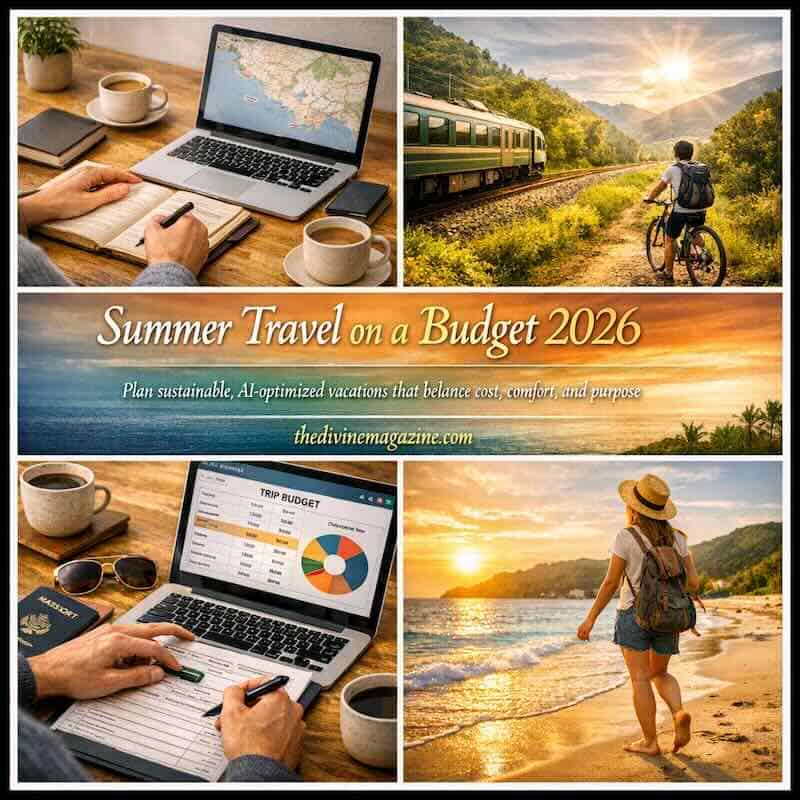
So you’ve decided on your perfect summer vacation and are ready to go? Or are you still planning your next holiday, making last-minute purchases, and looking forward to it? In 2026, the travel landscape has shifted toward more intentional, sustainable journeys. Whether you are merely setting money away for that much-needed vacation or are using AI to optimize your flights, one thing remains certain: you have to budget for vacation! Pretty obvious.
Why, you might be wondering. While some travelers are expert money handlers, the 2026 economy demands a sharper eye on “hidden” costs like dynamic carbon offsets and fluctuating digital nomad taxes. Regardless of your financial situation, a travel budget ensures your well-earned vacation is spent enjoying the scenery rather than stressing about bills. For real-time updates on currency and global costs, Numbeo remains an essential resource for 2026 travelers.
Lay Out a Budget
Divide your expenses into categories and estimate your prices realistically. In 2026, we recommend adding a 15% “inflation buffer” to account for shifting prices in popular hotspots.
Whatever kind of vacation you have scheduled, don’t skip this stage. If you’re organizing the trip on your own, consider each of the following expenses: Living quarters like Big Sky Vacation Rentals, eco-friendly transportation, local cuisine, and essential travel insurance. Don’t forget often-overlooked costs like international data roaming—though many now opt for eSIM technology—and mandatory tourist visas or sustainability fees.
Hidden Costs to Consider
Even a southern location with all-inclusive hospitality may require extra funds for the following:
- Service Tips: Cultural norms for tipping vary significantly by region.
- Dynamic Transport: Taxis or rideshare apps like Uber/Grab during peak festival hours.
- Local Experiences: Last-minute guided tours or entry to digital art museums.
- Sustainable Souvenirs: Support local artisans rather than mass-produced magnets!
Budget Hotspots for 2026
Southeast Asia: The Timeless Paradise
Southeast Asia remains the gold standard for high-value travel. Nations like Thailand, Vietnam, and Indonesia have integrated amazing digital infrastructure, making them perfect for “workations.” Whether you’re swimming in the Philippines’ glistening waters or touring historic temples in Cambodia, your dollar still goes incredibly far here.
Central and Eastern Europe: Culture Without the Crowd
Eastern Europe is the ideal place for travelers seeking rich history without Western European price tags. Nations like Hungary, Poland, and the Czech Republic offer stunning architecture and thriving nightlife. In 2026, look toward Romania and Bulgaria for even deeper savings and magnificent castles that rival the best in the world.
Central America: Eco-Adventure Hub
If you’re itching for adventure, Central America is a 2026 favorite. Costa Rica, Guatemala, and Nicaragua offer beautiful beaches and exciting outdoor activities. It’s the perfect region to spend a budget-friendly summer vacation zip-lining over treetops or exploring Mayan ruins.
The Balkans: Europe’s Last Frontier
The Balkan Peninsula is a must-see for tourists looking for “slow travel” and undiscovered treasures. Montenegro, Albania, and Bosnia & Herzegovina provide breathtaking scenery and warm hospitality without the exorbitant costs of major hubs. For more on safe navigation in these regions, see Current Travel Advisories.
Conclusion: The Smart Traveler’s Path
Budgeting for a vacation in 2026 isn’t about restricting your fun; it’s about empowering your freedom. By identifying your costs early—from your SIM card to your luxury rental—you remove the “financial noise” from your journey. Whether you choose a tropical escape or a local staycation, being financially prepared is the best way to ensure your memories are of the sights, not the receipts. So pack your bags and travel safely!
Frequently Asked Questions
Q: How much should I set aside for a “daily” budget?
A: This varies by region, but a safe 2026 average for mid-range travel is $75–$120 USD per day in Southeast Asia/Eastern Europe, and $150–$250 USD in North America/Western Europe.
Q: What is the best way to track my spending on the go?
A: Modern apps like Trabee Pocket or Wanderlog are excellent for categorizing expenses in real-time and converting currencies automatically.
Q: Are flights getting more expensive in 2026?
A: While fuel surcharges fluctuate, using tools like Google Flights to track prices over several months can help you snag “off-peak” deals that remain very affordable.