







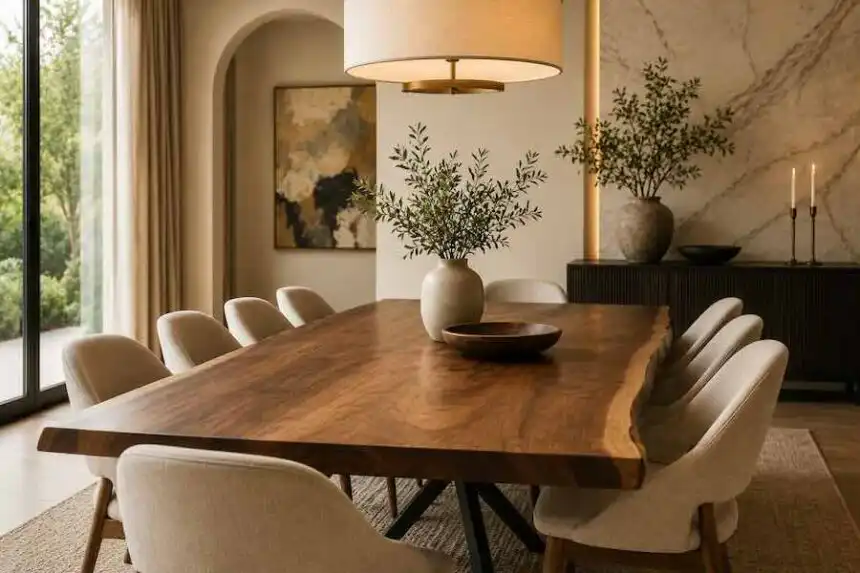
The dining table is more than a surface. It anchors the room, catches the afternoon light, carries everyday meals, and quietly sets the tone when guests arrive.
- How to Choose the Right Dining Tabletop
- Solid Wood Table Tops: Warm and Timeless
- Glass Table Tops: Light, Clean and Contemporary
- Laminate Table Tops: Practical and Versatile
- Formica Table Tops: Durable Design With Plenty of Choice
- What About Wood Veneer?
- Match the Material to the Room
- Think Beyond the Material
- A Practical Tabletop Checklist
- Conclusion
- FAQ: Choosing a Dining Tabletop
Choosing a tabletop can look simple until material, maintenance, durability, color, and proportion enter the conversation. A beautiful surface that scratches too easily may become frustrating in a busy home, while an exceptionally practical option can feel visually cold if it fights the rest of the room. The strongest choice balances both sides: how the dining room looks and how it actually lives.
How to Choose the Right Dining Tabletop
A dining room is where people gather around the table for dinners, celebrations, conversations, and slow weekend mornings. That makes durability important, but it also makes texture and atmosphere worth considering.
Start with the way the room is used. A household eating at the table every day has different requirements from someone furnishing a formal dining room used primarily for entertaining. Children, pets, direct sunlight, frequent dinner parties, and the amount of maintenance you are willing to accept should all influence the decision.
Then look at the room itself. Warm timber can soften stone floors and pale walls. Glass introduces transparency where visual space is limited. Laminate can bring color or pattern without demanding the same budget as premium natural materials. The tabletop should feel connected to its surroundings rather than added as an afterthought.
Solid Wood Table Tops: Warm and Timeless
Solid wood remains one of the most enduring choices for a dining table. Grain, knots, subtle shifts in tone, and the way the surface changes under daylight give natural timber a character that manufactured materials often try to reproduce.
Oak, maple, cherry, walnut, and birch each create a different visual effect. Oak tends to show a more pronounced grain, while maple can produce a cleaner, smoother appearance. Cherry is known for its warm character and can deepen in color as it ages. Birch offers a comparatively subtle grain that works comfortably across contemporary and traditional interiors.
One practical advantage of solid wood is repairability. Depending on the construction and finish, scratches and surface wear may be sanded and refinished rather than forcing replacement of the entire table. That makes quality timber particularly appealing when the table is expected to stay in the home for years.
The trade-off is maintenance. Wood responds to moisture, heat, sunlight, and changes in humidity, so coasters, trivets, placemats, and sensible cleaning habits can help protect the finish.
Glass Table Tops: Light, Clean and Contemporary
Glass works differently. Instead of adding visual weight, a transparent tabletop allows light and sightlines to continue through the furniture. In a compact dining room, that transparency can make a substantial table feel less dominant.
Glass can also be useful as a replacement tabletop, particularly when an existing base is worth keeping. Clear, tinted, smoked, textured, and frosted treatments provide options beyond the familiar completely transparent surface.
The material suits interiors built around clean geometry, metal, stone, or sculptural table bases. A beautiful base becomes part of the composition instead of disappearing beneath an opaque surface.
There are practical compromises. Fingerprints, dust, streaks, and crumbs are usually more visible on glass, which means the immaculate look requires regular cleaning. Safety should also be part of the purchase decision, particularly in family homes. Ask the manufacturer or retailer about the glass specification, edge treatment, thickness, installation, and intended use rather than choosing on appearance alone.
Laminate Table Tops: Practical and Versatile
Laminate is useful when practicality, variety, and price carry more weight than the character of natural timber. Modern surfaces are available in an extensive range of colors and patterns, including designs intended to resemble wood, stone, concrete, and other materials.
Importantly, laminate and wood veneer are not the same material. A veneer uses a thin layer of real wood applied to a substrate, while decorative laminate typically uses manufactured layers bonded to a core. The distinction matters because their appearance, repair options, care requirements, and construction differ.
For a dining room used heavily every day, laminate can be an appealing low-maintenance choice. It is generally straightforward to wipe clean, and the broad design selection makes it easier to coordinate a table with an existing interior.
Damage can be more difficult to disguise than it is on refinishable solid wood, particularly if an edge chips or the decorative surface is deeply scratched. Quality also varies considerably, so inspect the core, edging, joins, and finish before buying.
Formica Table Tops: Durable Design With Plenty of Choice
Formica is a brand associated with laminate surfacing rather than a separate natural tabletop material. That distinction is useful when comparing products: a table described as having a Formica surface will generally belong within the wider laminate category.
Its appeal lies in the combination of design flexibility and everyday practicality. Depending on the specific product, laminate surfaces can reproduce timber-inspired grains, muted neutrals, stone effects, deep colors, and graphic finishes without requiring the maintenance associated with the material they reference.
This makes the surface particularly useful in busy dining areas where easy cleaning matters. Still, durability should not be confused with indestructibility. Heat, sharp objects, impact, and prolonged moisture around vulnerable joints or edges can cause damage, so manufacturer care instructions remain important.
What About Wood Veneer?
Wood veneer deserves its own category because it sits neatly between the visual warmth of solid timber and the engineered construction of manufactured furniture. A thin layer of genuine wood is applied over a stable substrate, creating a natural grain surface while using considerably less solid timber.
A well-made veneer table can look refined and feel lighter than a substantial solid-wood design. It can also make certain timber finishes accessible at a different price point. The limitation is repair depth: because the visible wood layer is thin, aggressive sanding is generally not an option.
Match the Material to the Room
Material should support the architecture rather than compete with it. In a bright Scandinavian-style room with linen, pale walls, and restrained furniture, oak or another softly toned wood can add warmth without disturbing the quiet palette. A darker walnut surface introduces contrast and a more intimate mood.
Glass is effective when the table base has sculptural value or when a small room needs to retain a sense of openness. Laminate works well when color consistency, easy maintenance, or budget is the priority. Veneer occupies a comfortable middle ground for homeowners who want authentic wood grain without choosing a heavy solid-wood construction.
Think Beyond the Material
The tabletop is only one part of the dining experience. Shape, dimensions, chair clearance, lighting, acoustics, and circulation around the table can have just as much influence on whether the room feels inviting.
A beautifully proportioned table leaves enough space for people to sit comfortably without forcing everyone against a wall. Warm pendant lighting creates a softer pool of light after sunset. Textiles absorb sound. Ceramics, glassware, flowers, and candles add texture without requiring permanent design changes.
When people arrive, the table becomes a stage for everything else. Thoughtful food, drinks, and atmosphere matter more than expensive furniture. Even simple ideas for entertaining guests can change how the room feels once the chairs are filled.
A Practical Tabletop Checklist
Before buying, consider how often the table will be used, who will use it, how much cleaning you want to do, and whether scratches or natural aging will bother you. Measure the room carefully and leave comfortable circulation space around the chairs. Then compare samples in the actual dining room if possible. Wood, glass, and laminate can look dramatically different under warm evening bulbs than they do beneath showroom lighting.
Finally, inspect construction as closely as the surface. A beautiful tabletop cannot compensate for an unstable base, weak joints, poor edging, or dimensions that make dining uncomfortable.
Conclusion
There is no single best tabletop material for every dining room. Solid wood offers warmth, character, and repair potential. Glass keeps sightlines open and gives a room a crisp contemporary edge. Laminate prioritizes flexibility and practical maintenance, while wood veneer delivers genuine grain through a lighter engineered construction.
Choose according to the life happening around the table. A formal dining room may suit the depth and warmth of cherry or walnut. A compact contemporary apartment might benefit from transparent glass. A busy family dining space may call for an easy-care laminate surface. When material, scale, and daily habits align, the table feels as though it has always belonged in the room.
FAQ: Choosing a Dining Tabletop
What is the most durable material for a dining tabletop?
Durability depends on the specific product and how the table is used. Quality solid wood can last for decades and may be refinished, while high-quality laminate is attractive for everyday resistance and simple cleaning. Always compare the manufacturer’s care and performance specifications.
Is glass a good choice for a small dining room?
Yes. Because transparent glass preserves sightlines, it can make furniture appear visually lighter in a compact space. The trade-off is that fingerprints, dust, and streaks tend to remain visible, so regular cleaning is usually necessary.
Is laminate the same as wood veneer?
No. Wood veneer uses a thin layer of genuine wood over a substrate. Decorative laminate is a manufactured surface bonded to a core. Both can produce attractive tables, but their composition, maintenance, and repair possibilities are different.
Is Formica real wood?
No. Formica is a brand known for laminate surfacing. Some designs reproduce the color and grain of timber, but the decorative surface itself is not solid wood.
Which tabletop is easiest to maintain?
Laminate is often one of the simplest choices for routine cleaning, although care requirements vary by product. Glass wipes clean easily but shows marks quickly. Natural wood may require more attention to moisture, heat, spills, and the condition of its finish.