




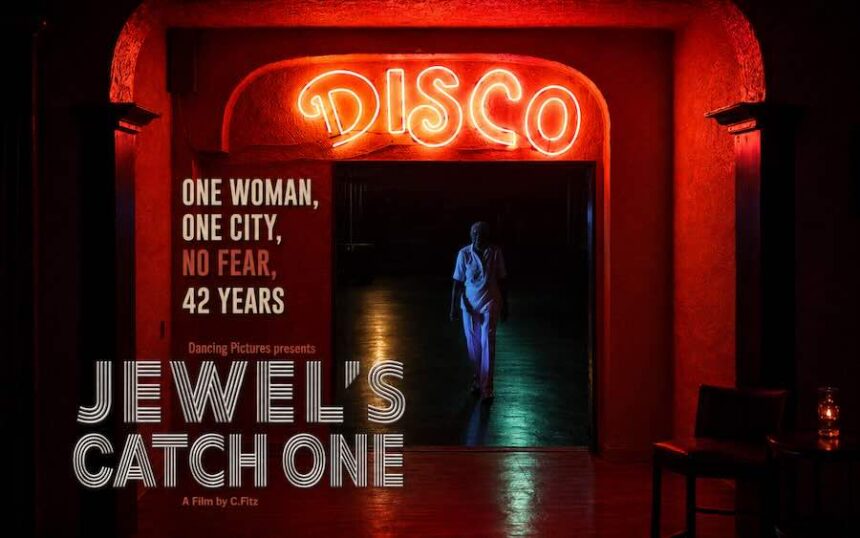
Some clubs close and become memory. Catch One became myth — and then, thanks to filmmaker C. Fitz, it became record. Jewel’s Catch One, the award-winning documentary tracing four decades of America’s oldest Black-owned disco, has returned to North American digital HD, cable, and satellite platforms including Prime Video and Apple TV, following Freestyle Digital Media’s acquisition of VOD rights from Dancing Pictures and Ramo Law. The re-release lands during Pride Month, days ahead of Juneteenth — timing that feels less like scheduling and more like intention.
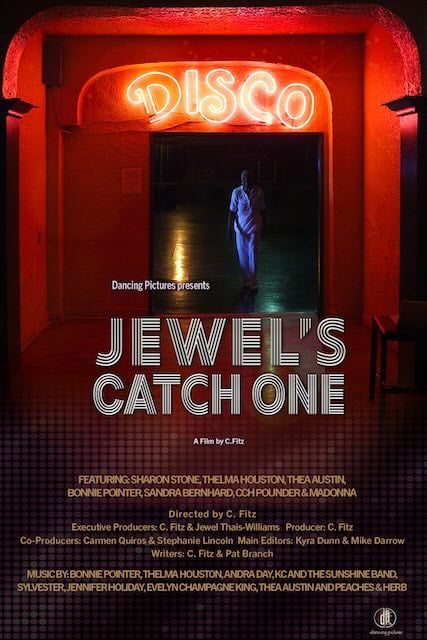
The film tells the story of Jewel Thais-Williams, the Black, LGBTQ+ trailblazer who opened Catch One on Pico and Norton and spent forty years turning a dance floor into a sanctuary — through police harassment, an arson that nearly ended it all, and the AIDS crisis, when she converted the club’s parking lot into a soup kitchen for a community the government had abandoned. C. Fitz built the film from rare archival footage and voices including Thelma Houston, Sharon Stone, Madonna, Maxine Waters, Bonnie Pointer, and Jenifer Lewis, narrated by CCH Pounder. It has since played more than 70 festivals worldwide, collecting four Best Documentary awards along the way.
We spoke with C. Fitz about archival footage that felt like Christmas morning, a ten-hour rough cut, and why Jewel’s lessons in showing up for community matter as much now as they did in 1973.
On the responsibility of preserving Catch One’s legacy for a new generation
“I felt a deep responsibility to honor a time when community wasn’t optional, it was survival,” Fitz says. “I approached the film with that urgency, wanting the visuals themselves to carry the intimacy, resilience, and joy that lived inside those walls.” Catch One, she explains, was never just a nightclub — it was a safe haven for Black and LGBTQ+ communities at a moment when that kind of space meant the difference between isolation and belonging, sometimes survival, for people who had lost their own homes elsewhere. “If even a handful of viewers walk away wanting to show up more for their own communities, to use their voice, to get involved, that’s the film doing exactly what it’s supposed to do.”
On the timing of the re-release, during Pride and just before Juneteenth
“It felt like the perfect time actually, almost like a second premiere,” Fitz says. Jewel faced down the police, her neighbors, and her own city with little financial backing — and when the club was set on fire, it took her two years of pure resilience to rebuild. Fitz sees a throughline to now: “Today again we are facing some of the worst people who only want to tear apart and burn down our culture and history.” The re-release with Freestyle, landing in Pride Month days before Juneteenth, was, in her words, “a gift to our little team who just want people to get inspired, get strong, and be a hero in your own backyard like Jewel, especially today.”
On what audiences still underestimate about Jewel’s activism
“I think what audiences still underestimate is just how much Jewel did with almost nothing,” Fitz says. Catch One was already a refuge before the AIDS crisis hit — but when it did, Jewel expanded that role dramatically, at a time when AIDS funding tended to stay in West Hollywood, in predominantly white neighborhoods, long before it reached Black and gay communities like hers. So she didn’t wait. She turned the club’s parking lot into a makeshift soup kitchen, hunted down food and medicine for people the system had abandoned, and threw drag balls that doubled as fundraisers for a community in crisis. “That’s not a footnote to the club’s legacy, it’s central to it,” Fitz says. “This was one woman stepping into a void the government left wide open.”
On the most revelatory find in the archival research
Fitz describes transferring VHS tapes from a trove of archival footage as opening “a Christmas present of exclusive, never-broadcasted cultural history gems.” The balls, in particular, stayed with her — fundraisers thrown by a community that was, in real time, getting sick and dying, and still finding the will to get dressed up, rehearse a number, and celebrate love with love. Jewel was often right there participating, not just opening her doors but standing among her own community. Fitz also points to an interview with Representative Maxine Waters, a friend and comrade of Jewel’s in the fight to save their communities during the AIDS crisis. “She explained how she learned from Jewel how dire the situation was in the Gay Black community,” Fitz says — after Jewel showed her the Catch parking lot soup kitchen, the sick she’d given a home to, and the volunteers who kept showing up.
On balancing journalism with cinematic, immersive storytelling
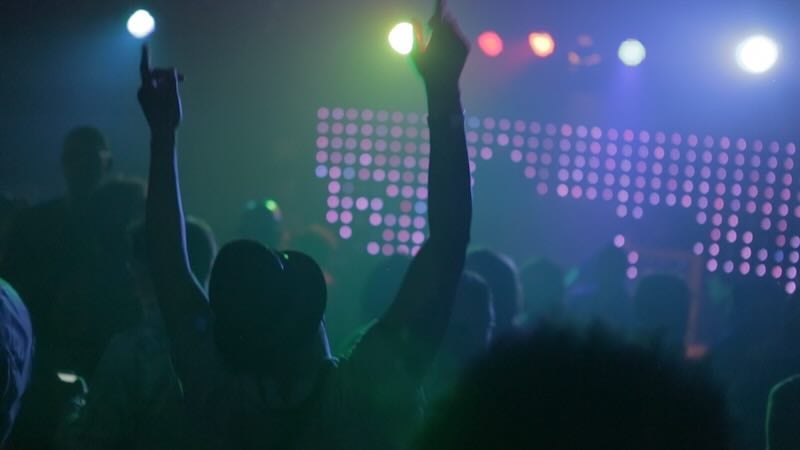
“With a ten hour rough cut at one point, I didn’t know how I would cut it down. That was super hard,” Fitz admits. The stories from Jewel, community members, and the celebrities who agreed to take part might have carried the film on their own — but she wanted connective tissue. Working with cinematographer Abe Martinez (Hunting Wives, Lincoln Lawyer), Fitz developed a recurring visual thread of dancing inside the club, letting viewers feel what it was like to be there. “This meant the audience could dance, could feel all the emotions that touched this space: death, love, joy, and community.”
On the celebrity interview that shifted her understanding of the club’s influence
“Catch One’s influence was so widespread that no single interview could capture it all,” Fitz says — but a few moments stand out. The late Bonnie Pointer describing her start performing at the Catch connects the club directly to the larger arc of music history. Thelma Houston hearing the master recording of “Don’t Leave Me This Way” played back on the Catch sound system for the first time produced a reaction, Fitz says, that “you can’t script.” Sandra Bernhard drew a through-line from the vogue balls at Catch to Madonna’s later cultural impact with Vogue, reframing how Fitz thinks about the club’s reach into the mainstream. And former patrons like Sharon Stone, who came to Catch in the ’90s to let loose away from the paparazzi, revealed what the space represented even to its celebrity regulars: freedom.
On the moment that sparked her commitment to telling Jewel’s story
Fitz was volunteering with the LGBTQ+ Center, directing shorts honoring key members of the queer community, when one year the subject was Jewel. “In researching her I was so blown away about all she had built, but there just wasn’t enough about her, either in print or on video,” she says. “I felt it was my duty as a filmmaker and part of the LGBTQ+ community to tell her story as big as I could.” The first day they met, Fitz told Jewel she needed a documentary. Jewel told her she could do it if she wanted to. “That was the beginning.”
On which barriers Catch One broke still persist today
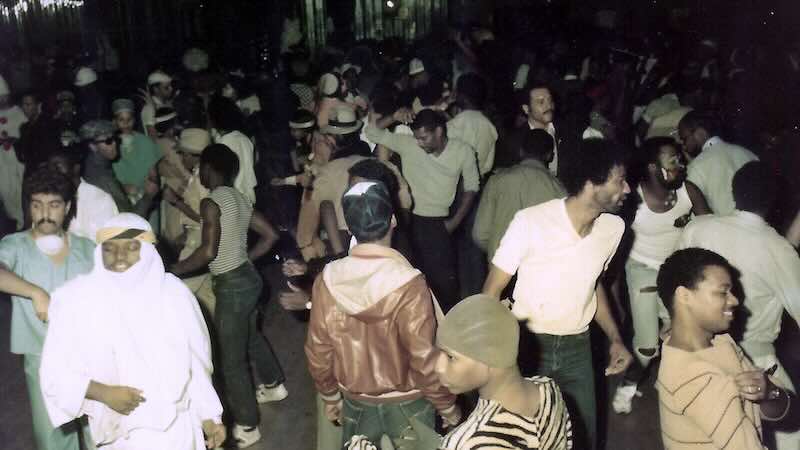
In the club’s heyday, when many queer activities were criminalized in Los Angeles, police regularly hauled Jewel’s patrons to jail, often with the express purpose of humiliating them and forcibly outing them to family and employers — harassment designed to make people afraid to simply exist in community with one another. “We see that same bigotry resurface today, just wearing a different uniform,” Fitz says, pointing to immigration enforcement targeting local communities and a wave of rhetoric aimed at purging schools, libraries, and museums of cultural history. “The names and the agencies change, but the underlying instinct doesn’t: control who gets to gather safely, and punish anyone who refuses to hide.”
On what more than 70 festival screenings taught her about the film
Jewel joined Fitz at many of those screenings — standing ovations, tearful and joyful Q&As, “a warm, fabulous spectacle to see her get her flowers,” as Fitz puts it. The circuit convinced the team to keep pushing for wider distribution. “I wanted to tell the world this history, and I think the festival circuit showed us we were on the right track,” Fitz says, thanking every viewer who came out to a screening along the way.
On curating music and fashion to match the era and the emotion
Fitz wanted music that would honor both the artists in the film and the more than forty years Jewel held space at Pico and Norton. It was, she says, one of the hardest, most time-consuming, nail-biting parts of the process — but it also led the film to London, where the music choices earned an invitation to screen at the BFI London Film Festival. “I hold onto that when I look back at all the obstacles in getting there,” Fitz says, crediting music producer Sean Fernald.
On what she hopes viewers take from the fragility of spaces like Catch One
“Let’s honor our past by never forgetting,” Fitz says. “Let’s take the lessons Jewel showed us by showing up, never letting go of the needy, and being a mighty force against the negative.” Her closing thought doubles as an invitation: “You don’t need a nightclub to be kind, to stay open for all, or care enough to reach out. All Jewel lessons. We need more of that today especially, so find your space and invite someone, or many, to join you.”
Where to Watch
Jewel’s Catch One is now streaming on Apple TV and Prime Video, and available across North American digital HD, cable, and satellite platforms via Freestyle Digital Media.
Conclusion
Forty years compressed into ninety-odd minutes will always lose something in translation. What C. Fitz’s film keeps is the pulse — the sense that Catch One was never just a building on Pico and Norton, but a practice: showing up, feeding people, dancing anyway. That the re-release arrives during Pride Month, days before Juneteenth, only sharpens the point. History like this doesn’t stay preserved on its own. It asks something of whoever’s watching.
FAQ
What is Jewel’s Catch One about?
The documentary traces the forty-year history of Catch One, America’s oldest Black-owned disco, and the life of its founder, Jewel Thais-Williams, who built the Los Angeles club into a safe haven for Black and LGBTQ+ communities, including during the AIDS crisis.
Who directed Jewel’s Catch One?
The film was directed by C. Fitz, written by Fitz and Pat Branch, and narrated by CCH Pounder.
Where can I watch Jewel’s Catch One?
The film is available on Apple TV and Prime Video, and across North American digital HD, cable, and satellite platforms following Freestyle Digital Media’s acquisition of VOD rights.
Who appears in the documentary?
The film features Thelma Houston, Sharon Stone, Madonna, Evelyn “Champagne” King, Thea Austin, Sandra Bernhard, Jenifer Lewis, Representative Maxine Waters, Bonnie Pointer, Jennifer Holliday, Janice Robinson, Al Von, Rue Thais-Williams, and Jewel Thais-Williams herself.
Has Jewel’s Catch One won any awards?
Yes. The film has won four Best Documentary awards and a Jury Award, earned a spot on Palm Springs International Film Festival’s “Best of Fest” list, and screened at more than 70 festivals worldwide, including BFI London and Inside Out Toronto.