SPOTLIGHT
MAGAZINE
Featured Artist
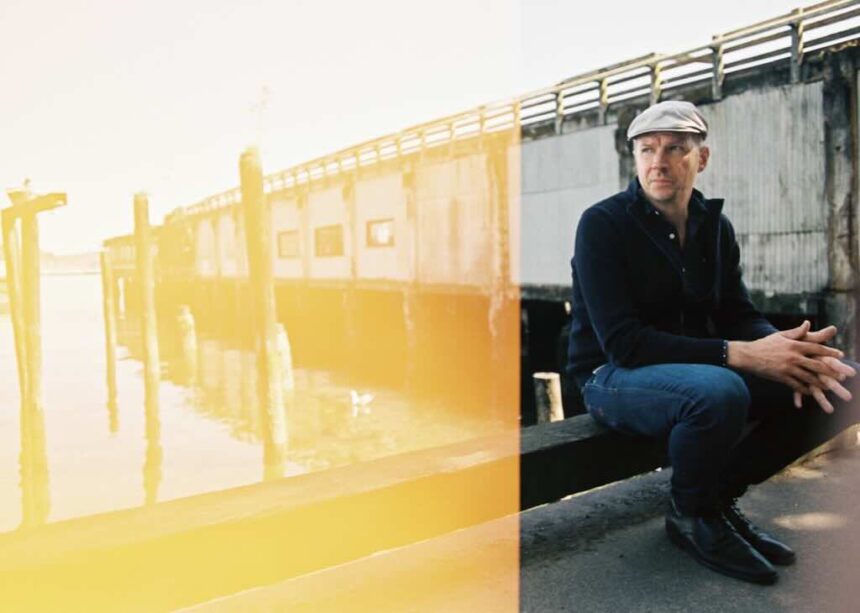
KYE ALFRED HILLIG
Tacoma songwriter Kye Alfred Hillig turns mortality, grief, faith, and stubborn hope into Widowmaker Express, his tenth solo album. Produced by longtime collaborator Daniel G. Harmann, the record moves through ghostly strings, lap steel, piano, and wide-open folk-rock arrangements while Hillig confronts what he calls “a wrestling match with God, a breakup letter to the universe.”
WORDS — DIVINE MAGAZINE · 2026
Tacoma songwriter Kye Alfred Hillig returns with Widowmaker Express, a record shaped by mortality, heartbreak, faith, and the peculiar weight of Pacific Northwest skies. Produced by longtime friend and collaborator Daniel G. Harmann, the album moves through folk-rock, alt-country, and singer-songwriter territory with the atmosphere of a late train crossing the waterfront: distant, heavy, and impossible to ignore.
The record began in the aftermath of a false-alarm medical emergency, but Hillig does not treat that experience as a neat turning point. Instead, Widowmaker Express sits inside the uncertainty it created. He describes the album as “a wrestling match with God, a breakup letter to the universe,” and its songs keep returning to the questions that surface when certainty disappears: what remains after loss, where faith goes when it falters, and why we continue reaching for one another anyway.
Across songs including “Oh, Magic,” “Disease of the Heart,” “Coyote Skins,” “The Ghost Will Turn Around,” and “Indryd James,” ghosts, memory, grief, and stubborn hope share the same dimly lit room. Harmann gives those ideas space, surrounding Hillig’s voice with strings, lap steel, piano, and spectral textures without burying the intimacy at the center of the writing.
There is light here, too. Closing track and lead single “On Small Wings” shifts the album toward patience and connection, finding grace not in certainty but in the decision to remain open to love. After ten solo albums and years within Tacoma’s music community, including earlier work as principal songwriter for Destruction Island and Pistol For A Paycheck, Hillig still writes without smoothing away the difficult edges.
Order Kye Alfred Hillig’s music and merchandise
In our conversation, Hillig talks about the medical scare that sent him staring toward the “big cosmic door,” losing the greyhound who had become closer than blood, his creative bond with Harmann, and the broken beauty of Tacoma. He also explains why suffering demands acceptance, why hope remains necessary, and why fitting neatly into the music industry has never interested him.
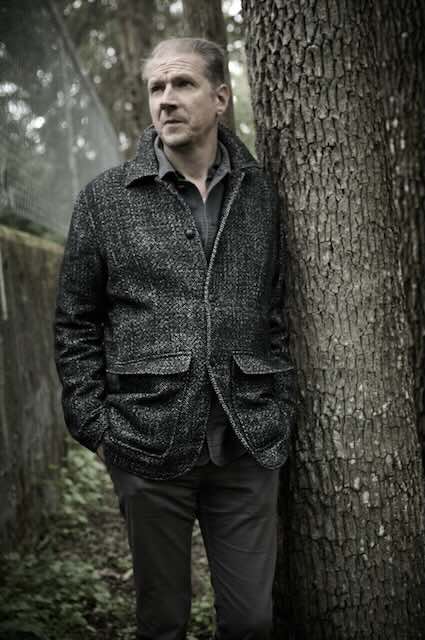
You’ve described Widowmaker Express as “a wrestling match with God, a breakup letter to the universe.” Can you walk us through the false-alarm medical emergency that set that wrestling match in motion?
Oh gosh, well it’s a long story, but the short version is I had intense chest pains for a solid week or so that I was certain was some version of heart failure. Turns out that it wasn’t and the diagnosis was far more benign, but felt remarkably similar in how it manifested. For a while there though I thought I was being rushed out through the big cosmic door.
This album reaches outward rather than turning inward, even though it deals with heartbreak and mortality. Was that an intentional choice, or did the songs just naturally resist becoming another interior breakup record?
For whatever reason they took dead aim at the universe. I think there are moments in life where it feels like you’re just getting pummeled and it can be easy to interpret that as coming from some sort of divine heavyweight, tenderizing your kidneys (existentially speaking). So this group of songs takes that perspective, as it felt most appropriate.
“Oh, Magic” opens the album as a meditation on absence. Why did that particular song feel like the right doorway into the rest of the record?
The producer Daniel G Harmann suggested that song as an opener and eventually it’s the only way I could hear the album starting. It does a great job of setting the stage for the flavor and subject matter to follow. It’s like “Welcome to the garbage dump! Go ahead and have a sniff.”
“Indryd James” is being called one of your most devastating songs to date. What’s the story behind it, and what made it so hard to write — or to finish?
Indryd was my greyhound who died back in 2010. I loved him more than anything else. He’d been a place of reliable love during a period of time where my life did the whole phoenix routine four or five times over, so he was closer to me than blood. I’d tried to write tributes to him over the years, but they didn’t get to the heart of the matter effectively enough. For whatever reason, the truth was finally able to come through. It felt good to finally give voice to his memory.
You and Daniel G. Harmann go back a long way. What does he understand about your songwriting that makes him the right person to build, as you put it, “big beautiful rooms for the songs to live in”?
Dan and I are similar creatures in a lot of ways. There are few people in this world who feel like they could be categorized on the same shelf as me, and Dan is one of them. So I think at a DNA level he gets what I’m after artistically. The focus of his work in the last ten years or so has been these intense, beautifully cinematic instrumental pieces, so it felt like if my songs could live in that space that we could create something truly unique together.
The Pacific Northwest — rusted waterfronts, foghorns, distant trains — feels almost like a co-writer on this record. How much of that atmosphere did you go looking for, versus how much just seeped in because of where you live?
Tacoma and the Pacific Northwest is my home, so it’s hard for it not to influence my work. The value of art is in its truth and this area is where my life is set, so it naturally becomes the setting. I’ve always resented Americana-type artists who sing about the dustbowl or whatever and I’m like “You’re from Milwaukee!” I love this area of the world. It’s so magnificently broken. It never lets you forget that life is happening, both good and bad, right outside your door.
“Coyote Skins” is described as searching for transformation in the aftermath of loss. What does transformation actually look like to you right now, at this point in your life and career?
It’s acceptance. You simply cannot wrestle with what is. Suffering is always trying to force its way in and if you don’t befriend it you’ll spend your whole life in opposition. So I just do the best I can and try to find peace in knowing I’ve lived through immensely difficult struggles before and I can do it again. So I try and just move with the wheel.
“The Ghost Will Turn Around” holds heartbreak and stubborn hope at the same time. How do you write a song that can carry both without one canceling out the other?
If we’re going to continue on for any duration this is the balance we must strike. Your heart will be broken. You cannot control that. Life will flip you upside-down by your heals and spank you raw. So if you want to survive you must hold some form of hope within that context. Otherwise you’re not going to make it.
You close the record with “On Small Wings,” choosing hope after ten songs of grief and uncertainty. Was that closing sequence always the plan, or did the album tell you where it needed to end?
It felt like to the only kind way to leave a listener after raking them over the coals so much. When I’m closing out a record I feel a sense of responsibility. Like, why did I tell you all of this? Why have I asked for your time? There was a responsibility with this album to crack the window for them a bit and let some fresh air in. I also, down in my guts, know the sentiment to be true. Just because you can’t see the good things coming for you doesn’t mean they’re not on the way. So you can choose to be a rotten cynic and join the whimpering masses or you can put in your chips and bet on beauty and hope.
Faith, or a fight with it, runs through this whole record — church bells, prayers, ghosts and angels. Where do you personally land on that question these days, if you had to answer it plainly?
In our most difficult moments I think we speak to god, if we’re honest. Sometimes that discussion feels more like a shouting match. So sometimes I shout at the mystery. There is much we don’t see and even more we don’t understand. Even if we simply speak metaphorically, ghosts and angels are all around us. As I drive around this city and this part of the country I remember so many past lives. Many of which were unpleasant and heavy. There are your ghosts. And yet, I wake up and step out my front door, and there’s a neighbor wishing me a good day. So perhaps angels aren’t too far away either. I am forced to accept that the experience of living is strong-arming me into an education. I try my best to show up and learn.
This is your tenth solo album, after years fronting Destruction Island and Pistol For A Paycheck. What does honesty in songwriting look like differently to you now than it did when you were starting out?
It’s always been an exploration of where I’m at in time. I’ve never struggled to be frank in my songs. My work is a distilled version of my life, so I do my best to encapsulate that in hopes that its of value to others. Years ago, in those bands, I think I felt a bit more like fighting with an audience, trying to jar them awake. I’ve always valued an element of chaos in my work. Now it’s more that I just want to be seen and known above all else.
You’ve built a career staying outside industry expectations and passing trends. What’s the trade-off been — and knowing what you know now, would you do it any differently?
That’s very true. I don’t give a damn about fitting in. In the end, the thing that matters most to me is that I’ve made the art that has called to me. This means I’ve had to do a bit of an army crawl throughout my career, but I don’t mind. I could put on a cowboy hat and shoot some music right down the middle, but that’s not me. In the end something like that would feel incredibly hollow. I wouldn’t do anything differently. All I want is the freedom to make music the way I want to. The rest of it can be set on fire.
Stream Album https://distrokid.com/hyperfollow/kyealfredhillig/widowmaker-express
Kye Alfred Hillig Online
Instagram |Spotify |Bandcamp |Facebook
Your tailored reading list
More stories chosen for their mood, aesthetic and point of view.
 Introspective resilience
Patrick Keller Debuts ‘Winded’: A Journey of Resilience and Rediscovery
Read story
introspective warmth
Kye Alfred Hillig Announces New Album & Single “Ezekiel Bobbing”
Read story Introspective