





There is a strange freedom in realizing nobody is watching quite as closely as you thought.
SPOTLIGHT
MAGAZINE
Featured Artist
BEST EX
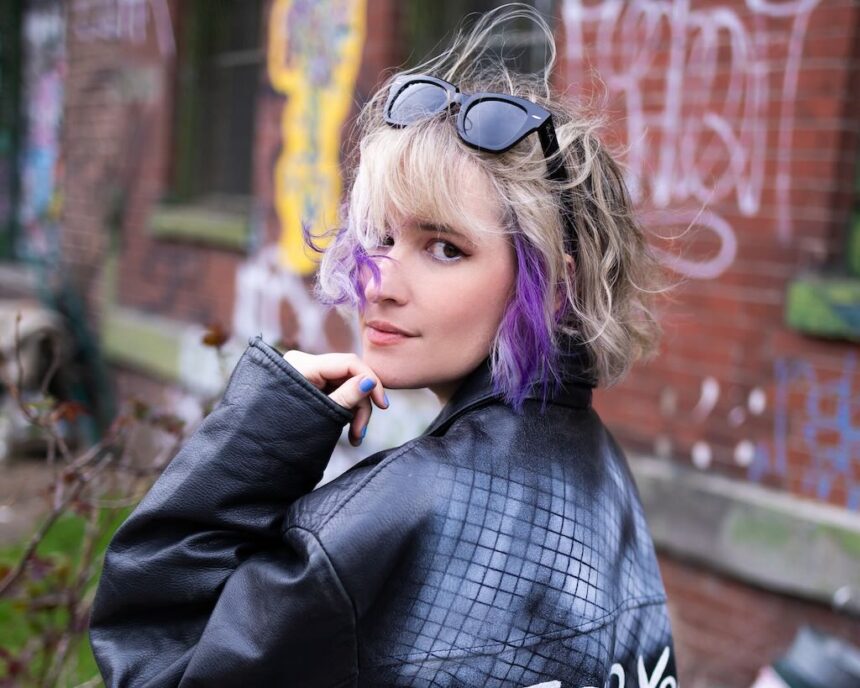
With Good Girl, Mariel Loveland turns the quiet friction of adulthood into something sharply observed and deeply familiar. Through Best Ex, she examines womanhood beyond prescribed timelines, the comfort of discovering you are not the main character, and the value of making music only when there is something worth saying.
WORDS — DIVINE MAGAZINE · 2026
For Mariel Loveland, the songwriter behind Best Ex, that realization arrived somewhere between a family group chat and the familiar pressure of adulthood. Her sister had three young children. Her brother had two. Their conversations carried the ordinary weight of childcare, school, money and exhaustion. Loveland was part of it all, yet standing slightly outside the frame.
She had married later than most people around her. She was still moving through Brooklyn on her own terms. And while everyone seemed to be worrying about somebody else, a question surfaced: who was worrying about her?
That tension became “Good Girl,” a song Loveland wrote in less than an hour and the track that eventually gave Best Ex’s sophomore album its name. Due November 6 via Iodine Recordings, Good Girl examines womanhood without treating marriage, motherhood or conventional milestones as its natural endpoint.
In conversation with Divine Magazine, Loveland discusses writing with more intention, finding comfort in being ordinary, reconnecting with her pop-punk past and making music that refuses to compress itself into seven seconds.
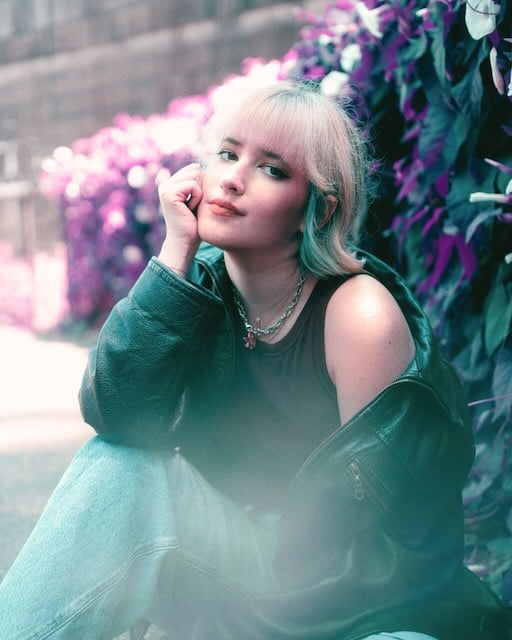
“Good Girl” came together in under an hour. What was happening in your life when the song arrived?
“At the time, I was in a never-ending text thread with my sister and mother, mostly about our family,” Loveland says. Her sister has three young children and her brother has two, so family conversations regularly circle around childcare, school, the cost of living and whether everyone is managing the pressure.
“I’m always tapped in to help them out,” she says.
Yet her own life looked different. “I had gotten married a couple of years prior, years later than just about everyone I knew,” Loveland explains. “It felt like everyone in my family had moved on and had different priorities, and I was just trapezing around Brooklyn doing my thing with no one really paying much attention. No one really worried about if I was good.”
The feeling was lonely, but not because she necessarily wanted the milestones she appeared to be missing. It was the implication behind them that interested her: the idea that a woman’s significance can become attached to whether she follows the expected sequence.
“Could I still matter if I never did?” she asks.
You’ve spoken about women being defined through roles like daughter, wife or mother. Had that been on your mind before writing “Good Girl”?
“This is something I’ve felt for a while,” Loveland says. “It’s very pervasive in our media.”
She points to the language used when young men become subjects of news stories: they are frequently described as promising, their futures emphasized even after serious mistakes. Women, she argues, are often granted empathy through a different vocabulary.
“When the media wants to humanize a woman, conjure up empathy, she’s never a woman with her whole life ahead of her. She’s always someone’s mom or someone’s wife, or someone’s daughter.”
Loveland cites the case of Adriana Smith, the 30-year-old Georgia nurse who was declared brain-dead while pregnant and whose body was subsequently kept on life support during the pregnancy.
“It seemed like everyone around her cared more about keeping her body on life support as an incubator for her baby than they did about the fact that this young woman lost her life,” Loveland says. “The news barely even put her name in a headline. She was just ‘pregnant woman.’”
Musically, “Good Girl” connects ’90s alternative rock with contemporary pop. How did you keep those influences in balance?
The distinction, for Loveland, begins with production.
The alternative records she grew up loving could leave air between their components: guitar, bass, drums and vocals, with small imperfections remaining audible. Modern pop often works differently, stacking details until the surface becomes almost seamless.
“Not everything was snapped to a grid or pitch-perfect,” she says of those older records. Contemporary production can carry what she calls “a glossy sheen” — “not a bad thing, it’s just a thing.”
On “Good Girl,” she kept the instrumentation connected to older rock records while allowing the vocals to become distinctly modern.
“So, so many layers,” she says.
Some imperfections stayed. That friction became part of the sound rather than something to remove.
“I really wanted to nail that perfect balance of something new that feels familiar,” Loveland says. “Something that could feel raw, but not sound bad to modern ears.”
The album moves through womanhood, anxiety, identity and relationships. What did writing it teach you about yourself?
Songwriting can make private experiences feel enormous. Loveland became increasingly aware of the temptation to cast herself as the central character in a uniquely dramatic story.
“You become a main character in a story you’re writing,” she says, referencing the famous Girls joke about being “a voice, in a generation.”
Good Girl moved her somewhere else.
“Once I started writing it, opening myself up to the idea that I was writing about womanhood, relationships, and the world in my 30s, I started to really notice I’m not alone out here,” she says. “I’m just average.”
There is comfort in that word. Average means shared mornings, familiar fears and domestic details that rarely look dramatic from the outside: a husband making coffee, a few minutes scrolling TikTok that unexpectedly turn into anxiety.
“I find comfort in the idea of writing about things we all experience.”
You recently opened for As It Is at American Dream Mall. How did it feel taking these more interior songs into that setting?
“It honestly feels incredible,” Loveland says. “I was so excited when they asked me to open for them — and even with just a couple days’ notice, I was determined to figure out how I was going to make it work.”
The show also connected two different periods of her career. Loveland’s former band, Candy Hearts, shared Warped Tour with As It Is in 2015. Years later, they found each other again through TikTok after the band reunited.
Returning to that world felt unexpectedly natural.
“It’s been a long time since I jumped back into that pop punk world, but honestly, it felt like business as usual,” she says. “It was like not a second passed, except we all have more wrinkles.”
“Good Girl” became the song that defined the album before you knew you were making one. Did that realization change the rest of the writing process?
Loveland describes her usual route toward an album as “a haphazard snowball rolling down a hill.” Songs accumulate first. The larger shape appears later.
“‘Good Girl’ was that moment,” she says, “and after that, I became very intentional about what I was writing.”
That choice sits in quiet opposition to a music economy built around constant visibility. Artists are encouraged to release, post and repeat, even when there is little space between one idea and the next.
Loveland wanted another standard.
“I didn’t want to make the same album I made over and over again in my 20s,” she says. “I only wanted to make an album if it adds to the conversation. I wanted to make something that felt like it had a purpose — at least to me.”

Was there a point when the adulthood you describe — one that looks little like what you imagined growing up — became especially clear?
“Absolutely. A lot of life happened,” Loveland says.
She watched people around her move in radically different directions. Friends separated or crossed the country. Some stayed out dancing until sunrise. Others bought homes, had children and went to work each morning. A bad date could feel catastrophic to one person while someone else quietly endured a life-changing illness.
The contrast dismantled the idea that adulthood has a single correct shape.
“It really just nails in the point — there’s no one life to live,” she says. “You can live many lives before your time is up. Most of all, what matters is your perspective. Your perspective becomes your reality.”
What do you hope listeners carry with them after hearing Good Girl in full?
The answer is deliberately small.
“I really just want people to hear it and be like, ‘Hey, I always felt that way, too.’ That’s always the dream.”
Compared with your first album, what has changed most in the way you write and see yourself as an artist?
“I think the older I get, the more intentional I am about writing,” Loveland says.
Earlier in her career, she was more willing to throw ideas against the wall and follow each one wherever it went. Now another question comes first: does this need to be said, and does she need to be the person saying it?
That restraint feels particularly sharp in an era of permanent content, algorithmic repetition and clips designed to make their point almost before they begin.
Loveland has little interest in keeping pace for its own sake.
“I just don’t ever want that to be me, even if it means that maybe I won’t ever be a household name,” she says. “You can go ahead and catch me singing when I have something to actually say — and you can sit down to listen or not, because it’s gonna take me longer than 7 seconds to say it.”
That may be the clearest thread running through Good Girl. The record is less interested in making Loveland exceptional than in making ordinary experience visible: the expectations absorbed quietly, the lives that drift from their imagined timelines, the mornings that look insignificant until somebody writes them down.
Sometimes recognizing yourself in someone else’s story is enough.