






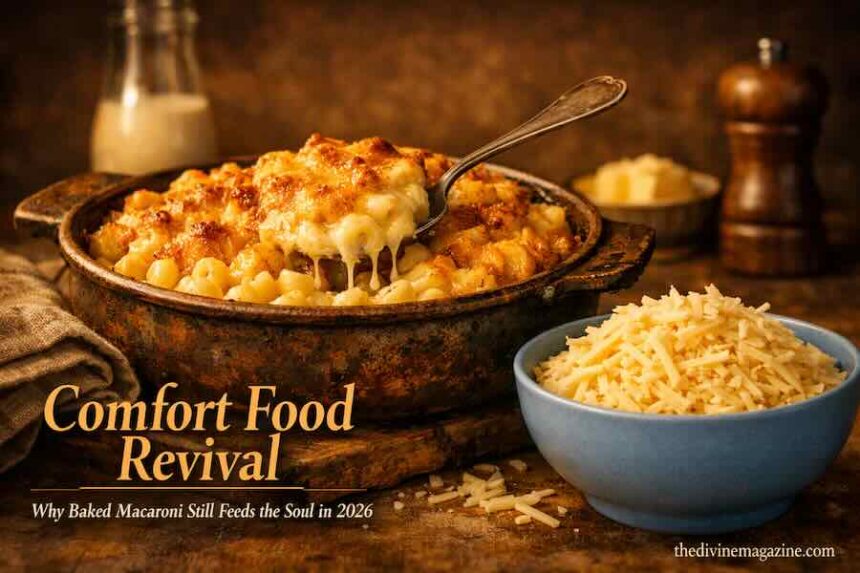
In a world obsessed with reinvention, few dishes remain as universally comforting as baked macaroni and cheese. It’s the kind of food that doesn’t ask for permission — it simply arrives, warm and golden, carrying the scent of childhood kitchens, late‑night cravings, and the quiet reassurance that everything will be okay. In 2026, as more people turn toward nostalgic cooking for grounding and emotional reset, this humble classic is experiencing a full‑blown revival.
- The Emotional Pull of Nostalgic Cooking
- A Modern Take on a Heritage Classic
- Why Comfort Food Matters in 2026
- Best Side Dishes to Serve With Macaroni and Cheese
- 1. Bright, Crisp Salads
- 2. Roasted Vegetables
- 3. Sautéed Greens
- 4. Crispy Proteins
- 5. Simple Bread or Biscuits
- Why Homemade Is Better Than Boxed Versions
- 1. Real Ingredients, Real Flavor
- 2. Customizable to Your Mood
- 3. Better Texture and Crust
- 4. Emotionally Grounding
- 5. Healthier, Even When It’s Indulgent
- The Divine Macaroni & Cheese Recipe
- Recipe Notes & Variations
- Conclusion
- Frequently Asked Questions
- Why is baked macaroni and cheese trending again in 2026?
- Is baked macaroni and cheese considered healthy?
- What makes the “old‑fashioned” version different?
- Can I make a Scandinavian‑inspired version?
- What’s the best way to get that perfect golden crust?
- Can baked macaroni and cheese be made plant‑based?
- Why does comfort food feel so emotionally grounding?
But this isn’t the boxed version you grew up with. Today’s comfort food renaissance blends heritage, minimalism, and cinematic presentation — transforming old‑fashioned dishes into modern rituals. And baked macaroni and cheese sits at the center of that movement.
The Emotional Pull of Nostalgic Cooking
Comfort food is more than flavor — it’s memory. Psychologists note that warm, creamy textures activate the same emotional pathways associated with safety and belonging. In a time when digital life moves faster than ever, people are craving dishes that slow them down, ground them, and reconnect them to something familiar.
Baked macaroni and cheese is the perfect example: simple ingredients, slow oven heat, and a golden crust that feels like a hug. It’s the kind of dish that turns a kitchen into a sanctuary.
A Modern Take on a Heritage Classic
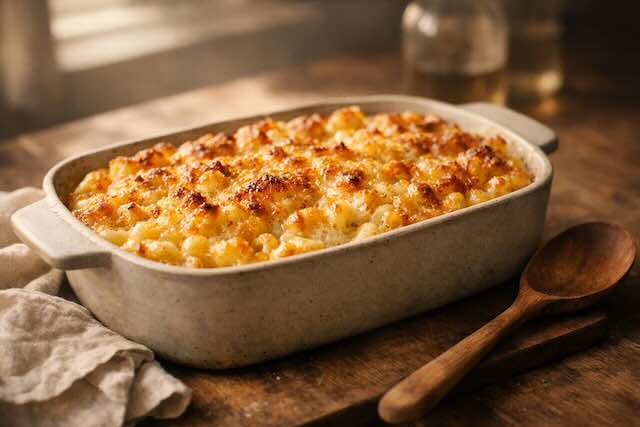
While the original recipe remains iconic, 2026 home cooks are giving it a modern twist. Think Scandinavian minimalism meets American comfort — fewer ingredients, higher quality, and a focus on texture and warmth.
- Nordic-inspired cheeses like Jarlsberg, Havarti, or a sharp aged cheddar
- Oven-to-table stoneware for a rustic, editorial look
- Breadcrumb toppings infused with herbs or browned butter
- Plant-forward variations using oat milk or cashew cream
The result? A dish that feels both nostalgic and new — familiar enough to comfort, elevated enough to impress.
Why Comfort Food Matters in 2026
As wellness culture evolves, people are embracing a more holistic definition of nourishment — one that includes emotional satisfaction, cultural connection, and sensory pleasure. Comfort food isn’t the enemy of health; it’s part of a balanced, emotionally aware lifestyle.
And baked macaroni and cheese, with its golden crust and creamy center, embodies that philosophy perfectly.
Best Side Dishes to Serve With Macaroni and Cheese
Macaroni and cheese is rich, creamy, and deeply comforting — which makes it the perfect anchor for a balanced meal. Pairing it with the right sides adds contrast, freshness, and texture, turning a nostalgic dish into a complete, modern plate.
1. Bright, Crisp Salads
A fresh salad cuts through the richness beautifully. Think peppery arugula, shaved fennel, lemon vinaigrette, or a Nordic-inspired cucumber-dill salad. The acidity and crunch create the perfect balance.
2. Roasted Vegetables
Caramelized Brussels sprouts, roasted broccoli, or honey-glazed carrots bring warmth and depth. Their earthy flavors complement the creaminess without competing with it.
3. Sautéed Greens
Spinach, kale, or Swiss chard sautéed with garlic adds a savory, slightly bitter note that balances the dish. It’s also a great way to add nutrients without complicating the meal.
4. Crispy Proteins
For a heartier plate, pair macaroni with roasted chicken, crispy tofu, or baked salmon. The contrast between creamy pasta and crisp or flaky textures is incredibly satisfying.
5. Simple Bread or Biscuits
A warm slice of sourdough or a soft biscuit turns the meal into pure comfort. Keep it simple — the macaroni is the star.
Why Homemade Is Better Than Boxed Versions
Boxed macaroni and cheese has its place — quick, nostalgic, and easy. But homemade versions offer something deeper: flavor, texture, and emotional resonance that boxed mixes simply can’t match.
1. Real Ingredients, Real Flavor
Homemade macaroni uses real cheese, real butter, and real milk — not powdered blends or stabilizers. The result is richer, creamier, and infinitely more satisfying.
2. Customizable to Your Mood
Want a Scandinavian twist with Jarlsberg? A plant-based version with oat milk? A spicy breadcrumb topping? Homemade gives you full creative control.
3. Better Texture and Crust
The golden, bubbling crust of baked macaroni is impossible to replicate with boxed mixes. That caramelized top layer is part of what makes the dish feel so comforting and cinematic.
4. Emotionally Grounding
Cooking from scratch is a ritual — a way to slow down, reconnect, and create something meaningful. In 2026, that emotional grounding is part of why homemade comfort food is thriving.
5. Healthier, Even When It’s Indulgent
Homemade versions allow you to choose high-quality ingredients, reduce sodium, and avoid preservatives. It’s comfort food that feels good in every sense.
The Divine Macaroni & Cheese Recipe
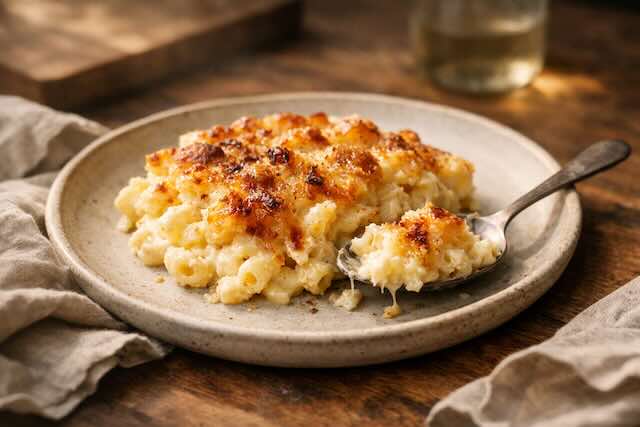
This version blends classic comfort with modern simplicity — creamy, golden, and baked to perfection in a matte stoneware dish. It’s nostalgic, cinematic, and effortlessly elegant.
Ingredients
- 400 g (14 oz) elbow macaroni or short pasta
- 3 tbsp butter
- 3 tbsp all-purpose flour
- 700 ml (3 cups) whole milk
- 200 g (7 oz) sharp aged cheddar
- 100 g (3.5 oz) Gruyère or Jarlsberg cheese
- Salt and freshly ground black pepper, to taste
- Pinch of nutmeg (optional)
- 1 cup breadcrumbs mixed with 1 tbsp melted butter
Instructions
- Preheat oven to 190°C (375°F). Butter a medium baking dish.
- Cook the pasta until just al dente. Drain and set aside.
- Make the sauce: Melt butter in a saucepan, whisk in flour, and cook for 1 minute. Gradually add milk, whisking until smooth. Simmer until thickened.
- Add cheese: Stir in cheddar and Gruyère until melted. Season with salt, pepper, and nutmeg.
- Combine: Fold the pasta into the sauce and pour into the baking dish.
- Top: Sprinkle with buttered breadcrumbs for a crisp finish.
- Bake: 25–30 minutes, until golden and bubbling.
- Serve: Let rest for 5 minutes before serving. Pair with a crisp salad or roasted vegetables.
Recipe Notes & Variations
Every cook has their own version of comfort. Here are a few ways to make this macaroni and cheese uniquely yours — whether you’re leaning into nostalgia or modern minimalism.
Scandinavian Twist
Use Jarlsberg or Havarti for a Nordic flavor profile that melts beautifully and adds subtle nuttiness. Serve in matte stoneware and garnish with fresh thyme for a clean, modern look.
Plant‑Based Comfort
Swap butter for olive oil, milk for oat milk, and cheese for a blend of vegan cheddar and nutritional yeast. The result is creamy, rich, and fully plant‑forward — proof that comfort food can evolve without losing its soul.
Gluten‑Free Option
Use gluten‑free pasta and substitute rice flour for the roux. The texture remains silky, and the golden crust still delivers that satisfying crunch.
Extra‑Crisp Topping
Mix breadcrumbs with grated Parmesan and a drizzle of browned butter. Bake uncovered for the last 10 minutes to achieve a perfectly crisp, cinematic crust.
Make‑Ahead Tip
Prepare the dish up to the baking stage, cover, and refrigerate for up to 24 hours. Bake just before serving — the flavors deepen overnight, and the texture becomes even more luxurious.
Conclusion
In 2026, baked macaroni and cheese isn’t just a recipe — it’s a ritual. A reminder that comfort doesn’t need to be complicated, and that the dishes we return to again and again often say more about us than the ones we chase for novelty. Whether you’re cooking for nostalgia, grounding, or pure pleasure, this golden, bubbling classic remains one of the most emotionally resonant foods of our time.
Sometimes, the simplest dishes are the ones that stay with us the longest.
Frequently Asked Questions
Why is baked macaroni and cheese trending again in 2026?
Comfort food is having a major revival as people seek grounding, nostalgia, and emotional warmth. Baked macaroni and cheese delivers all three — it’s simple, familiar, and deeply satisfying, making it a perfect antidote to fast‑paced digital life.
Is baked macaroni and cheese considered healthy?
It depends on how you prepare it. Modern versions often use high‑quality cheeses, whole‑grain pasta, or plant‑based alternatives. In 2026, wellness culture embraces balance — meaning comfort food can absolutely be part of a healthy lifestyle when enjoyed mindfully.
What makes the “old‑fashioned” version different?
Traditional baked macaroni and cheese relies on simple ingredients: pasta, butter, milk, and a sharp cheese like cheddar. No fillers, no shortcuts — just slow oven heat and a golden crust. Its simplicity is exactly why it’s making a comeback.
Can I make a Scandinavian‑inspired version?
Absolutely. Many home cooks are swapping cheddar for Nordic cheeses like Västerbotten or Prästost, adding subtle herbs, or baking in matte stoneware for a minimalist, editorial look. It’s comfort food with a modern Scandinavian twist.
What’s the best way to get that perfect golden crust?
Use a blend of cheeses, bake uncovered, and finish with a quick broil. A light breadcrumb topping with browned butter also adds texture and depth without overpowering the dish.
Can baked macaroni and cheese be made plant‑based?
Yes. Oat milk, cashew cream, and plant‑based cheeses melt beautifully in 2026. Many vegan versions are just as creamy and comforting as the original — sometimes even more so.
Why does comfort food feel so emotionally grounding?
Warm, creamy textures activate emotional pathways linked to safety and memory. Comfort food reconnects us to moments of care, belonging, and home — which is why dishes like baked macaroni remain timeless.