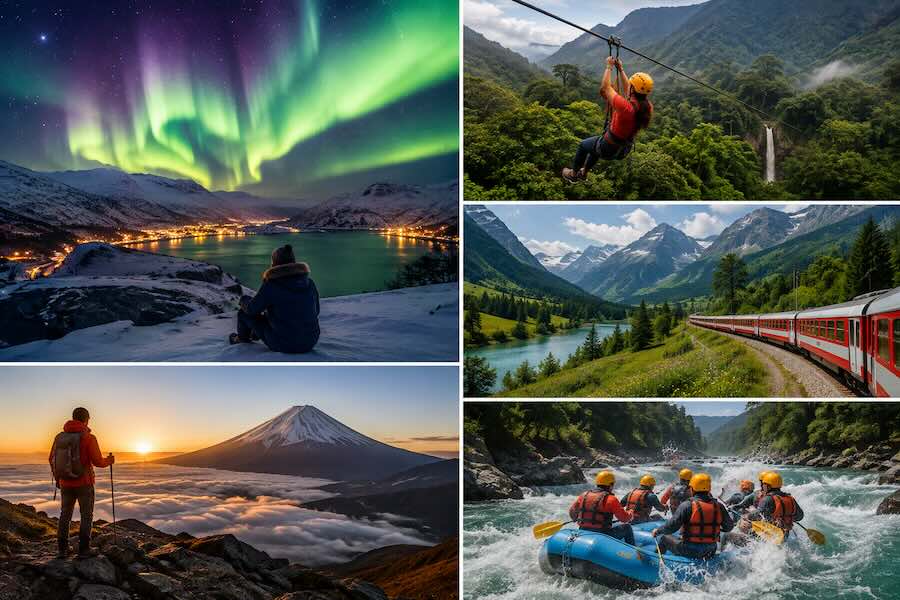
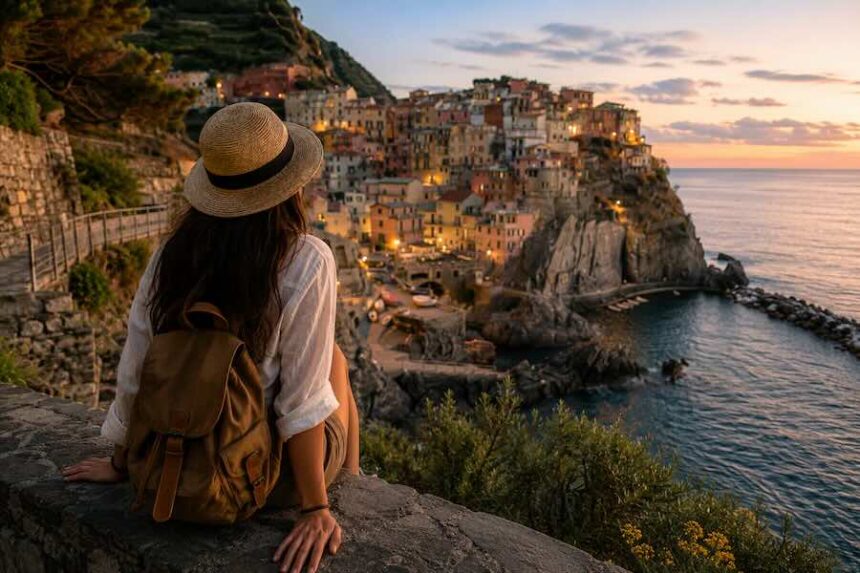
The group chat has been discussing the trip for six months. One person cannot take Friday off. Another wants a beach. Someone else has disappeared from the conversation entirely. The flight you bookmarked in March now costs twice as much.
- Why solo travel is booming in 2026
- 1. Japan: best for a first major solo adventure
- 2. Portugal: best for an easy European solo trip
- 3. New Zealand: best for the solo traveller who wants space
- 4. Copenhagen: best for the design-minded city break
- 5. Australia: best when solo travel becomes a bigger journey
- How to travel solo without making it harder than necessary
- The solo supplement is still real
- How to meet people when you are travelling alone
- The practical takeaway
- Conclusion
- Frequently Asked Questions
Increasingly, travellers are choosing a simpler answer: go without them.
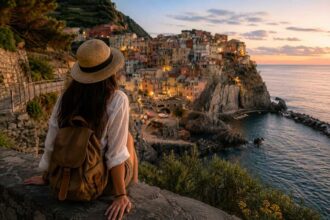
Solo travel has moved decisively into the mainstream in 2026. Google searches for “solo travel” reached record levels in the U.S. this year, while Skyscanner reports that hotel searches using its solo-traveller filter have jumped 83 percent year over year. The shift is not simply about being alone. It is about having control over time — waking when you want, staying three hours in a museum, changing cities on Tuesday because Tuesday suddenly feels right.
That freedom can be intoxicating. It also requires a little more preparation. There is no second passport in someone else’s bag, no friend watching your suitcase while you buy coffee and nobody automatically noticing when your plans change.
The best solo destinations therefore offer more than beautiful photographs. They make independent movement feel natural.
Why solo travel is booming in 2026
The numbers point to something larger than a passing travel aesthetic. The eight strongest months for U.S. Google searches around solo travel across the past two decades occurred consecutively between December 2025 and July 2026.
Freedom remains the obvious attraction. A Hostelworld survey of more than 3,300 solo travellers found that 64 percent valued freedom and spontaneity, while 58 percent wanted opportunities to meet new people. That second number matters because contemporary solo travel is becoming less synonymous with isolation.
You can arrive alone and still spend the evening around a crowded table. Walking tours, cooking classes, hostels, small-group excursions, coworking spaces and social travel apps have made temporary connection easier without requiring travellers to surrender control of the entire itinerary.
In other words, solo travel increasingly means choosing when to be alone.
1. Japan: best for a first major solo adventure
Tokyo at 7 a.m. can feel almost cinematic alone. Convenience-store lights glow against wet pavement. A train arrives exactly when the platform display said it would. Breakfast can be ordered without turning it into an occasion.
Japan sits near the centre of the 2026 solo-travel conversation. It ranked as the most desired country among solo travellers surveyed by FTLO Travel for this year, and the practical appeal is easy to understand.
The country’s extensive rail system removes one of solo travel’s recurring frictions: figuring out how to move between unfamiliar places without another person helping with logistics. The Japan National Tourism Organization describes the rail network as extensive, punctual and convenient, with Shinkansen services connecting major cities.
A prepaid Suica, PASMO or other compatible IC card makes everyday movement even easier. Tap through station gates, board buses and use the same card for small purchases at many convenience stores and vending machines.
For a first trip, resist trying to collect the entire country. Tokyo, Kyoto and Osaka already contain weeks of material. Give yourself unscheduled mornings. Eat alone at the counter. Take one train simply because the neighbourhood at the other end looks interesting.
Best for: first-time solo travellers who want ambitious travel with strong transport infrastructure.
Divine route: Tokyo → Kyoto → Osaka.
2. Portugal: best for an easy European solo trip
Lisbon works beautifully at walking speed. Pale stone under afternoon sun. Espresso at a counter. Yellow trams appearing between buildings before the Tagus suddenly opens at the bottom of a hill.
Portugal has become particularly visible in 2026 solo-travel data. Tourism Portugal reported in July that individual bookings among Dutch travellers had increased 30 percent between 2024 and 2026, with Lisbon identified by Transavia as its leading European solo destination.
The country’s official tourism organisation also specifically recommends Portugal for solo travel, pointing to its relatively compact geography and public-transport network. That combination is useful when travelling alone: fewer complicated transfers, shorter distances and several very different landscapes within one trip.
Start in Lisbon, but do not stop there. Porto gives the trip a moodier northern counterpoint, while smaller towns and Atlantic landscapes slow everything down. Portugal works especially well when the itinerary has breathing room rather than becoming a checklist of viewpoints.
Best for: food, architecture, city wandering and a relatively approachable first solo trip to Europe.
Divine route: Lisbon → Porto, with one smaller coastal or historic stop between them.
3. New Zealand: best for the solo traveller who wants space
Some trips are built around streets. New Zealand is built around distance.
It ranked alongside Japan and Australia among the most desired 2026 destinations in FTLO Travel’s survey of solo travellers. The attraction is different here: mountains, lakes, coastlines and the pleasure of having a day organised around landscape rather than reservations.
Queenstown makes an accessible base for the South Island, particularly for travellers who want outdoor experiences without spending every day completely alone. Group hikes, boat trips and adventure activities create natural points of contact with other people before you return to your own room and your own schedule.
The challenge is geography. New Zealand rewards planning more than compact European destinations do. Decide whether the trip is primarily about the North Island or South Island unless you have enough time to move slowly between both.
Best for: nature, hiking, road-trip energy and travellers comfortable with longer distances.
Divine route: Queenstown → Wānaka → Aoraki/Mount Cook region.
4. Copenhagen: best for the design-minded city break
Copenhagen makes solitude look unusually elegant.
A bicycle against pale brick. Morning light across a bakery table. Cold harbour water beside precise modern architecture. The city suits the traveller who does not need constant entertainment and instead enjoys assembling a day from small things.
Its scale helps. A solo trip becomes less about negotiating a giant metropolis and more about moving between neighbourhoods, museums, cafés, waterfronts and restaurants at your own rhythm. Copenhagen also appeared among the leading European destinations identified in 2026 solo-booking research reported by Turismo de Portugal.
There is a financial trade-off: Denmark can be expensive. For solo travellers, who cannot divide hotel rooms or taxis between two people, that matters. Spend where the experience genuinely improves — a beautiful dinner, a considered hotel — and use walking, cycling and public transport for the rest.
Best for: design, food, architecture and a compact long weekend.
Divine approach: stay centrally enough to walk, then structure each day around one neighbourhood rather than crossing the city repeatedly.
5. Australia: best when solo travel becomes a bigger journey
Australia is not the economical option, nor the compact one. That can be exactly why it works.
It was one of the three most desired countries in FTLO Travel’s 2026 solo-travel survey, alongside Japan and New Zealand. For American travellers in particular, the flight alone turns the trip into a commitment rather than an impulsive weekend away.
Sydney gives first-time visitors an easy urban anchor: beaches, ferries, neighbourhood restaurants and enough familiar city infrastructure to make the opening days straightforward. Melbourne suits travellers who prefer galleries, music, cafés and neighbourhood wandering. Beyond the cities, Australia becomes a very different proposition, where distances require considerably more planning.
The mistake is trying to “do Australia” in ten days. Choose a region. Leave blank space. A solo trip becomes exhausting when every morning begins with another airport.
Best for: travellers ready to turn a solo vacation into a substantial long-haul trip.
Divine approach: build around Sydney or Melbourne and add one contrasting region rather than chasing the entire map.
How to travel solo without making it harder than necessary
The romantic version of solo travel says you should arrive with a passport and intuition. The better version includes backups.
For Americans travelling internationally, the U.S. Department of State recommends checking current destination advisories, entry requirements and local laws before departure. Travellers can also enrol in the free Smart Traveler Enrollment Program, or STEP, to receive security information from the nearest U.S. embassy or consulate.
- Book the first night before you fly. Arrival day is the wrong moment to improvise accommodation.
- Keep digital and physical document backups. Store copies separately from the originals and leave another copy with someone you trust.
- Share the shape of the trip. A trusted person at home should know your accommodation and major transport plans.
- Check the current travel advisory before departure. Conditions can change after the original booking.
- Carry more than one payment method. Keep a backup card separate from your main wallet.
- Download offline maps. Do it before you need them, not while standing outside an unfamiliar station with poor reception.
- Consider travel medical insurance. Many U.S. health plans provide limited or no overseas coverage, and medical evacuation can be extremely expensive.
- Give yourself permission to leave. If a bar, street, ride, accommodation or person feels wrong, changing plans is enough. You do not need to justify it.
The solo supplement is still real
There is one stubborn disadvantage to travelling alone: many travel costs were designed for two people.
A $240 hotel room is $240 whether one person sleeps in it or two. Taxis cannot be divided. Some tours and cruises still charge single supplements. That means solo travel can cost more per person even when the itinerary itself is modest.
The answer is not automatically the cheapest hostel bed. Mix formats. Spend two nights in a good hotel, then use a private hostel room or guesthouse somewhere expensive. Take trains instead of private transfers. Travel slightly outside peak season. Stay longer in fewer places.
Slower travel often feels better alone anyway. You begin recognising the person behind the café counter. The route back to the hotel becomes familiar. A foreign city starts acquiring tiny pieces of routine.
How to meet people when you are travelling alone
The paradox of solo travel is that it can make meeting people easier. Two friends eating dinner together appear occupied. One person sitting at a bar leaves space for conversation.
Choose activities where interaction happens naturally: a small walking tour, cooking class, surf lesson, food tour, group hike or communal dinner. Stay somewhere with shared spaces even if you book a private room. Sit at the counter instead of requesting the smallest table in the corner.
Then keep some silence. The point is not to reconstruct the social calendar you left at home.
The practical takeaway
For a first international solo trip, choose infrastructure over ambition. A destination with reliable public transport, straightforward accommodation and plenty to do independently removes unnecessary friction.
Japan is our strongest long-haul choice for 2026. Portugal makes an excellent European introduction. Copenhagen works beautifully for a shorter city break. New Zealand suits travellers who want landscape and space, while Australia is the bigger commitment for someone ready to make the journey itself part of the story.
And do not schedule every hour. One of solo travel’s greatest luxuries is precisely the thing an itinerary cannot predict.
Conclusion
There is a particular moment on a solo trip when the strangeness disappears. You stop thinking about the empty seat across the table. You know which train entrance to use. You walk back to the hotel without opening the map.
The city has not become yours. You have simply learned how to move through it.
That may explain why solo travel feels so suited to 2026. It offers something increasingly rare: a few days in which nobody else gets a vote on how you spend your time.
Frequently Asked Questions
Is solo travel becoming more popular in 2026?
Yes. U.S. Google searches for “solo travel” reached record levels in 2026, while Skyscanner reported an 83 percent year-over-year increase in hotel searches using its solo-traveller filter.
Where is the best place to travel solo in 2026?
Japan is a particularly strong choice thanks to its extensive rail network and large range of experiences that work naturally for individual travellers. Portugal, New Zealand, Copenhagen and Australia are also compelling depending on budget and travel style.
Is Japan good for first-time solo travellers?
Japan can work very well for independent travel because major destinations are connected by an extensive rail network and prepaid IC cards simplify many local transport journeys. First-time visitors should still research local customs, transport and current travel guidance before departure.
How do you stay safe while travelling alone?
Research your destination before leaving, check current government travel advisories, keep document backups, share key itinerary information with someone you trust and maintain access to more than one payment method. U.S. citizens travelling abroad can also enrol in the State Department’s STEP program.
Is solo travel more expensive?
It can be. Accommodation, taxis and some tours cost more per person when there is nobody to split the bill with. Travelling outside peak periods, staying longer in fewer destinations and mixing accommodation types can reduce the difference.
How can I meet people while travelling solo?
Small-group walking tours, food experiences, classes, group hikes, social hostels and communal dining create low-pressure opportunities to meet other travellers. The advantage of travelling alone is that you can join these experiences when you want company and leave space for solitude when you do not.
Your tailored reading list
More stories chosen for their mood, aesthetic and point of view.