PCOS (polycystic ovarian syndrome) is a complex hormonal condition affecting an estimated 1 in 10 women worldwide. In 2026, research continues to highlight how nutrition, lifestyle, and metabolic health play a major role in managing symptoms. If you’re one of the many women navigating PCOS, the right diet can make a profound difference — and this guide will help you get started.
If you’ve slipped into an unhealthy routine or feel overwhelmed by conflicting advice, don’t worry — small, sustainable changes can transform your energy, hormones, and overall well‑being. Below, you’ll find an expert‑informed, 2026‑updated PCOS diet guide designed to support hormone balance, gut health, and long‑term metabolic stability.
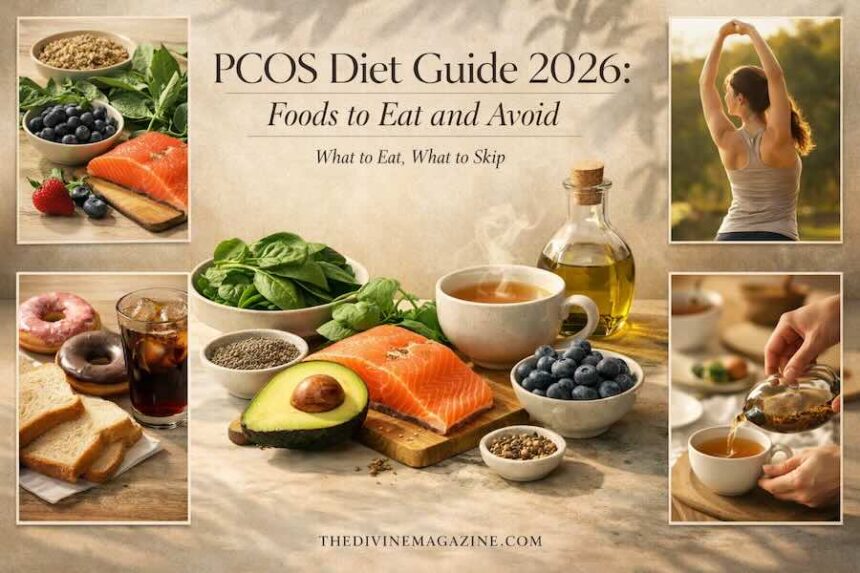
Foods to ADD to your diet plan (2026 update)
- Leafy green vegetables
Leafy greens remain one of the most nutrient‑dense, low‑calorie foods you can add to your PCOS diet. They’re rich in folate and vitamin B — nutrients many women with PCOS are deficient in. Spinach, kale, Swiss chard, and arugula support hormone regulation and metabolic health. According to Harvard Nutrition Source, leafy greens also help reduce inflammation, a common PCOS driver.
- High‑fiber foods
Fiber supports gut health, stabilizes blood sugar, and helps lower insulin levels — a key factor in PCOS management. Many high‑fiber foods also contain prebiotics that nourish the gut microbiome. Great options include sunflower seeds, black beans, berries, lentils, and whole grains. Updated 2026 research from NCBI shows that a fiber‑rich diet can significantly improve insulin sensitivity in women with PCOS.
- Lean protein
Nearly half of women with PCOS struggle with weight gain, which can increase risks like fatty liver and hypertension. Lean protein helps keep you full, supports muscle health, and stabilizes blood sugar. Include 2–3 servings of fish per week, grilled or baked chicken, tofu, peas, and beans. The American Diabetes Association recommends lean protein as part of a balanced metabolic diet.
- Healthy fats
Healthy fats are essential for hormone production, fertility, and inflammation control. Avocados, extra‑virgin olive oil, unsalted nuts, seeds, and oily fish (like salmon or sardines) are excellent choices. These fats support hormone balance and help regulate appetite.
Organic foods
Choosing organic produce when possible may reduce exposure to endocrine‑disrupting chemicals — something especially relevant for PCOS. Buying directly from local farmers can make organic options more affordable. When it comes to beverages, there are several reasons to choose organic tea, including fewer chemicals and potential cardiovascular benefits. Consider switching your daily tea to an organic alternative.
Foods to avoid (2026 update)
- Processed foods
Processed foods often have a high glycemic index (GI), which can spike insulin levels — a major concern for PCOS. Cakes, biscuits, ready‑to‑eat meals, white rice, and white bread can all contribute to blood sugar instability. Updated 2026 guidelines from CDC Diabetes emphasize limiting refined carbohydrates for better metabolic control.
- Dairy items (in some cases)
Some women with PCOS may benefit from reducing dairy intake, especially if they experience inflammation or digestive sensitivity. Research suggests that lowering dairy consumption may support weight loss in certain individuals. Before making major changes, consult your healthcare provider to determine whether dairy affects your symptoms.
- Alcohol
Alcohol can contribute to fatty liver, disrupt gut health, and worsen inflammation — all of which are relevant to PCOS. Moderate consumption (such as an occasional glass of red wine) is generally fine, but limiting intake supports better hormonal balance and liver function.
Health is wealth — especially with PCOS
To every woman navigating PCOS: your body is capable, resilient, and deserving of care. Focus on nourishing foods, daily movement (even 30–40 minutes helps), hydration, and stress reduction. If you enjoy flavored teas, consider buying organic tea online to explore varieties that support wellness. Most importantly, stay informed, stay active, and stay kind to yourself.
Conclusion
Managing PCOS in 2026 is all about understanding your body’s needs and supporting it with nutrient‑dense foods, balanced meals, and mindful lifestyle choices. While there’s no one‑size‑fits‑all solution, focusing on whole foods, gut health, and metabolic balance can significantly improve symptoms. Small changes add up — and your journey toward better health starts with the choices you make today.
FAQ (2026)
1. Can diet alone cure PCOS?
PCOS cannot be “cured,” but diet and lifestyle changes can dramatically reduce symptoms and improve hormonal balance.
2. Is intermittent fasting good for PCOS?
Some women benefit from time‑restricted eating, but it’s not suitable for everyone. Listen to your body and consult a healthcare professional.
3. Are supplements necessary?
Some supplements — like inositol, omega‑3s, and vitamin D — may help, but needs vary. Always check with a healthcare provider.
4. Can I eat carbs with PCOS?
Yes — focus on whole grains, legumes, and fiber‑rich carbs that support stable blood sugar.
5. Does going dairy‑free help?
It helps some women, especially those with inflammation or digestive issues. It’s not required for everyone.