






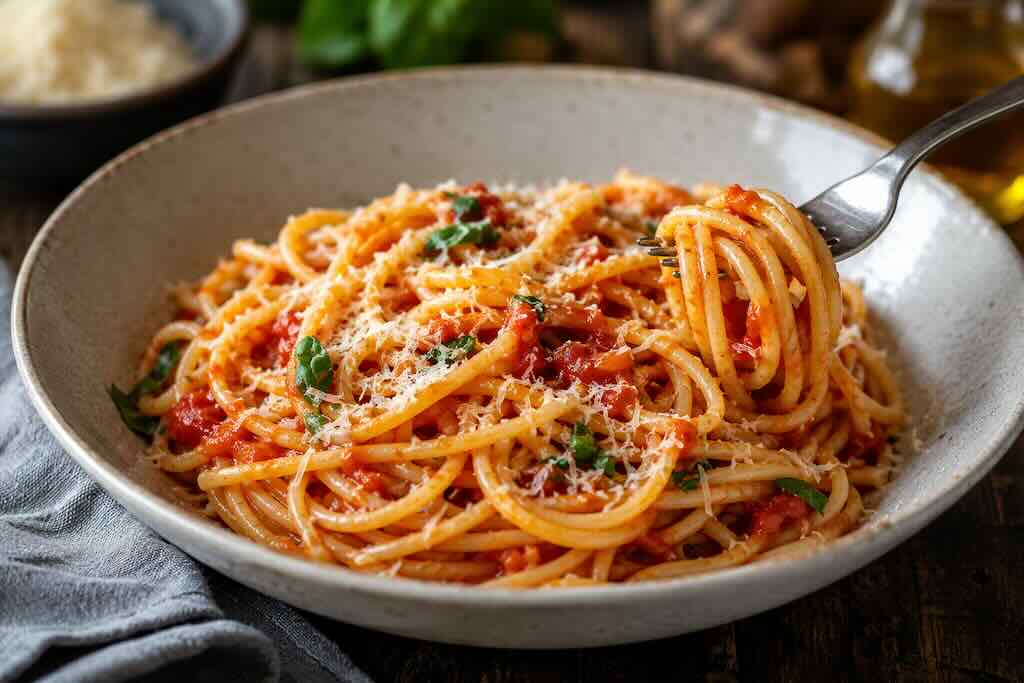
Restaurant pasta often arrives with a particular gloss. The sauce clings to every curve and ridge instead of collecting at the bottom of the bowl. The noodles still have some bite. Even a plate built from tomato, garlic and olive oil can taste deeper and more complete than the version you make on a Tuesday night.
- The pasta water is doing real work
- Restaurants don’t usually treat the sauce as a topping
- Your pasta may be cooking too long
- Salt has to reach the pasta itself
- Fat often arrives at the end
- The pan matters almost as much as the pot
- Better dried pasta can make a difference
- Restaurants are tasting until the last second
- A restaurant-style method you can use tonight
- The difference happens in the last few minutes
- FAQ
It’s tempting to credit better ingredients or a mysterious chef’s trick. Sometimes those matter. More often, the difference comes down to a handful of small decisions made during the final minutes of cooking.
Restaurant pasta isn’t simply boiled pasta with sauce poured over it. Pasta and sauce usually finish cooking together, with heat, starch, fat and vigorous movement turning separate ingredients into one dish.
The pasta water is doing real work
As pasta cooks, starch enters the water. That cloudy liquid might look like something destined for the sink, but a small amount can be extremely useful when finishing a sauce.
Starch affects the texture and behavior of sauces, helping water and fat form the smooth consistency associated with many well-finished pasta dishes. The chemistry becomes especially obvious in cacio e pepe, where there’s nowhere for a weak technique to hide. Research discussed by the American Chemical Society found starch concentration and temperature to be important to producing a stable, silky cheese sauce rather than a clumpy one.
You don’t need laboratory precision for dinner. Before draining the pasta, scoop out a mug of its cooking water. Add it to the sauce gradually. A splash may loosen a sauce that has become too thick; a little more can help it coat the noodles as everything is tossed together.
The Culinary Institute of America similarly instructs cooks to reserve pasta water and use it to adjust sauce consistency when tossing pasta.
Restaurants don’t usually treat the sauce as a topping
One of the easiest ways to make homemade pasta feel disconnected is also one of the most familiar: drain the noodles, put them on a plate, then spoon sauce over the top.
Instead, move the pasta into the pan containing the sauce while the noodles are still slightly firmer than you want them. Add a little cooking water and toss or stir over heat. The pasta continues cooking while the sauce works its way across the surface.
Watch what happens in the pan. A loose, slightly watery mixture can become glossy and cohesive within a minute or two. Long strands start carrying sauce with them as they move. Rigatoni picks it up around its ridges and inside its hollow center. The distinction between noodle and sauce becomes much less obvious.
This final stage also gives you control. Too dry? Add pasta water. Too loose? Keep tossing over heat. Needs richness? Finish with a little fat or cheese when appropriate to the dish.
Your pasta may be cooking too long
If pasta is completely cooked before it reaches the sauce, finishing it in the pan can push it beyond the texture you wanted.
Restaurant cooks can account for those last moments. At home, try tasting the pasta before the package’s suggested cooking time is finished. When the center is still pleasantly firm, transfer it directly to the sauce rather than waiting until it feels ready to eat from the pot.
Pasta texture isn’t simply a matter of minutes on a timer. Its structure is shaped by what happens to starch and protein as it cooks. The American Chemical Society’s explanation of pasta chemistry describes how cooking changes interactions between starches and proteins, affecting the final texture.
So taste it. The difference between firm and soft can happen quickly.
Salt has to reach the pasta itself
A beautiful sauce can’t completely compensate for bland noodles underneath it.
Salt in the cooking water seasons the pasta as it cooks. It isn’t there because salty water meaningfully speeds up cooking; its important contribution here is flavor. The amount doesn’t need to turn the pot into seawater, despite the old kitchen cliché, but the water should be deliberately seasoned.
This is one reason restaurant pasta can taste more complete before you can identify why. Seasoning isn’t reserved for the sauce. It happens in layers.
Fat often arrives at the end
There’s also that restaurant sheen: not oily, exactly, but supple and glossy.
Depending on the recipe, cooks may finish pasta with olive oil, butter, cheese or another source of fat. Combined with the sauce and starchy liquid, that finishing step can change both texture and the way flavors linger in the mouth.
More isn’t automatically better. A puddle of oil won’t rescue poorly cooked pasta. The useful part is integration: enough moisture, enough fat and enough movement to create a sauce that coats rather than slides away.
The pan matters almost as much as the pot
At home, we tend to think of the large pot as the place where pasta is cooked and the saucepan as the place where sauce is made. In good pasta cooking, the second pan is where the dish actually comes together.
Use a pan wide enough to let you toss or stir comfortably. Keep the sauce ready before the pasta finishes cooking. Then transfer the noodles straight across, bringing a little cooking water with them.
For a simple tomato sauce, a minute of tossing may be enough. A butter-and-cheese sauce needs closer attention to temperature so the cheese melts smoothly rather than tightening into clumps. A slow-cooked ragù behaves differently again. There isn’t one finishing formula for every pasta, which is partly why cooking by sight and texture matters more than rigid timing.
Better dried pasta can make a difference
Technique can improve an inexpensive packet considerably, but the pasta itself isn’t irrelevant.
Dried pasta is a structured combination of durum wheat components, and manufacturing choices influence how it behaves when cooked. Research published in the Journal of Agricultural and Food Chemistry has shown that high-temperature drying changes the physical behavior of durum wheat starch, including its gelatinization and swelling characteristics.
Shape deserves attention too. A delicate sauce and a heavy meat ragù ask different things of pasta. Tubes catch chunks and sauce inside them; ridges create more surface contact; long strands suit sauces that can travel along their length. Pairing isn’t governed by an absolute set of rules, but choosing a shape that physically works with the sauce can make the plate feel much more coherent.
Restaurants are tasting until the last second
This may be the least glamorous difference and one of the most important.
A pasta dish can change substantially during its final minute in the pan. Starchy water dilutes seasoning. Cheese adds salt. Reduction concentrates it again. Butter softens acidity. Pepper or herbs alter the aroma just before serving.
Taste after the pasta and sauce have come together, not only before. Check the salt. Notice the acidity. Look at the consistency. If the sauce is sitting in a pool beneath the noodles, keep working it. If the pasta looks tight and sticky, loosen it with a spoonful of cooking water.
Then stop when it’s right.
A restaurant-style method you can use tonight
- Have your sauce hot and ready before the pasta finishes cooking.
- Cook the pasta in well-seasoned water and begin tasting it early.
- Reserve a mug of cooking water before draining.
- Transfer the pasta to the sauce while it’s still slightly firm.
- Add a small splash of pasta water and toss over heat.
- Adjust the consistency gradually rather than pouring in too much liquid at once.
- Finish with cheese, butter or olive oil if the recipe calls for it.
- Taste the complete dish and correct the seasoning before serving immediately.
None of these steps is particularly dramatic. Together, they change the plate.
The difference happens in the last few minutes
You don’t need a restaurant kitchen to make restaurant-quality pasta. You need to stop thinking of boiling the noodles and making the sauce as two separate jobs.
Keep the pasta a little firm. Save the cloudy water. Let the noodles finish in the pan. Toss until the sauce looks glossy and attached rather than wet and separate. Taste once more before the plate leaves the stove.
That silky bowl of pasta at your favorite restaurant may involve excellent ingredients and years of instinct behind the stove. But much of what you’re tasting happens in a surprisingly ordinary place: the final inch of cooking water, the hot pan and the minute before dinner reaches the table.
FAQ
Why should you save pasta water?
Pasta water contains starch released during cooking. Adding small amounts while tossing pasta with its sauce can help adjust consistency and create a smoother coating around the noodles.
Should you rinse pasta after cooking?
For a hot pasta dish that will be finished with sauce, generally no. Rinsing removes surface starch that can be useful when bringing pasta and sauce together. Some cold preparations are different and may call for rinsing as part of the recipe.
Should pasta finish cooking in the sauce?
For many pasta dishes, yes. Moving slightly undercooked pasta into the sauce gives you time to adjust the consistency with cooking water while the noodles reach their final texture.
Does expensive pasta really taste better?
Not automatically. Wheat, manufacturing and drying methods can affect pasta’s structure and cooking characteristics, but good technique still matters enormously. A carefully finished bowl made with ordinary dried pasta can be far better than premium pasta that has been overcooked or poorly sauced.