







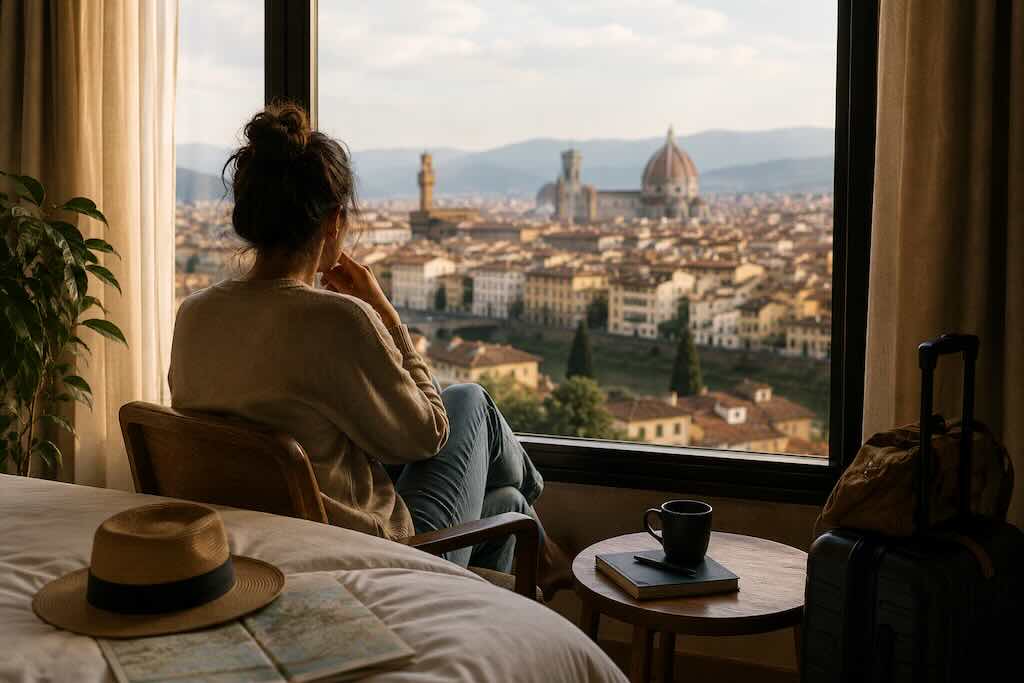
You come home and notice things you barely saw before you left.
- Routine makes everyday life difficult to see
- Another place gives you something to compare home with
- Travel temporarily breaks the machinery of your week
- You pay attention differently when things are unfamiliar
- New experiences can matter after the trip ends
- Coming home can make ordinary comforts feel new
- The useful souvenirs aren’t always things
- Travel gives home a new outline
- FAQ
The kitchen suddenly feels darker. Your usual walk to the station seems shorter than you remembered. You miss the late dinners of the place you’ve just left, or the quiet mornings, or simply how much of the day you spent outside. A habit that felt perfectly normal two weeks ago now looks oddly negotiable.
Travel changes the scenery for a while. More interestingly, it can change the scenery when you return.
Routine makes everyday life difficult to see
Familiarity is efficient. You know which cupboard holds the coffee, which road gets you to work and roughly how long your morning takes. You don’t need to study the supermarket or consciously decide how to use the shower.
Much of ordinary life runs this way. That’s useful, but it also means familiar surroundings can recede into the background.
Travel interrupts that fluency. In an unfamiliar place, small actions require attention again. You look at the buildings because you don’t know what comes after the corner. You study a menu rather than ordering automatically. You notice when shops close, how people use public space and whether dinner begins at six or ten.
For a few days, life becomes conspicuous.
Another place gives you something to compare home with
Imagine spending a week somewhere people walk to buy bread each morning. You return to a neighborhood where nearly every errand begins with getting into a car.
Nothing at home has changed. Your comparison has.
The same thing can happen with apartment size, public transport, meal times, street noise, access to nature or the amount of time people appear to spend socially. Travel provides another version of ordinary life, and that makes your own version easier to recognize.
Not every comparison is flattering to the destination. A beautiful hotel room can make you appreciate your own mattress. A complicated transit system can produce unexpected affection for the bus route you complain about every week. Ten restaurant meals in a row may leave you genuinely excited to chop vegetables in your own kitchen.
Distance can sharpen appreciation as easily as dissatisfaction.
Travel temporarily breaks the machinery of your week
At home, days are partly shaped by obligations that repeat: alarms, commuting, meetings, school runs, laundry, shopping, cooking and the low hum of messages waiting to be answered.
A trip can remove some of those demands, even if it introduces others.
Research on vacations supports the idea that time away can function as a meaningful period of recovery. A 2025 meta-analysis published in the Journal of Applied Psychology, covering 32 studies and 256 effect sizes, found a substantial positive effect of vacation on employee well-being. Psychological detachment from work and physical activity during vacation were among the experiences associated with greater benefits.
That doesn’t mean a holiday automatically repairs an exhausting everyday life. Travel can involve delays, disrupted sleep, expense and its own forms of stress. The research is about vacation recovery rather than proving that visiting another place changes your worldview.
Still, stepping outside the normal sequence of the week can create a useful contrast. You discover what remains when the usual schedule temporarily disappears.
You pay attention differently when things are unfamiliar
Think about how you walk through your own neighborhood. You may pass the same bakery, tree and brick wall without really looking at any of them.
Now think about walking through an unfamiliar city on your first morning there.
You notice balconies, door handles, tiled entrances, the smell coming from a café and the particular sound pedestrian signals make at a crossing. Even mundane objects become worth examining because you haven’t categorized them yet.
That heightened attention doesn’t necessarily survive the flight home. But sometimes the habit does, briefly. The first walk through your own neighborhood after a trip can feel unusually detailed. You see the architecture. You notice the season. You realize there’s a park three streets away that you’ve never entered.
Home has acquired some of the strangeness that made the destination interesting.
New experiences can matter after the trip ends
Rest isn’t the only potentially valuable part of a vacation.
A 2022 study of 507 people in Japan examined vacation experiences and subsequent subjective well-being. Among the recovery experiences studied, mastery — experiences involving learning, challenge or developing skills — was the factor associated with later subjective well-being.
That might mean navigating an unfamiliar transport network, attempting another language, hiking somewhere demanding or learning how a regional dish is prepared. These experiences are small reminders that your normal way of doing something is only one way.
They can also expose preferences that routine had hidden. Perhaps you don’t actually dislike mornings; you dislike mornings spent immediately checking email. Perhaps you enjoy walking far more than you thought when the walk has somewhere interesting to lead. Maybe dinner feels better when it lasts an hour instead of twelve minutes beside a laptop.
A trip creates unusual conditions, so these discoveries need some skepticism. Vacation you isn’t living with Monday’s calendar. But the contrast can still reveal something useful.
Coming home can make ordinary comforts feel new
The first night back has its own sensory character.
Your pillow feels familiar. The bathroom is exactly where you expect it to be. You know which floorboard creaks. You can make tea without searching for anything.
Absence can restore some visibility to things familiarity had dulled.
Research on post-vacation happiness has produced mixed results rather than a simple story of lasting bliss. A study involving 1,530 Dutch adults found that vacationers generally weren’t happier than non-vacationers after returning, although people who had experienced a very relaxing holiday did report greater post-trip happiness.
More recent evidence paints a somewhat stronger picture of recovery. The 2025 meta-analysis found that vacation-related gains in well-being may persist longer than earlier research suggested. What happens after a trip appears to depend on more than simply having gone away.
That matches an experience many travelers know: the glow fades, but particular observations can remain.
The useful souvenirs aren’t always things
You don’t need to redesign your life because breakfast tasted better in Copenhagen or you slept wonderfully beside the sea.
Instead, pay attention to what you miss once you’re home.
Maybe it’s walking after dinner. Sitting outside with coffee. Buying fewer groceries more often. Taking trains instead of driving. Eating at a table. Spending an afternoon without checking work. Keeping your bedroom as uncluttered as the hotel room you liked.
Some of those pleasures belong specifically to being away. Others can survive translation into ordinary life.
Choose one.
A ten-minute evening walk is easier to keep than a promise to “live more like you do on vacation.” So is breakfast away from your phone or one afternoon each weekend spent exploring somewhere unfamiliar close to home.
Travel gives home a new outline
A trip doesn’t need to transform you to be worthwhile. Sometimes its quieter effect is enough.
You leave a familiar environment, adapt to another one and then return with fresh comparisons. For a short period, the automatic parts of your life become visible again.
You notice what you missed. You notice what you didn’t miss at all.
That may be why the journey home can be as revealing as the journey out. The front door opens onto the same rooms, the same routines and the same life you left behind.
They just don’t look quite as inevitable anymore.
FAQ
Why does everything feel different when you return from traveling?
Travel interrupts familiar routines and gives you another environment to compare with home. When you return, habits and surroundings that normally receive little attention can temporarily feel more noticeable.
Can travel actually improve well-being?
Research suggests vacations can improve well-being and support recovery, although experiences vary and the effects don’t necessarily last indefinitely. Psychological detachment from work and certain vacation activities may influence how restorative a trip feels.
Why do I appreciate home more after a trip?
Being away removes the familiarity that can make everyday comforts almost invisible. Returning can make your own bed, kitchen, neighborhood and routines feel noticeable again, particularly after dealing with the practical uncertainties of an unfamiliar environment.
How can I keep the perspective I get from traveling?
Identify one specific part of the trip that improved your days and adapt it to normal life. A regular walk, slower breakfast, more time outdoors or occasional exploration close to home is easier to maintain than trying to recreate an entire vacation.