







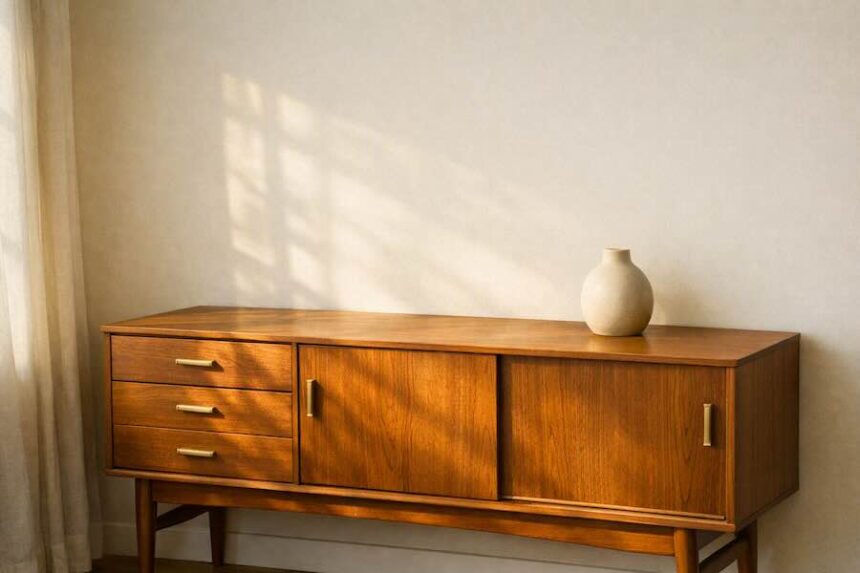
Furniture used to arrive quietly — flat-packed, uniform, forgettable. In 2026, the story has changed. The Circular Economy has moved from niche ethos to design standard, and second-hand sourcing is no longer a budget compromise. It’s the clearest way to build a home with a point of view.
As “fast furniture” loses its shine, the market has shifted toward Quality over Quickness. Here’s the updated guide to navigating the resale world in 2026 — where to look, what to buy, and how to turn a pre-loved piece into something that reads as intentional, not accidental.
Why Second-Hand Is the New Luxury in 2026
- Zero-Waste Living: Choosing used furniture keeps bulky items out of landfills, and out of the Sustainable Furnishings Council’s growing list of concerns around furniture waste.
- The “Un-Googleable” Home: In an era of AI-generated perfection, vintage furniture carries texture and patina that no mass retailer can replicate.
- Inflation-Proofing: New furniture prices still move with global shipping costs. The local resale market stays comparatively stable — and often cheaper.
Essential Furniture Pieces to Look For in 2026
1. Solid Hardwood Foundations
In 2026, “Solid Wood” is the keyword worth hunting for. Look for Mid-Century Modern or early 20th-century pieces with dovetail joints and mortise-and-tenon construction — built to outlast a century, unlike modern particleboard.
- Pro Tip: Check the Forest Stewardship Council (FSC) guidelines to understand why keeping old wood in circulation often beats buying “sustainable” new wood.
2. The “Hero” Sofa
Buying a used sofa means a careful inspection — structural integrity first, then pest control checks (like bedbugs). Done right, a high-quality vintage frame is worth the effort many times over.
- 2026 Trend: Look for “Tuxedo” or “Chesterfield” silhouettes. Buying a solid frame for $100 and investing $400 in eco-friendly upholstery fabrics like hemp or recycled polyester is now standard practice, not a hack.
3. Case Goods With Provenance
Dressers, sideboards, and credenzas hold their value best when they come from known makers. Marketplaces like Chairish now let buyers filter by era, maker, and material — turning what used to be guesswork into an informed search.
Where to Hunt in 2026: Beyond the Thrift Store
The thrift hunt has gone digital. Finding the best pieces in 2026 takes a multi-channel approach:
- Hyper-Local Apps: Beyond Facebook Marketplace, look for Buy Nothing Groups and local community swaps.
- Estate Sales: Still the gold mines of 2026. Use EstateSales.net to find high-end liquidations, where designer pieces often sell for a fraction of retail on the final day.
- Charity Shops With a Mission: Support organizations like Habitat for Humanity ReStore, which diverts tons of furniture from waste while funding housing projects.
- Curated Resale Platforms: Sites like Kaiyo handle delivery and inspection for larger pieces, making cross-city sourcing far less risky than a blind Marketplace pickup.
Upcycling 2026: The “Gentle Restore”
The shabby-chic look of the 2010s is gone. In 2026, the trend is “Gentle Restoration” — enhancing a piece’s original character rather than burying it under thick chalk paint.
- The Technique: Use citrus-based strippers and walnut oil to revive dry wood — a method Apartment Therapy has championed for its low toxicity and richer, more natural finish.
- Hardware Swap: The fastest way to make a $20 dresser read as a $2,000 piece is to swap old plastic handles for brushed brass or hand-thrown ceramic knobs.
Budgeting for Your 2026 Home
Don’t buy because it’s cheap. Buy because it fits.
- The 70/30 Rule: Spend 70% of your budget on “Health & Comfort” (mattress, primary sofa) and 30% on “Character Pieces” (side tables, lighting, shelving).
- Transportation Costs: Always factor in the “U-Haul Tax.” A free sofa isn’t free if it costs $100 to rent a truck to move it.
- The 90-Day Plan: We advocate for Slow Decorating. Take three months to furnish a room instead of three days. It prevents clutter-buying and ensures every piece earns its place.
Conclusion
A second-hand home isn’t a lesser version of a new one. It’s a slower, more deliberate one — built piece by piece, with each item carrying a history the showroom can’t offer. The resale market in 2026 rewards patience: a solid frame here, a gentle restoration there, and a room that looks collected rather than purchased. That’s the real luxury now — not the price tag, but the story behind it.
FAQ: Second-Hand Savvy
Q: How do I know if a piece of furniture is actually “Vintage” or just old? A: Look for manufacturer stamps inside drawers or under tables. Familiarize yourself with brands like Lane, Drexel, or Ercol. Use 1stDibs to research the history and potential value of the styles you find.
Q: Is it safe to buy a used mattress? A: Generally, no. Health standards recommend buying a new mattress to ensure hygiene and proper spinal support. Save your money on the bed frame so you can afford a high-quality organic latex or hybrid mattress.
Q: How do I check if a vintage piece contains harmful materials, like lead paint or old finishes? A: For anything pre-1978, assume old paint may contain lead until tested. The EPA’s lead-safety guidelines cover simple at-home test kits and safe stripping practices.
Q: What’s the fastest way to spot a well-made piece from across the room? A: Weight and joinery. Lift a corner — solid wood feels heavier than veneer over particleboard — and check drawer joints for interlocking dovetails rather than glued butt joints or staples.