







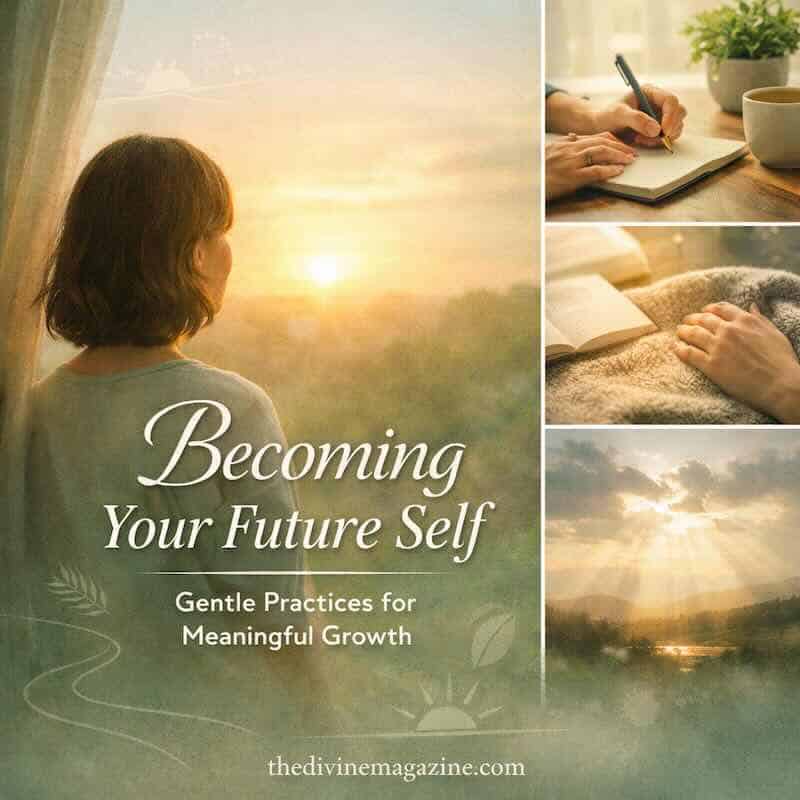
Becoming your future self isn’t about radical reinvention overnight—it’s about small, gentle practices that, repeated over time, reshape who you are becoming. In 2026, with constant noise, comparison, and pressure to “optimize” everything, meaningful growth starts with slowing down, listening inward, and choosing intentional steps rather than quick fixes.
- 1. Clarify Your Future Self (Without Making It a Performance)
- 2. Translate Vision Into Tiny, Repeatable Practices
- 3. Practice Self‑Talk That Supports, Not Sabotages
- 4. Build Environments That Quietly Nudge You Forward
- 5. Let Your Timeline Be Human, Not Algorithmic
- 6. Anchor Growth in Relationships, Not Just Self‑Improvement
- Conclusion
- FAQ: Becoming Your Future Self
Psychologists often describe identity as something we practice, not something we simply have. Every choice – how you spend your mornings, what you say yes or no to, how you speak to yourself – is a vote for the person you’re becoming. Gentle growth means casting those votes with care, without perfectionism or self‑punishment. For a deeper dive into identity and habits, resources like identity‑based habits can be a helpful starting point.
1. Clarify Your Future Self (Without Making It a Performance)
Before you can become your future self, you need a sense of who that is—but it doesn’t have to be a rigid five‑year plan. Instead of obsessing over titles or achievements, focus on qualities and daily realities. Ask yourself:
- How do I want to feel in my everyday life?
- What kind of relationships do I want to nurture?
- What values do I want my decisions to reflect?
- What does “enough” look like for me, not for anyone else?
It can help to write a one‑page “future self snapshot”—a simple description of your life one or two years from now. Keep it grounded and human, not aspirational branding. If you enjoy structured exercises, the Greater Good Science Center offers reflective tools that can support this kind of inner work.
2. Translate Vision Into Tiny, Repeatable Practices
Big goals often collapse under their own weight. Gentle growth is about shrinking the change until it’s almost impossible to resist. Instead of “become confident,” you might practice the following:
- Sending one honest message a day instead of people‑pleasing.
- Speaking up once in a meeting, not leading the whole thing.
- Spending five minutes each evening noticing what you did well.
These micro‑actions are like training reps for your future self. Over time, they become part of your identity. For habit design ideas, you might explore frameworks like behavioral science on habit formation to keep things realistic rather than extreme.
3. Practice Self‑Talk That Supports, Not Sabotages
How you speak to yourself is one of the strongest predictors of whether change sticks. If every attempt at growth is met with “you’re behind” or “this is pointless,” your nervous system will associate change with shame, not possibility. Gentle growth means shifting your inner dialogue from criticism to companionship.
Try replacing harsh questions like “Why can’t I get it together?” with “What would make this 10% easier today?” Self‑compassion isn’t indulgent; research from Dr. Kristin Neff shows it actually increases motivation and resilience over time.
4. Build Environments That Quietly Nudge You Forward
Your environment often shapes your behavior more than willpower does. Becoming your future self is easier when your surroundings quietly support your intentions. That might mean:
- Keeping your journal or notebook visible on your desk.
- Curating your social feeds to include people who value depth, not just performance.
- Creating a small “focus corner” at home where your brain learns to associate that space with calm work or reflection.
If you’re curious about how environment and behavior interact, the field of choice architecture and design psychology offers practical insights into why small environmental tweaks can have outsized effects.
5. Let Your Timeline Be Human, Not Algorithmic
Algorithms reward speed, novelty, and constant output. Human growth doesn’t. Some seasons are about visible progress; others are about quiet integration, healing, or simply staying afloat. Becoming your future self means allowing your pace to be honest rather than impressive.
It can be helpful to think in seasons instead of deadlines: a season of learning, a season of experimenting, a season of rest. Long-term studies on change and wellbeing, like those highlighted by the American Psychological Association, consistently show that sustainable growth is gradual, non-linear, and deeply personal.
6. Anchor Growth in Relationships, Not Just Self‑Improvement
Your future self doesn’t exist in a vacuum. They are shaped by the people you confide in, the boundaries you set, and the communities you choose. Gentle growth includes asking for support, sharing your intentions with trusted people, and letting relationships evolve as you do.
That might mean joining a small peer circle, a local group, or an online community that values honesty over performance. Platforms like Meetup or curated learning communities can be a starting point if you’re looking for spaces where growth is shared, not performed.
Conclusion
Becoming your future self is less about chasing a perfected version of you and more about tending to the person you are today. When you clarify what matters, translate it into small practices, soften your self‑talk, shape your environment, respect your own pace, and root your growth in real relationships, change stops feeling like a performance and starts feeling like a life.
You don’t have to overhaul everything at once. Choose one gentle practice that feels honest for this season of your life and let it be enough for now. Your future self is built in these small, repeated moments of alignment.
FAQ: Becoming Your Future Self
1. How do I know who my “future self” should be?
Start with values, not outcomes. Instead of asking “What should I achieve?”, ask “What kind of person do I want to be in my relationships, work, and inner life?” Reflective exercises from sources like the Greater Good Science Center can help you explore this without turning it into a performance.
2. What if I feel stuck and nothing seems to change?
Feeling stuck is often a sign that your goals are too big, too vague, or not aligned with your current capacity. Shrink the change: choose one action that takes five minutes or less and repeat it daily for a few weeks. If emotional heaviness or burnout is involved, consider speaking with a qualified mental health professional—directories like Psychology Today’s therapist finder can be a starting point.
3. How can I stay consistent without burning out?
Consistency doesn’t mean intensity. Aim for “sustainable minimums”—the smallest version of a habit you can keep even on difficult days. For example, one paragraph of journaling, a five‑minute walk, or one honest check‑in with yourself. Research on habit formation suggests that frequency and emotional tone matter more than dramatic effort.
4. Is it selfish to focus on my future self?
Not when it’s grounded in integrity. Becoming a more regulated, honest, and aligned version of yourself usually benefits the people around you. The key is to balance self‑reflection with responsibility and care for others, rather than using “self‑improvement” as an excuse to disconnect.
5. How do I handle setbacks without giving up?
Setbacks are part of any growth process. Instead of interpreting them as proof you can’t change, treat them as information: What was too much? What support was missing? What boundary wasn’t honored? A brief, compassionate review after a setback can turn it into a learning moment rather than a verdict on your future.