







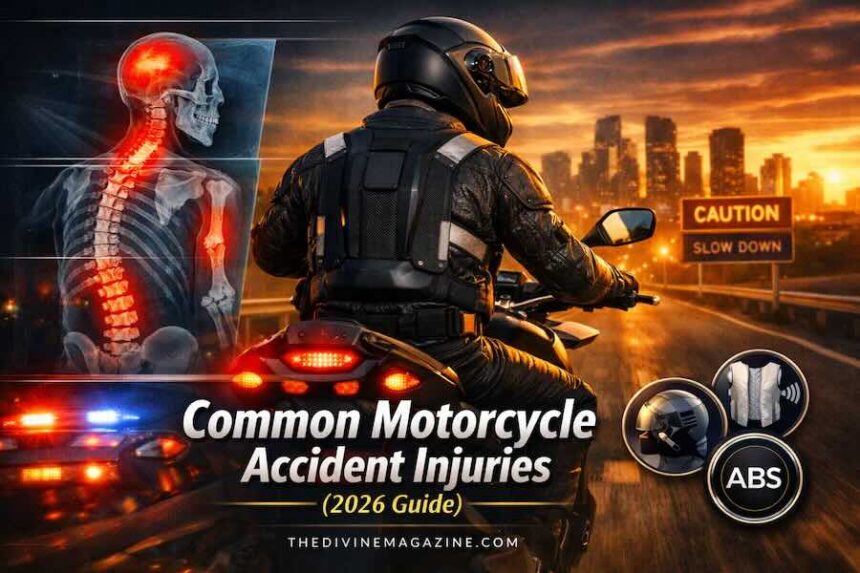
Motorcycles are often seen as a more exciting and independent form of personal transportation than cars, with many motorcyclists enjoying the fun and thrill of riding their bikes along the highway and feeling a real connection with the open road.
Unfortunately, while bikes may be more enjoyable to drive in some ways and have other advantages too, they also have some serious downsides, with safety being the number one issue. More than 5,000 motorcyclists are killed in accidents every year in the US, with countless others getting injured.
Since motorcycles are quite small vehicles, they can’t offer the same protection as something like a minivan or SUV, and even though security standards have improved for motorcycles, they’re still not able to offer key features like airbags.
This is why a lot of accidents involving motorcycles will result in injuries, and anyone involved in such an accident should seek medical attention as soon as possible. This guide will go over some of the most common forms of motorcycle injury to help you develop a better understanding of the risks you may face.
Head and Brain Damage
Head and brain injuries are among the worst kinds of injuries a motorcyclist may suffer when accidents happen, and unfortunately, these types of injuries are quite common. Bikers are often thrown from their motorcycles when collisions occur, often flying straight into a vehicle ahead or onto the road beneath them, banging their heads in the process.
There is a range of potential symptoms that can result from a head or brain injury, including headaches, fatigue, eye strain, and problems with memory and cognitive function which can lead to serious personal and professional consequences and recurring medical bills for treatments and therapy.
Broken or Fractured Bones
As stated above, when motorcycle accidents happen, they tend to cause the rider to fly right off their bike, often hitting an obstacle in front of them or the road around them, and these kinds of heavy impacts can naturally result in some nasty injuries, including fractures all around the body and broken bones as well.
Bone breaks are often able to heal over time, but some can be very severe and may require extensive surgery to repair the damage. In some cases, breaks will never fully heal, leaving people with limps, aches, and mobility issues that may affect their lives in more ways than one. Wearing protective accessories and driving within the speed limit can help to minimize the risk of broken bones.
Muscular Injuries
Motorcycle accidents aren’t just able to leave people with broken bones and brain injuries; they can also cause a wide range of different muscular injuries too, often in areas like the legs and groin. This is because, when crashes and collisions occur, the lower parts of a rider’s body are the most likely to be pushed into the bike itself, putting immense pressure on the muscular tissue in the process.
Muscular injuries can occur all over the body, depending on the nature of the accident, and they can be very painful, with long recovery times. Extensive physiotherapy may be needed, combined with long periods of rest and other forms of treatment too, and this kind of injury may force you off your motorcycle for several weeks or months.
Road Rash
Road rash can be one of the milder injuries incurred in a motorcycle accident, but in the most severe cases, it can also be one of the nastiest and most painful injuries of all. Essentially, in simple terms, road rash is a form of friction burn that occurs when a rider’s body is thrown along the road at high speed, resulting in the burning of the skin.
Road rash commonly occurs along the legs and arms but may occur in other parts of the body as well, burning away the top layers of skin and leaving the raw lower layers exposed to the air. This can hurt a lot, and there’s a high risk of infection too, which can cause a lot of additional complications, so it’s important to get road rash treated as soon as possible.
Spinal Cord & Internal Injuries (2026 Update)
Modern trauma data shows that spinal cord injuries are increasingly common in motorcycle crashes due to high‑impact collisions and ejections. These injuries can lead to partial or full paralysis, chronic pain, and long-term disability. Internal injuries—such as organ damage or internal bleeding—may not be immediately visible but can be life-threatening. Riders should always undergo a full medical evaluation after any crash. For more information, see the NHTSA motorcycle safety resources.
Psychological Trauma & Post‑Accident Anxiety
Beyond physical injuries, many riders experience psychological trauma after an accident. Conditions such as PTSD, anxiety, riding fear, and sleep disturbances are common. Mental health support, counseling, and trauma‑focused therapy can significantly improve recovery outcomes. Organizations like MentalHealth.gov provide guidance on accessing support.
2026 Motorcycle Safety Technology
Motorcycle safety has evolved significantly in recent years. Riders now have access to advanced gear such as airbag vests, smart helmets with crash detection, and improved ABS systems. Brands like Alpinestars Tech‑Air and Dainese D‑Air offer wearable airbag systems that dramatically reduce injury severity in crashes.
Conclusion
These are just some of the potential injuries that can occur when motorcycle accidents happen, and we haven’t even touched on the many mental health issues that people can experience after accidents too, like anxiety, fear, and stress. With new 2026 safety technology, better protective gear, and increased awareness, riders can significantly reduce their risk. Always ride defensively, wear proper gear, and seek medical attention immediately after any crash.
FAQ: Motorcycle Accident Injuries (2026)
1. What are the most common motorcycle injuries in 2026?
Head trauma, fractures, spinal damage, and road rash remain the most frequent injuries, according to updated NHTSA data.
2. How can riders reduce injury risk?
Wear modern safety gear such as airbag vests and smart helmets, follow speed limits, and maintain defensive riding habits.
3. Should I see a doctor after a minor crash?
Yes. Internal injuries and concussions may not show symptoms immediately. Always get a full medical evaluation.
4. Can psychological trauma occur after an accident?
Absolutely. Many riders experience anxiety or PTSD. Seek support through MentalHealth.gov or a licensed therapist.
5. What legal steps should I take after a motorcycle accident?
Document the scene, contact law enforcement, and consult a personal injury attorney. Updated 2026 compensation laws favor riders who report promptly.
6. Are airbag vests mandatory in 2026?
Not yet, but they’re strongly recommended by safety experts and insurers for reducing chest and spinal injuries.
7. What’s new in motorcycle safety technology?
Smart helmets with crash detection, adaptive ABS, and connected emergency alerts are becoming standard features on 2026 models.