







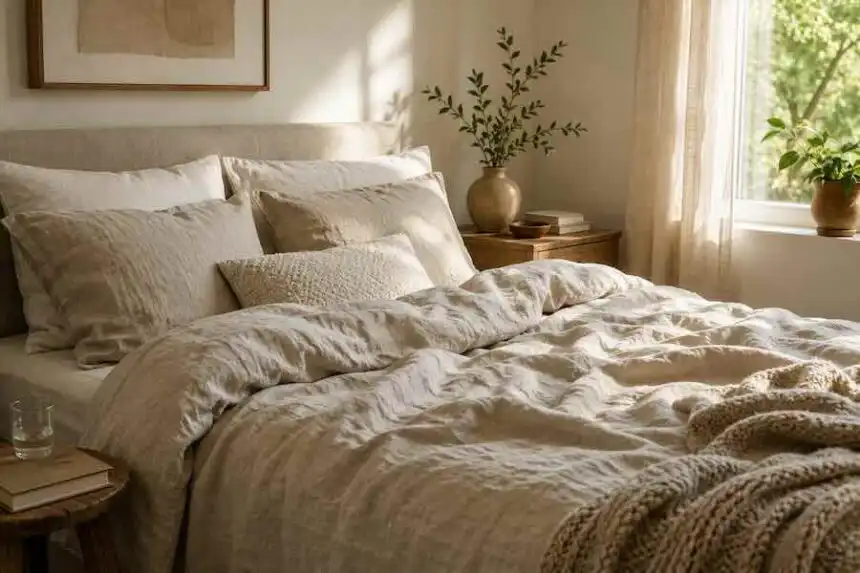
For sensitive skin, bedding is not simply a decorative layer. It stays against the face and body for hours, shaping the small overnight environment of heat, moisture, friction, detergent residue, and fabric texture that can make comfortable skin feel considerably less comfortable by morning.
- Why Linen Bedding Can Feel Better Against Sensitive Skin
- Breathability and Moisture Management Matter
- Is Linen Really Hypoallergenic?
- Linen vs Cotton, Silk, and Synthetic Bedding
- New Linen Can Feel Rough — and That Matters
- Detergent May Matter as Much as the Fabric
- Choosing Linen Bedding for Sensitive Skin
- Temperature Regulation Is Linen’s Quiet Strength
- Durability Makes the Higher Price Easier to Understand
- Practical Takeaway: Test Linen Before Replacing Everything
- Conclusion: Linen Can Create a Calmer Bed
- FAQ: Linen Bedding and Sensitive Skin
Linen can be a particularly appealing bedding material because its loose, breathable structure helps heat and moisture escape rather than remain trapped against the skin. Yet sensitive skin is personal. Linen is not automatically “hypoallergenic,” nor can a fabric treat eczema, rosacea, allergies, or another skin condition. The better question is whether well-made, carefully washed linen creates a sleeping environment your skin finds calmer.
Why Linen Bedding Can Feel Better Against Sensitive Skin
Linen begins with flax. Its fibers produce a distinctive fabric that feels airy, textured, and relatively dry against the body. That combination becomes especially relevant if warmth and perspiration tend to make your skin uncomfortable during the night.
Instead of treating linen as a cure, think of it as part of the skin’s physical environment. Breathability, moisture management, surface texture, dyes, finishing agents, and whatever remains in the fabric after washing can all influence comfort.
If sensitivity is already part of your routine, the same restrained approach used when choosing products for sensitive skin makes sense here: fewer unnecessary ingredients, less fragrance, and careful observation of how your individual skin responds.
Breathability and Moisture Management Matter
One of linen’s clearest advantages is airflow. Its woven structure allows warmth to dissipate while the fibers absorb moisture, which can make the bed feel less humid and clammy when temperatures rise.
That matters because sweat, heat, and friction can be uncomfortable for already reactive skin. Keeping the sleeping environment cooler and drier may therefore make linen more comfortable for some people, particularly those who sleep warm.
The effect can also be useful beyond summer. Linen bedding can be layered with blankets or a duvet during colder months, allowing you to adjust insulation without giving up the breathable surface directly against your body.
Is Linen Really Hypoallergenic?
“Hypoallergenic” is used loosely in bedding marketing, so it deserves some caution. No textile can guarantee that it will never trigger irritation or an allergic response.
For sensitive skin, what may matter more is everything surrounding the fiber: dyes, chemical finishes, detergent, fragrance, fabric softener, accumulated allergens, and how frequently the bedding is cleaned.
When shopping, certifications can provide another useful filter. OEKO-TEX offers textile testing and certification related to harmful substances, while the Global Organic Textile Standard covers certified organic textile processing under defined environmental and social criteria.
Certification does not tell you whether a sheet will personally agree with your skin, but it gives you more information about how the textile has been produced.
Linen vs Cotton, Silk, and Synthetic Bedding
There is no universal winner for sensitive skin. Texture alone can change the answer. Cotton generally feels smoother immediately, linen has its recognizable dry texture, silk offers an exceptionally smooth surface, and synthetic bedding varies enormously depending on its construction.
| Fabric | What It Feels Like | What Sensitive Sleepers Should Consider |
|---|---|---|
| Linen | Airy, dry and initially crisp | Excellent breathability, but rougher linen may create unwanted friction |
| Cotton | Smooth and familiar | Comfortable from the first night; performance varies considerably by weave and quality |
| Silk | Very smooth with little surface drag | Gentle texture, but usually expensive and more demanding to maintain |
| Synthetics | Varies from soft microfiber to slick performance fabrics | Some constructions may retain more warmth and moisture than breathable natural alternatives |
If friction is your primary concern, a very smooth textile may feel better than textured linen. If overheating is what wakes you, linen’s airflow may matter considerably more. Sensitive skin makes personal testing more useful than broad fabric rankings.
New Linen Can Feel Rough — and That Matters
Fresh linen does not always arrive with the cloud-soft finish suggested by styled bedroom photography. Depending on the yarn, weave, weight, and finishing process, new sheets can feel crisp or even slightly coarse.
That texture tends to soften through washing and use, but someone whose skin reacts strongly to friction may prefer prewashed linen from the beginning. A linen pillowcase is a sensible first test because it places the material against some of the most sensitive skin without requiring an investment in an entire bedding set.
Wash it before the first night. Then keep the rest of your skincare and laundry routine unchanged for a while so you can judge the fabric itself rather than several new variables at once.
Detergent May Matter as Much as the Fabric
A beautifully breathable sheet can still become uncomfortable when coated in fragrance or fabric-softener residue. For reactive skin, simple laundering is usually the cleaner experiment.
- Use a mild, fragrance-free detergent if fragrance tends to bother your skin.
- Follow the manufacturer’s washing temperature rather than assuming all linen requires the same setting.
- Avoid excessive detergent, which can leave residue behind.
- Skip scented fabric softener if you are trying to identify possible irritants.
- Dry according to the care label; excessive heat can place unnecessary stress on fibers.
These habits also complement the care principles in our guide to caring for linen: gentle treatment protects both the fabric’s texture and its useful lifespan.
Choosing Linen Bedding for Sensitive Skin
Ignore romantic product language for a moment and read the specification. Look for 100 percent linen if you specifically want flax rather than a blend, examine certification information where available, and check whether the material has been prewashed.
European provenance can be useful information, and organizations such as Masters of Linen provide traceability standards for European flax and linen production. Still, geography alone does not guarantee that one set of sheets will be softer or more suitable for your skin than another.
Fabric weight deserves attention too. Lighter linen generally feels airier, while heavier material can feel more substantial and may take longer to soften. Rather than chasing a single “perfect” GSM number, consider the climate, how warm you sleep, and the tactile sensation you prefer.
Temperature Regulation Is Linen’s Quiet Strength
There is something particularly pleasant about slipping into bedding that does not immediately trap warmth around the body. Linen’s loose, dry hand gives a bed that feeling: cool air moving through the weave, less sticky fabric against warm skin, and layers that can be adjusted without creating a sealed cocoon.
If night sweats are frequent or severe, however, bedding should not be treated as the diagnosis or solution. Persistent night sweats can have many causes and are worth discussing with a healthcare professional.
Durability Makes the Higher Price Easier to Understand
Good linen is rarely the cheapest bedding on the shelf. Its appeal lies partly in what happens after purchase: flax fibers are strong, the material develops a softer hand with use, and quality linen can remain serviceable for years when cared for correctly.
That changes the value calculation. Instead of comparing two sets purely by their initial price, consider construction, care requirements, repairability, and how frequently each is likely to need replacing.
Linen also has an environmental story worth examining, but avoid assuming every linen product is automatically sustainable. Agricultural practices, processing, dyeing, manufacturing location, durability, shipping, and eventual disposal all contribute to the footprint of a finished textile.
Practical Takeaway: Test Linen Before Replacing Everything
If your skin is reactive, make one change at a time. Start with a prewashed linen pillowcase. Wash it using your normal fragrance-free detergent, sleep on it for a couple of weeks, and note changes in comfort, warmth, itching, or irritation.
If the texture feels good, add sheets or a duvet cover. If it feels scratchy even after repeated washing, there is no prize for forcing the relationship. Cotton, silk, or another comfortable textile may simply suit your skin better.
The same measured approach applies when dealing with changes in sensitive or aging skin. Pay attention to the environment touching your body, but avoid assigning every flare-up to a single product.
Conclusion: Linen Can Create a Calmer Bed
Linen’s strongest case for sensitive skin is refreshingly practical. It breathes well, manages moisture, grows softer through use, and can create a cooler, less clammy sleeping surface.
Those qualities may reduce some of the environmental factors that make sensitive skin uncomfortable, but linen is not medical treatment and “natural” does not automatically mean irritation-free. Choose carefully processed fabric, keep laundry products simple, and let your own skin make the final decision.
FAQ: Linen Bedding and Sensitive Skin
Is linen bedding hypoallergenic?
Linen is frequently marketed as hypoallergenic, but no fabric can guarantee an absence of allergic or irritant reactions. Breathability and moisture management can make linen comfortable for sensitive sleepers, while dyes, finishes and laundry products can still cause problems for some people.
Is linen good for eczema-prone skin?
Some people with eczema may appreciate linen’s breathable, moisture-managing qualities, while others may find its initial texture irritating. The National Eczema Association’s fabric guidance can provide additional context, but persistent or worsening symptoms should be discussed with a qualified healthcare professional.
Does linen become softer after washing?
Yes. Linen characteristically relaxes and softens through washing and use. Prewashed linen can provide a softer starting texture for people particularly sensitive to friction.
How should I wash linen bedding for sensitive skin?
Follow the bedding manufacturer’s care instructions and consider a mild, fragrance-free detergent. Avoid excessive detergent and strongly scented fabric treatments if residues or fragrance tend to irritate your skin.
Is linen better than cotton for sensitive skin?
Neither fabric is universally better. Linen can offer excellent airflow and moisture management, while cotton often feels smoother immediately. Your sensitivity to heat, perspiration, texture, dyes, and laundry products should guide the choice.
How can I tell whether my bedding is irritating my skin?
Change one variable rather than replacing your entire sleep routine. Testing a freshly washed pillowcase while keeping skincare and detergent consistent can make patterns easier to notice. Persistent itching, redness, rash, or other symptoms deserve medical assessment rather than continued fabric experimentation.