
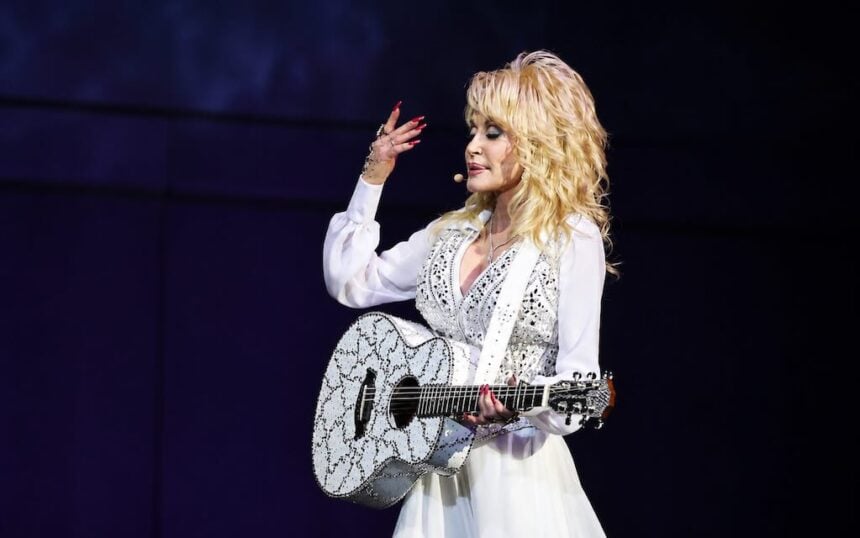
There are voices you recognize before the first line has finished. Dolly Parton’s was one of them: bright but never weightless, unmistakably Appalachian, capable of carrying heartbreak without making it theatrical.
On August 25, 2026, that voice became part of history.
Dolly Parton has died at 80 in Nashville, Tennessee. Her family confirmed her death Tuesday, ending a life that moved from poverty in the Smoky Mountains to one of the most extraordinary careers in American popular music. Reuters and the Associated Press independently confirmed the news. At the time of publication, a cause of death had not been publicly announced.
There will be numbers attached to what comes next: more than 100 million records sold, thousands of songs written, Grammy Awards, films, businesses, halls of fame and decades of performances. They matter.
But numbers have never explained Dolly particularly well.
Her real achievement was stranger and harder to reproduce. She could be funny without becoming a novelty, glamorous without surrendering control of the joke, sentimental without becoming hollow and enormously famous while continuing to write songs about people who sounded as though they lived two houses down the road.
America did not simply know Dolly Parton.
It trusted her.
Dolly Parton’s death comes during a remarkable final chapter
The timing makes today’s news particularly difficult to absorb.
Parton turned 80 in January. Just six days before her death, her official website announced 82 new global sales certifications across 14 countries, reflecting renewed engagement with a catalog that was still moving across generations.
“Jolene” had reached Diamond status in Canada and the Netherlands. “9 to 5” had gone Diamond in Canada. New certifications stretched from the United Kingdom and Australia to Finland, Sweden and South Africa.
She was also preparing for another unlikely chapter: DOLLY: A True Original Musical, her autobiographical stage musical, was scheduled to arrive on Broadway in winter 2026.
Even at 80, Dolly Parton was not being discussed solely in the past tense.
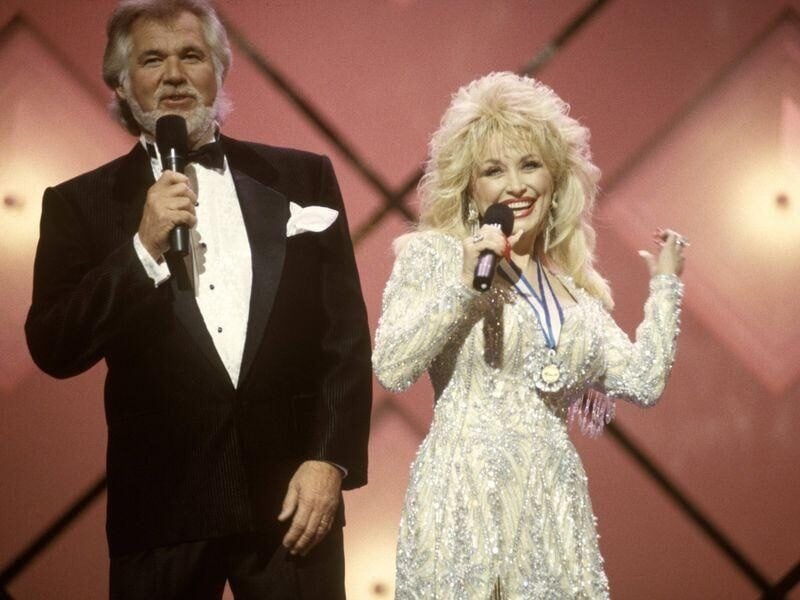
Photo credit: Dolly Parton in 1983. Photo by Alan Light, CC BY 2.0, via Wikimedia Commons.
Before the icon, there was the songwriter
Strip away the rhinestones and Dollywood signs and you arrive at the part of Parton’s career that deserves the closest attention now: the writing.
Reuters estimates that she wrote around 3,000 songs. Parton herself repeatedly treated songwriting not as a side effect of celebrity but as the centre of her creative identity.
You can hear why in “Jolene.”
The song is remarkably economical. There is no elaborate revenge fantasy, no attempt to make its narrator invulnerable. Instead, Parton writes a woman asking another woman not to take the person she loves.
That vulnerability is the engine.
The guitar keeps moving. The name keeps returning. The narrator understands exactly how beautiful her rival is, which makes the fear underneath the song feel even sharper.
More than half a century later, it still sounds immediate.
“I Will Always Love You” was a goodbye before it became a phenomenon
Another Parton song became so enormous in someone else’s voice that its origin story can almost disappear.
Parton wrote “I Will Always Love You” when she was preparing to leave Porter Wagoner’s television show and professional partnership. Rather than writing an angry declaration of independence, she wrote a farewell built around affection.
Parton’s original recording is restrained. Small. Almost conversational.
Then Whitney Houston recorded it for The Bodyguard in 1992 and transformed the composition into one of pop music’s defining vocal performances.
Parton responded in characteristically Dolly fashion: with pride, gratitude and jokes about the royalties.
The contrast between those two recordings says something important about her writing. A great song can survive a complete change in scale.
Whisper it or belt it. The architecture remains.
“Coat of Many Colors” turned poverty into detail, not spectacle
Parton was born in 1946 and grew up in a large family in rural East Tennessee. Poverty became part of her public biography, but her strongest writing about it rarely asked listeners for pity.
“Coat of Many Colors” is the clearest example.
The song recalls a coat Parton’s mother made from pieces of fabric and the humiliation she experienced when other children laughed at it. Yet the emotional centre is not deprivation. It is the value a child assigns to something made with love.
That distinction matters.
Parton could write about class because she understood the texture of it: homemade clothes, crowded rooms, family stories, embarrassment, pride. She did not need to turn hardship into an aesthetic.
Then Dolly walked into an office at 9 a.m.
By 1980, Parton was already a major music star. Then came 9 to 5.
The film placed her alongside Jane Fonda and Lily Tomlin in a workplace comedy about three women dealing with a sexist, egotistical boss. Parton’s title song did something equally clever: it turned office frustration into a country-pop record that could play almost anywhere.
The typewriter-like rhythm is playful. The subject underneath it is not.
Work without recognition. Ambition constrained by hierarchy. Someone above you taking credit while you keep the machinery moving.
Decades later, “9 to 5” remains immediately legible because the workplace changed faster than the feeling did.
She understood the Dolly Parton character better than anyone
There was always an intriguing tension between Dolly Parton the person and Dolly Parton the visual event.
The hair was enormous. The nails were long. Rhinestones caught every available light source. The silhouette was deliberately exaggerated.
None of this happened accidentally.
Parton understood image construction with remarkable clarity. She could make the joke about herself before anyone else had the opportunity, which meant the joke rarely diminished her.
In interviews collected by the Associated Press after her death, that self-awareness appears repeatedly. She once described herself with characteristic economy as a “workhorse that looks like a show horse.”
That may be one of the cleanest descriptions of her career.
The show horse made people look.
The workhorse wrote the songs.
Dolly in her own words
Parton’s humor deserves a place in any remembrance because it was not separate from her intelligence. It was one of the ways she expressed it.
When discussing Whitney Houston’s enormous success with “I Will Always Love You,” Parton could happily let Houston have the vocal glory while joking about receiving the money. When speaking about acting, fame or her appearance, she routinely punctured the seriousness surrounding celebrity before it could harden around her.
The Associated Press’s archive of Parton interviews across several decades is worth reading today precisely because the personality survives on the page: funny, practical, ambitious and unusually aware of how fortunate her life had become.
Her influence did not stop at country music
Calling Parton a country legend is accurate and incomplete.
Her songs moved through pop, rock, bluegrass and film. Whitney Houston carried one into the centre of 1990s pop culture. Younger artists continued returning to “Jolene.” Parton’s Rockstar project in 2023 arrived after her induction into the Rock & Roll Hall of Fame and placed her alongside artists from outside the country world.
Meanwhile, generations of songwriters inherited something less obvious from her: permission to be commercially ambitious without treating emotional directness as unsophisticated.
Parton’s songs rarely needed obscurity to sound intelligent.
She could make a complicated feeling plain without making it simple.
Why so many different people felt that Dolly belonged to them
Parton’s cultural reach eventually became almost anomalous.
She could occupy spaces that increasingly shared very little with one another: country radio and queer culture, church-going Southern families and Hollywood, grandparents and teenagers discovering “Jolene” through another artist or another algorithm.
Reuters noted after her death that she had an unusual ability to bridge political and cultural divisions.
Part of that came from knowing when not to turn every microphone into a political podium. But reducing her appeal to neutrality misses something.
Her songs consistently took ordinary people seriously.
Women afraid of losing someone. Workers tired of being overlooked. Families without much money. People leaving relationships while still loving the person they were leaving.
You did not have to agree with Dolly Parton about everything to recognize someone you knew inside a Dolly Parton song.
The quieter legacy: millions of children’s books
Then there is the part of Parton’s life that may ultimately reach almost as many homes as her music.
She founded Dolly Parton’s Imagination Library in 1995, inspired by her father, who could not read or write.
What began in her home county in Tennessee became an international literacy program. By 2026, Parton’s official website said the program operated across five countries and sent more than two million free books every month to children.
There is something unusually coherent about that legacy.
A woman who built her life by telling stories spent decades making sure children received books before they could read the stories themselves.
The final years carried loss as well as recognition
Parton’s husband, Carl Dean, died in March 2025 at 82. They had been married for nearly six decades.
Their marriage was unusual by celebrity standards partly because Dean spent most of it outside celebrity culture altogether. Parton remained the public figure. He largely remained home.
After his death, Parton spoke publicly about grief and faith while continuing to work.
Her 80th year then became a curious mixture of looking backward and continuing forward: new certifications, new recordings, honors and preparations for the Broadway musical based on her life.
Six days before her death, her website was still publishing news about how strongly her music was selling around the world.
That detail feels different tonight.
Five Dolly Parton songs to play tonight
If you want to remember Parton through the thing she valued most, begin with the songs rather than a career montage.
- “Coat of Many Colors” — for the storyteller who could turn childhood memory into something universal.
- “Jolene” — for tension, restraint and one of popular music’s most unforgettable names.
- “I Will Always Love You” — listen to Parton’s original recording first and notice how little the song actually needs.
- “9 to 5” — for the wit, rhythm and working-class observation hiding inside an irresistible pop song.
- “Light of a Clear Blue Morning” — for the sense of release that runs through some of her most hopeful writing.
That final selection carries particular weight now. Parton released a new rendition of “Light of a Clear Blue Morning” for her 80th birthday, joined by Lainey Wilson, Miley Cyrus, Queen Latifah and Reba McEntire, with proceeds benefiting pediatric cancer research at Monroe Carell Jr. Children’s Hospital at Vanderbilt.
A legacy that was still moving
Celebrity deaths have a strange way of freezing people.
Suddenly the photographs become archival. The songs become classics. A person who was still making plans yesterday is reorganized into eras.
Dolly Parton will resist that treatment for a while.
Her music is too present. Her jokes still circulate like something she said five minutes ago. Children are opening books with her name attached to them. Artists who were not alive when “Jolene” was recorded are still finding things inside it.
And somewhere tonight, someone who never thought of themselves as a country listener will play “I Will Always Love You,” discover that quiet original recording and understand something about Dolly Parton that the wigs and rhinestones could occasionally obscure.
Underneath one of the most recognizable personas American entertainment ever produced was a songwriter.
That was the part she wanted us to remember.
Editor’s note: This article was published on August 25, 2026, following confirmation of Dolly Parton’s death.