







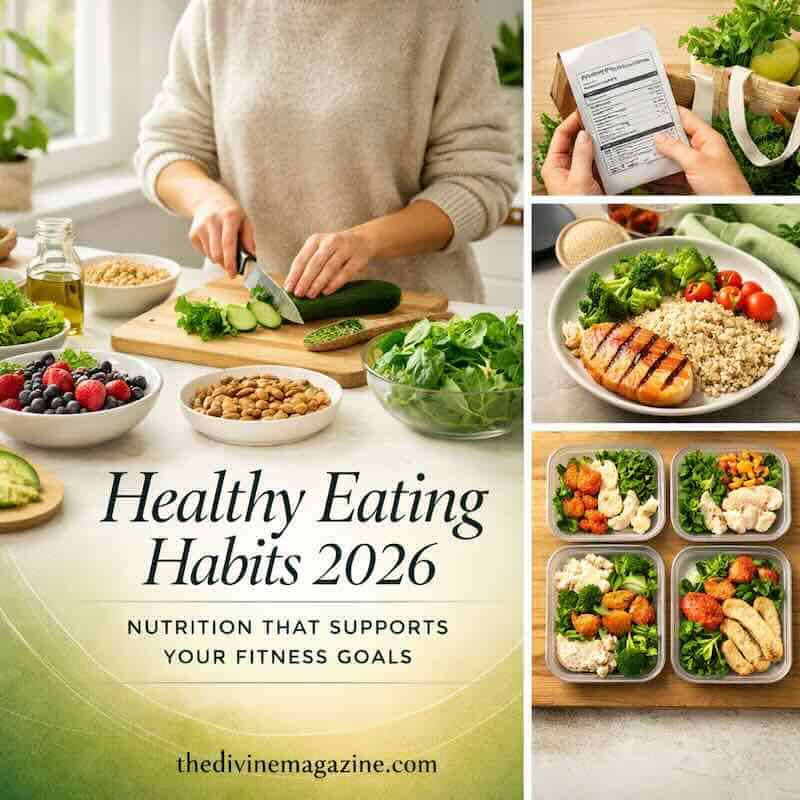
In 2026, goal setting has evolved beyond career and finances — it’s now deeply connected to health, longevity, and emotional wellbeing. Whether you’re aiming for better fitness, improved nutrition, or stronger relationships, goals remain powerful expressions of what we value most. Writing them down still helps make them tangible and keeps us accountable for progress.
- Healthy Eating Habits to Achieve Your Fitness Goals (2026 Edition)
- 1. Eat Plenty of Fruits and Vegetables
- 2. Don’t Skip Breakfast
- 3. Reduce Processed Foods
- 4. Choose High-Fibre Starchy Carbohydrates
- 5. Eat More Fish
- 6. Limit Saturated Fat and Sugar
- Conclusion
- FAQ: Healthy Eating and Fitness Goals 2026
- 1. How can I set realistic nutrition goals for 2026?
- 2. Are plant‑based diets effective for fitness and muscle gain?
- 3. What are the best snack options for a fitness routine?
- 4. How does hydration affect nutrition and performance?
- 5. Should I count calories or focus on macronutrients?
- 6. How can I maintain healthy eating habits while traveling?
- 7. What’s the role of sleep in nutrition and fitness?
- 8. Are supplements necessary for a balanced diet?
- 9. How often should I update my fitness and nutrition plan?
- 10. What’s the most important habit for long‑term health in 2026?
When it comes to health, fitness and nutrition goals often top the list. We want to lose or gain weight, exercise consistently, and make smarter food choices. While regular exercise can take months or years to show results, healthy eating habits are harder to measure but equally transformative. In 2026, nutrition science continues to prove that food quality directly impacts metabolism, energy, and mental clarity.
Nutrition remains the ultimate game changer — you can’t out-train a poor diet. Burning calories takes hours, but regaining them can happen in minutes. Sustainable progress depends on consistent, mindful eating and a balanced daily routine. For updated dietary guidelines, visit British Nutrition Foundation or Harvard Nutrition Source.
Healthy Eating Habits to Achieve Your Fitness Goals (2026 Edition)
Despite the flood of new diet trends — from AI-personalized meal plans to microbiome-based nutrition — the fundamentals of eating well remain unchanged. Here are six timeless habits backed by modern science to help you reach your fitness goals.
1. Eat Plenty of Fruits and Vegetables
Experts still recommend at least five portions of fruits and vegetables daily. Choose fresh, frozen, canned, dried, or juiced options. Getting your 5 A Day can be simple — add berries to breakfast cereal, swap mid-morning snacks for fruit, or blend a smoothie. A portion equals 80g of fresh produce or 30g of dried fruit (best consumed with meals).
Limit fruit juice to one 150ml glass per day to protect dental health. For nutrient-rich alternatives, explore vegan shakes or meal replacement shakes with 10–15g of plant-based protein per serving.
2. Don’t Skip Breakfast
Breakfast remains the cornerstone of a balanced diet. It jumpstarts metabolism, improves cognitive function, and helps regulate appetite throughout the day. Skipping breakfast may lead to overeating later. Choose high-fibre, low-sugar options like whole-grain cereal with semi-skimmed milk and sliced fruit. For more ideas, visit BBC Good Food – Healthy Breakfasts.
3. Reduce Processed Foods
Not all packaged foods are harmful, but reading labels is essential. Opt for frozen vegetables, canned beans, and whole ingredients over boxed meals high in preservatives and hidden sugars. For guidance on decoding food labels, see FDA Nutrition Facts Guide.
4. Choose High-Fibre Starchy Carbohydrates
Starchy carbohydrates should make up about one-third of your diet. Foods like potatoes, bread, rice, and cereals provide energy and essential nutrients. Contrary to popular belief, they’re not inherently fattening — gram for gram, they contain less than half the calories of fat. Choose wholegrain varieties such as brown rice, whole wheat pasta, and potatoes with skins for added fibre and satiety.
5. Eat More Fish
Fish remains a top source of lean protein and omega-3 fatty acids. Aim for two portions weekly, including one oily fish like salmon, sardines, or trout. Oily fish help prevent heart disease and support brain health. For sustainable seafood choices, visit Marine Stewardship Council or BBC Good Food – Oily Fish Guide.
- Cod
- Coley
- Skate
- Plaice
- Haddock
6. Limit Saturated Fat and Sugar
Fat is essential, but type and quantity matter. Excess saturated fat raises cholesterol and heart disease risk. Men should limit intake to 30g daily, women to 20g. Choose unsaturated fats like olive oil, nuts, and avocados. When buying meat, select lean cuts and trim visible fat. For more on healthy fats, see American Heart Association – Fats Explained.
Reduce free sugars found in sweets, syrups, and fruit juices. Excess sugar contributes to obesity and tooth decay. Instead, focus on natural sugars from fruits and dairy. For updated sugar guidelines, visit World Health Organization – Healthy Diet 2026.
Conclusion
Achieving fitness goals in 2026 requires balance, patience, and consistency. Break large goals into measurable weekly steps and track progress using digital health tools or journals. Celebrate small wins — they build momentum and motivation. Remember, sustainable health is not about restriction but about nourishment and awareness.
These six habits remain timeless foundations for a healthier lifestyle. Combine them with regular movement, hydration, and adequate sleep to create a holistic wellness routine that lasts. For personalized nutrition insights, explore MyFitnessPal or Cronometer.
FAQ: Healthy Eating and Fitness Goals 2026
1. How can I set realistic nutrition goals for 2026?
Start by defining specific, measurable targets such as “eat five servings of vegetables daily” or “reduce added sugar by half.” Track progress weekly using apps like Cronometer or MyFitnessPal. Small, consistent changes build long‑term success.
2. Are plant‑based diets effective for fitness and muscle gain?
Yes. Plant‑based diets rich in legumes, whole grains, and vegetables support muscle recovery and reduce inflammation. Ensure adequate protein intake from sources like tofu, lentils, and pea protein powder. For research‑based guidance, see NutritionFacts.org – Plant‑Based Diets.
3. What are the best snack options for a fitness routine?
Opt for nutrient‑dense snacks that balance protein, fibre, and healthy fats. Examples include Greek yogurt with berries, a handful of nuts, or whole‑grain toast with avocado. For more ideas, visit Healthline – Healthy Snacks for Weight Loss.
4. How does hydration affect nutrition and performance?
Proper hydration supports digestion, nutrient absorption, and muscle function. Aim for 2–3 litres of water daily depending on activity level. Include electrolyte‑rich drinks after intense workouts. Learn more at Medical News Today – Hydration and Health.
5. Should I count calories or focus on macronutrients?
Counting calories can help with weight management, but macronutrient balance is key for fitness. Aim for a mix of complex carbs, lean proteins, and healthy fats. Use tracking tools like Eat This Much to plan balanced meals automatically.
6. How can I maintain healthy eating habits while traveling?
Pack portable snacks like nuts, protein bars, and fruit. Choose grilled or steamed options when eating out and stay hydrated. For global healthy travel tips, see CDC – Healthy Travel 2026.
7. What’s the role of sleep in nutrition and fitness?
Sleep regulates hormones that control appetite and muscle recovery. Aim for 7–9 hours per night to optimize metabolism and energy. Explore the latest research at Sleep Foundation – Nutrition and Sleep.
8. Are supplements necessary for a balanced diet?
Supplements can help fill nutrient gaps but should not replace whole foods. Consult a registered dietitian before adding vitamins or protein powders. For evidence‑based guidance, visit NHS – Vitamins and Minerals Guide.
9. How often should I update my fitness and nutrition plan?
Review your plan every 8–12 weeks to adjust for progress and seasonal changes. Use data from wearables or apps to fine‑tune calorie intake and activity levels. For goal‑setting strategies, see Verywell Fit – Setting Fitness Goals.
10. What’s the most important habit for long‑term health in 2026?
Consistency. Balanced nutrition, regular movement, hydration, and sleep form the foundation of lasting wellbeing. For a comprehensive overview of modern health habits, visit World Health Organization – Healthy Diet 2026.