






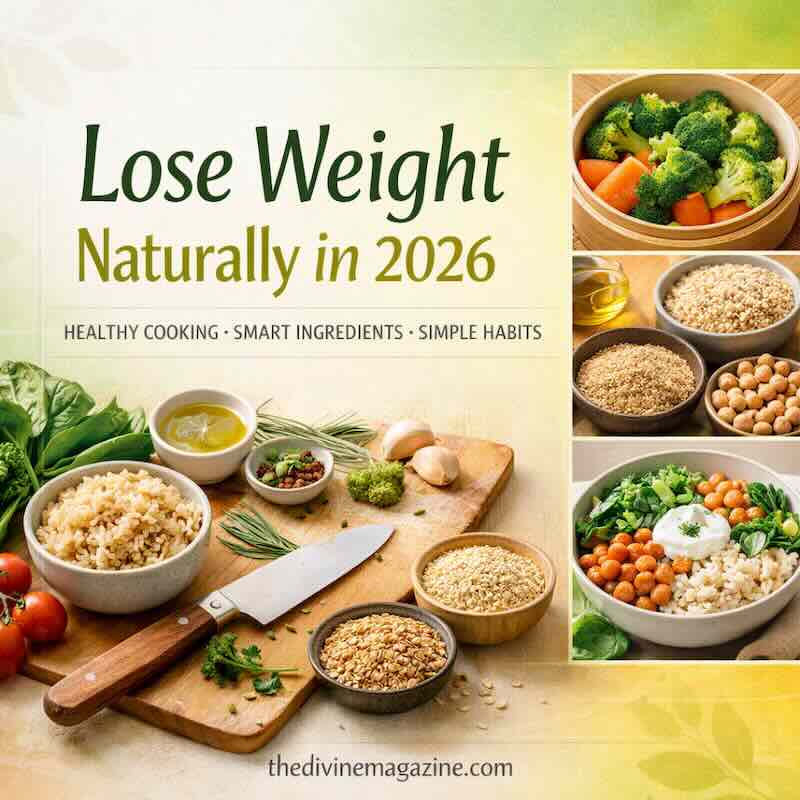
In 2026, healthy eating is less about restrictive diets and more about sustainable habits. You can lose weight and improve your well-being without following strict meal plans—simply by rethinking how you cook and what you combine. Small, consistent changes in your pantry and preparation methods can make a big difference.
Modern nutrition emphasizes balance, not deprivation. By using common ingredients in smarter ways — baking instead of frying, reducing oils, and choosing whole grains — you can create meals that are both satisfying and nourishing. For inspiration, explore Harvard’s Healthy Eating Plate 2026 for science‑based guidance.
Start with What’s in Your Pantry
Healthy cooking doesn’t require exotic ingredients. You can begin with staples already in your kitchen — rice, oats, eggs, vegetables, and healthy oils — and transform them through better cooking techniques like roasting, steaming, and poaching. Reducing butter and processed fats helps maintain heart health and supports weight management.
Smart Ingredient Choices
Rice — This humble grain remains a global staple. Combine it with vegetables and lean proteins for balanced meals. Visit https://carolinarice.com/products/white-rice/ to learn more about enriched white rice and its nutritional value. For whole‑grain alternatives, check Whole Grains Council Brown Rice Guide.
Whole Wheat Pasta, Quinoa, and Couscous — These fiber‑rich ingredients support digestion and help you feel full longer. Combine them with vegetables or light sauces for versatile, nutrient‑dense meals. Explore EatRight.org’s Whole Grain Tips 2026 for more ideas.
Oats — A powerhouse for heart health, oats lower cholesterol and stabilize blood sugar. Use them in porridge, granola, or baked goods. For creative recipes, visit Quaker Oats Recipes 2026.
Vegetables — The foundation of any healthy diet. Steam, roast, or grill them to preserve nutrients and flavor. Pair with grains or proteins for balanced meals. For seasonal inspiration, check BBC Good Food’s Healthy Vegetable Collection 2026.
Eggs — Packed with protein and essential nutrients, eggs are versatile and quick to prepare. Poached, boiled, or scrambled, they fit into nearly any dish. Learn more about their benefits from Egg Nutrition Center 2026.
Healthy Oils — Choose oils rich in unsaturated fats such as olive, avocado, or flaxseed oil. These support cardiovascular health and enhance flavor. For comparisons, see Healthline’s Healthy Cooking Oils Guide 2026.
Try This Easy Recipe
One‑Pan Rice Recipe 2026
- 1 tbsp sunflower oil
- 2 crushed garlic cloves
- 2 tbsp curry paste
- 1 cup basmati rice
- 1 cup spinach
- 2 cups vegetable stock
- 1 can of chickpeas
- ½ cup raisins
- Salt and black pepper to taste
- ½ cup cashew nuts
- Natural yogurt to serve
Preparation:
- Heat sunflower oil in a saucepan over medium heat.
- Add garlic and curry paste; cook for 5 minutes.
- Stir in rice, spinach, stock, chickpeas, raisins, salt, and pepper.
- Bring to a boil, then reduce heat and simmer 25 minutes.
- Turn off heat, add cashews, and mix well.
- Serve warm with natural yogurt.
Conclusion
In 2026, healthy eating is about flexibility and awareness. You don’t need to follow restrictive diets—just cook smarter, use whole ingredients, and enjoy balanced meals. By making small adjustments in your pantry and preparation, you’ll build habits that last and support long‑term wellness.
FAQ: Healthy Cooking and Weight Loss 2026
1. Can I lose weight without dieting in 2026?
Yes. Focus on portion control, balanced meals, and mindful eating. Research from the World Health Organization Healthy Diet 2026 confirms that sustainable habits outperform short‑term diets.
2. What are the best cooking methods for health?
Steaming, roasting, and baking preserve nutrients and reduce fat. Avoid deep‑frying. For technique guides, visit EatingWell’s Healthy Cooking Methods 2026.
3. How can I make meals more filling without extra calories?
Include fiber‑rich foods like oats, legumes, and vegetables. Drink water before meals and eat slowly to improve satiety. See Medical News Today’s Filling Foods List 2026.
4. Are healthy oils better than butter?
Yes. Oils like olive and avocado contain unsaturated fats that support heart health. Butter is fine in moderation but should not be your primary fat source. Learn more from American Heart Association