







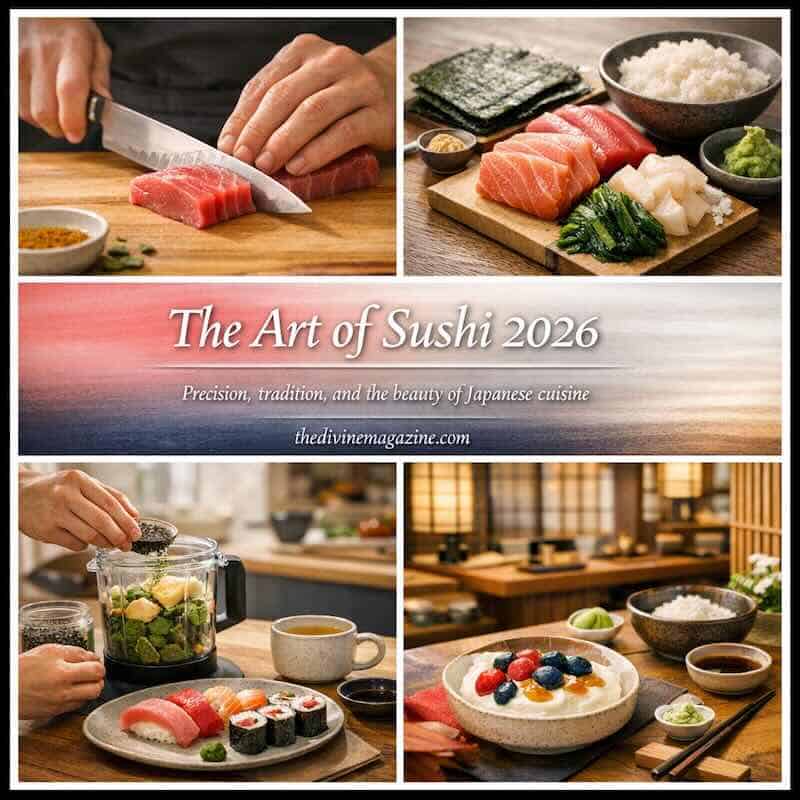
Although it looks easy, creating sushi is actually a complex culinary skill that requires years of experience to master. In 2026, as global palates become more refined, the distinction between “fast-food sushi” and authentic artistry has never been clearer.
Sushi chefs study this delicate dish extensively, and it takes exact procedures and careful preparation—from choosing the freshest ingredients to blending flavors in the ideal ways—truly an art form!
Mastery of sushi is an art that requires practice. A must-read resource for learning how to make sushi at home or improving your roll technique is this thorough guide on sushi. To understand the scientific precision required, many modern enthusiasts also look toward the Michelin Guide’s breakdown of sushi excellence.
Revealing The Sushi Art
More than simply food, sushi is a deeply rooted, globally popular art form. Sushi is a sensory extravaganza that should be appreciated, from the fresh ingredients to the exquisite workmanship. A key element in the flavor, aesthetic, and cultural identity of Japanese society and food, sushi combines sweet, salty, fatty, and acid tastes into a captivating whole.
A Culinary Artistry
Beyond simple gastronomic prowess, sushi-making is an artistic and creative expression. Japanese sushi chefs take an eye for aesthetics and a commitment to accuracy to their work. In recent years, this has expanded to include “sustainable sushi” practices, ensuring that the art form thrives without depleting our oceans.
Coordinating Flavors
A mouthwatering blend of tastes and textures, sushi has everything from the umami taste of raw seafood to the sweet tanginess of rice vinegar. Its visual presentation is also amazing; chefs serving sushi in Japanese restaurants frequently use artistic license to arrange each bite exquisitely on their platters. You too can master this wonderful craft and create delicious meals in your own home with the right information and practice!
Sushi-Making Process Navigation
Low fat content along with plenty of protein, carbs, vitamins, and minerals makes sushi a favorite for generations of people worldwide! In 2026, the focus has shifted toward “Clean Label” ingredients, ensuring that even the soy sauce and wasabi are free from artificial additives.
From preparing sushi rice, handling delicate fish, and mastering rolling to using one’s hands to press and mold both fish and rice in much the same manner a good crafts person would, sushi-making is a painstaking art. But what makes sushi unique is that sushi chefs press and mold both elements with their fingertips, much like a skilled craftsperson might.
Making Rice That Is Perfect
A sushi’s core is rice (shari). Discover how to prepare rice to the perfect texture by washing, seasoning, and cooling it. The basis of great sushi is mastery of the rice. For a deep dive into the chemistry of sushi vinegar, check out the Just One Cookbook guide to perfect Shari.
Locating High-Quality Ingredients
Making sushi demands that the ingredients be of the highest quality. Discover the need for choosing crisp nori, fresh fish, and other essential ingredients for real tastes. Always ensure your fish is “sushi-grade,” a term that indicates it has been flash-frozen to eliminate parasites.
The Slicing Art
A signature of sushi expertise is accuracy in cutting. Discover methods for deftly slicing fish and other materials so that every dish is a gourmet masterpiece. The angle of the blade can completely change the texture of the fish on the tongue.
Fully Submerging Oneself in Sushi Tradition
From choosing only the freshest ingredients to creating visually arresting rolls, sushi chefs demonstrate a “shokunin,” or an unrelenting quest of excellence, in all facets of their profession. Though making sushi might be difficult and require several stages, such as preparing rice, stuffing fish fillets, and rolling, with time and effort, anyone can make sushi at home that rivals a Japanese restaurant!
Experience Japanese Sushi Bars
Sushi is a treasured art form symbolizing Japan that is more than just food for millions of people worldwide. Years are spent by sushi chefs honing their trade and learning how careful flavor pairings and textures produce their specialties. One has to become fully immersed in Japanese sushi bar culture to truly enjoy sushi.
Breaking Down the Japanese Restaurant Menu
Convince yourself to negotiate the complexities of a Japanese restaurant menu. Learn about the many selections, which include anything from sashimi and nigiri to unusual rolls and homemade treats.
Affirming Innovation and Tradition
Worldwide, hearts and stomachs have been won over to the delectable dish of sushi. Though traditions are handed down from generation to generation and sushi is steeped in history and culture, it is also adaptable enough to new tastes and civilizations.
Japanese Classics
Discover the world of classic sushi styles like maki, sashimi, and nigiri. Discover the background and importance of every style in the culinary legacy of Japan.
Fusion and Innovation
Sushi made at home can equal that served in Japanese restaurants with the proper materials and preparation methods. This delicious dish has crunchy veggies, fresh salmon, and subtly toasted seaweed! There are a zillion different ways to prepare this delicious dinner, including the popular “sushi bake” and “sushi tacos” that have taken 2026 social media by storm.
Presenting The Art
Sushi plate appearance is highly valued in Japanese culture, equal to taste and texture. It takes perfect balancing of sushi rice, fish, and nori/seaweed components to make a delightful hand roll or nigiri. The rice should be sweet and slightly sticky to go well with the flavors of fresh raw fish. Simultaneously, seaweed adds earthy and slightly salty textures that harmonize everything while wasabi provides a strong yet well-tempered kick.
Precision Plated
One of the most important parts of sushi art is presentation. Master methods for presenting your sushi dishes with grace and elevate the whole eating experience.
Condiments and Garnishes
After you’ve gotten the hang of creating sushi, try out different toppings and plating methods to make your servings look good and wow your visitors. When plating sushi, you may create visually arresting plates that will really impress them by varying up the colors and textures.
Conclusion: Your Journey into Sushi Mastery
As we navigate the culinary landscape of 2026, sushi remains a bridge between ancient tradition and modern innovation. Making sushi can be gratifying and difficult at the same time because it teaches patience and provides chances to try out different flavors. Moreover, there are online forums and communities globally that promote similar culinary interests; someone is always available to help or support you on your way to becoming a sushi master. Embrace the “shokunin” spirit, and your kitchen will soon transform into your very own sushi bar.
Frequently Asked Questions
Q: Is all “fresh” fish safe for sushi?
A: Not necessarily. For sushi, you must use “sushi-grade” or “sashimi-grade” fish. This usually means the fish was frozen at specific temperatures to ensure it was safe for raw consumption.
Q: What is the best rice to use for sushi?
A: Short-grain Japanese rice is essential. It has the right starch content to become sticky enough to hold its shape while remaining fluffy.
Q: Do I really need a bamboo mat to make rolls?
A: While a makisu (bamboo mat) is traditional and provides the best tension, you can use a clean kitchen towel lined with plastic wrap in a pinch.
Q: Why is my sushi rice too mushy?
A: Mushy rice is usually caused by over-washing, using too much water, or over-mixing when adding the vinegar seasoning. Handle the rice gently with a folding motion.