







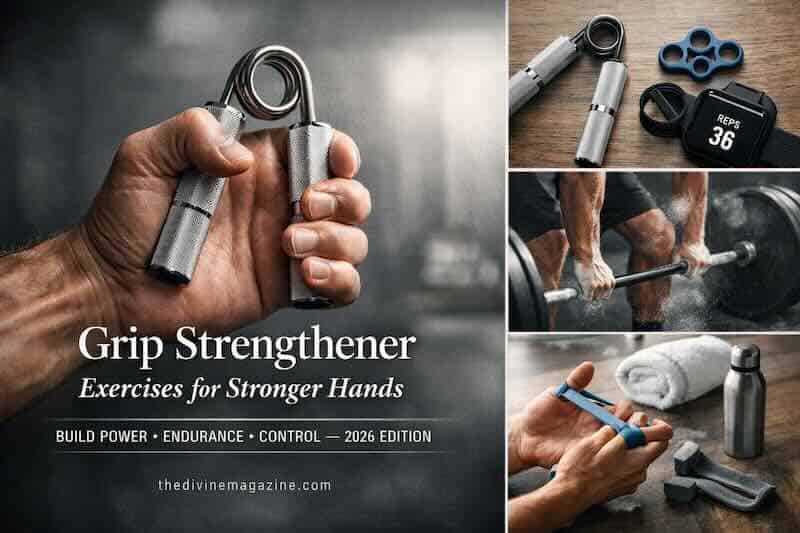
In 2026, fitness routines have become more data-driven and holistic — yet many still overlook one crucial area: forearm strength. While we focus on core and compound movements, our forearm muscles often remain undertrained, leading to weak grip and limited lifting capacity. Building grip strength early improves your holding power, which becomes essential for advanced workouts involving heavy lifts and high-calorie burns.
The most effective way to develop grip strength is by using a grip strengthener or hand gripper. This simple tool targets your forearm muscles, finger joints, and tendons to improve holding capacity and range of motion. According to the American Council on Exercise (ACE), grip strength correlates strongly with overall muscular endurance and functional performance.
In this updated guide, we’ll show you how to maximize your grasping ability using a grip strengthener — and explain why improving grip strength is vital for your long-term fitness goals.
Why You Should Improve Your Grip Strength
Grip strength is more than just a gym metric — it’s a key indicator of health and longevity. A strong grip supports better performance in weightlifting, climbing, and everyday tasks. Research published by Healthline shows that grip strength is linked to improved cardiovascular health and reduced injury risk.
When you lift weights, your forearms and finger joints stabilize the load. Weak grip strength can lead to chronic strain or poor form, especially during pull-ups and deadlifts. Strengthening your grip ensures better control, safety, and endurance during intense workouts.
How to Use a Grip Strengthener to Maximize Your Grip Strength
Below are five effective hand-gripper exercises that can help you build forearm power and grip endurance. These routines are simple yet powerful — perfect for both beginners and advanced athletes.
1. High Reps, Low Resistance
If your grip feels weak or inconsistent, start with high repetitions and low resistance. This foundational exercise improves endurance and prepares your muscles for heavier loads. Use a hand gripper with light to moderate tension and perform 15–20 reps per hand. You can gradually increase reps as your strength improves.
Low-resistance gripping is also an excellent warm-up before heavy lifting. It activates the forearm muscles and increases blood flow, reducing the risk of strain.
2. Low Reps, High Resistance
Once you’ve built endurance, progress to low reps with high resistance. This intermediate-level exercise develops muscle density and power. Perform 5–6 reps per hand using a heavier gripper. Focus on controlled movement — don’t release the handles abruptly. Slowly open your hand to reset the tool, maintaining tension throughout the motion.
This technique builds resilience against heavy loads and improves your grip for compound lifts like deadlifts and rows. For guidance on proper form, see Men’s Health’s grip training guide.
3. Isometric Reps
Isometric grip training enhances endurance and static strength. Squeeze both handles of the gripper and hold for 30–50 seconds. You can also perform a two-hand close, then release one hand and maintain the grip with the other for 10–15 seconds. This exercise builds stability and control under sustained tension.
Isometric holds are particularly useful for climbers and athletes who rely on prolonged grip engagement.
4. Drop Sets
Drop sets combine intensity and endurance. Start with heavy resistance for 5–6 reps, then immediately switch to lighter resistance for 8–10 reps. Continue alternating until fatigue sets in. This method improves both strength and stamina by challenging your muscles across multiple resistance levels.
Drop sets are a staple in advanced grip training programs and help increase forearm endurance while maintaining muscle tone.
5. Finger Extensor Training
Balance your grip training by strengthening the opposing muscles — your finger extensors. Use a finger extensor band or trainer to open your fingers against resistance. This prevents overuse injuries and improves overall hand mobility. For product examples, see best hand grip strengthener and complementary extensor tools.
Conclusion
Grip strengtheners remain one of the most effective tools for improving forearm functionality and overall strength. In 2026, balanced grip training — combining resistance, endurance, and recovery — is essential for athletes, lifters, and anyone seeking better physical performance. Include these exercises in your routine and notice measurable improvements within three months.
FAQ: Grip Strength Training (2026)
1. How often should I use a grip strengthener?
Start with 3–4 sessions per week, allowing rest days for recovery. Overtraining can lead to tendon strain.
2. Can grip training improve overall strength?
Yes. Stronger grip enhances performance in compound lifts, climbing, and sports requiring hand control.
3. What’s the best grip strengthener for beginners?
Choose adjustable resistance models or smart grippers like Squegg that track progress digitally.
4. How long does it take to see results?
Most users notice improved grip within 6–8 weeks of consistent training.
5. Should I train finger extensors too?
Absolutely. Balanced hand training prevents overuse injuries and improves dexterity.