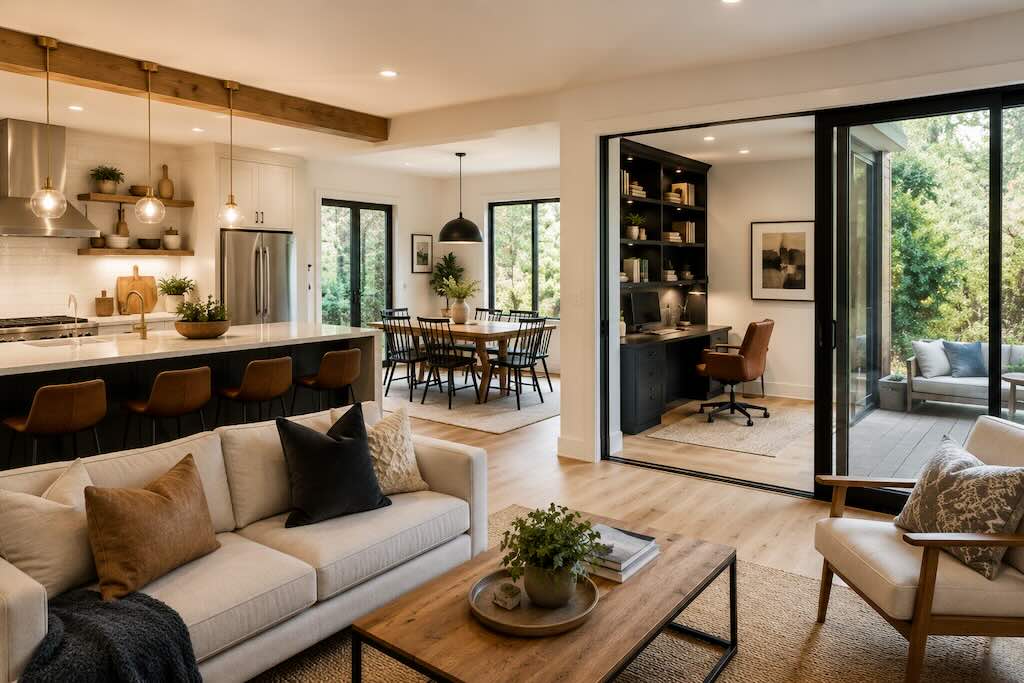








As we move through 2026, the trend of “Wellness Architecture” has shifted from a luxury concept to a household standard. At the heart of this movement is natural light. Beyond just making a room look larger, sunlight regulates our circadian rhythms, boosts Vitamin D, and dramatically alters the mood of our living spaces. If your home feels stagnant or dark, you don’t need a sledgehammer; you just need to master the physics of light.
1. The Mirror Effect: Strategic Placement
The oldest trick in the designer’s handbook is still the most effective. To double the light in a dim room, place a large mirror directly opposite your largest window. In 2026, we are seeing a move toward organic-shaped, oversized floor mirrors that lean against the wall, acting as a “second window” to bounce light into shadowy corners.
2. Choose “Luminous” Paint Finishes
Not all white paints are created equal. To maximize brightness, look for the Light Reflectance Value (LRV) on the paint can. An LRV of 80 or higher will reflect the majority of the light that hits it. For a modern, soft glow, utilize satin or eggshell finishes rather than flat matte, as the slight sheen helps propel light further into the room.
For a deep dive into how colors interact with sunlight, check out the Benjamin Moore Color Trends 2026 guide to see which hues are dominating the light-centric design world this year.
3. Lightweight Window Treatments
Heavy, dark drapery is a relic of the past. To transform your home, swap thick velvet or heavy cotton for linen sheers or motorized cellular shades. These materials provide privacy while diffusing harsh direct sun into a soft, ethereal glow that fills the room without creating heat pockets.
4. Clear the “Path of Light”
Look at your windows: is there a tall bookshelf or a high-back sofa partially blocking the glass? To maximize illumination, keep the path between the window and the center of the room clear. Use low-profile furniture—a hallmark of modern minimalist design—to ensure that sunlight can reach the deepest parts of your floor plan.
5. Clean Your Glass (Inside and Out)
It sounds simple, but a layer of pollen, dust, or water spots can cut the amount of light entering your home by up to 20%. In 2026, robotic window cleaners have made this chore effortless. Keeping your glass crystal clear ensures that the full spectrum of the sun’s rays can enter your sanctuary.
Conclusion: Embracing Brighter Living Spaces
Transforming your home with natural light is one of the most cost-effective ways to improve both your property value and your mental health. By focusing on reflective surfaces, smart furniture placement, and light-filtering fabrics, you can turn a cave-like dwelling into a radiant, intentional space. As the design world increasingly prioritizes mental well-being—a core tenant outlined by the International WELL Building Institute (IWBI)—optimizing day-lighting stands out as the ultimate life hack for modern interiors. Remember, a home that captures the sun is a home that breathes.
Frequently Asked Questions
Q: My windows face North. How do I get more light?
A: North-facing rooms receive consistent but cool, weak light. Use warm-toned whites (with red or yellow undertones) to prevent the room from feeling “grey,” and use glossy furniture finishes to catch whatever weak light is available.
Q: Does natural light damage furniture?
A: Yes, UV rays can fade fabrics and wood over time. To prevent this, consider applying a transparent UV-filtering window film. These are virtually invisible but block 99% of the harmful rays while letting 100% of the visible light through.
Q: What are “Solar Tubes”?
A: Solar tubes (or sun tunnels) are a great 2026 solution for windowless rooms like bathrooms or hallways. They use a highly reflective pipe to funnel sunlight from your roof directly into a ceiling fixture, providing natural daylighting where traditional windows aren’t possible. You can explore how these passive solar configurations save energy through the U.S. Department of Energy guidelines on daylighting design.