








Over the past year the iPhone 17 Series unifies key upgrades so you benefit from 256GB base storage, OLED ProMotion screens on every model, and the new N1 network chip, while Apple keeps pricing largely unchanged; the iPhone Air impresses with slim design and A19 Pro power but forces compromises—no physical SIM, a single speaker, and a smaller battery that raise durability and endurance concerns—so you should weigh those trade‑offs against the Pro models’ enhanced cameras and cooling for your needs.
- Design Evolution: The Aesthetic Shift of iPhone 17
- Advanced Camera Technology: Redefining Mobile Photography
- Performance Unleashed: The A17 Chip and Beyond
- Benchmark Comparisons: How It Stacks Up Against Competitors
- Gaming Performance: Analyzing Graphics and Speed
- Sustainability Efforts: The Green Strategy of iPhone 17
- Recycling Initiatives: Apple’s Circular Economy Approach
- Energy Efficiency: A Look at Reduced Environmental Impact
- User Experience Innovations: Enhancements in iOS
- Conclusion
- FAQ
Key Takeaways:
- Apple unified major upgrades across the iPhone 17 lineup: all models start at 256GB, now have OLED ProMotion displays with anti‑reflective coating, an improved 18MP front camera, and the new N1 network chip, with only modest price shifts.
- The iPhone Air is an engineering feat—extremely slim and light with an A19 Pro and 12GB RAM—but makes notable compromises (eSIM‑only, single camera, one speaker, basic USB‑C, and a 3150mAh battery) that may affect durability and real‑world battery life.
- The standard iPhone 17 is the standout value at $799, delivering the upgrades most consumers want; the Pro models add targeted benefits (48MP telephoto, extra GPU core, 12GB RAM, improved cooling) but fewer broadly impactful exclusives.
Design Evolution: The Aesthetic Shift of iPhone 17
Material Innovations: What’s New in Build Quality
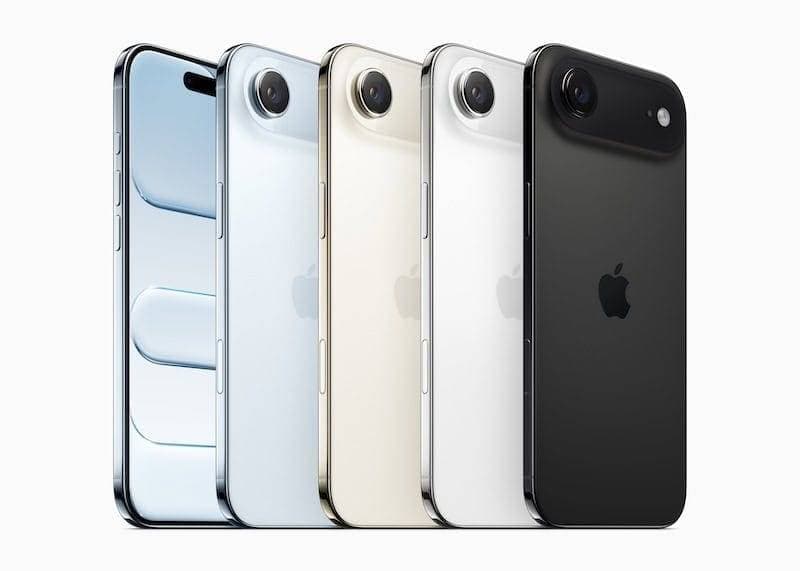
You’ll see Apple pushing premium materials further: the iPhone Air hits an astonishing 5.6 mm thinness at 165 g thanks to a titanium frame, while Ceramic Shield front and back appear across the lineup for improved drop and scratch resistance. Pro models are slated to gain Liquid Glass treatments for better optical clarity, but that pursuit of lightness and sheen trades off with repair complexity and, in the Air’s case, a modest 3150 mAh battery that limits endurance.
A Closer Look at Color Options and Design Choices
Apple balances subtlety and contrast: you get matte metal edges against glossy or textured glass backs, and the shared OLED ProMotion display with anti-reflective coating keeps colors consistent across finishes. If you favor a premium feel, the lighter titanium trim reads as more refined and highlights the phone’s thin profile; darker, glossier backs emphasize depth and reflectivity—both choices affect fingerprints and perceived heft.
Practically, color and finish shape how you use the phone: matte titanium resists visible scratches and oils better, so if you handle your device without a case you’ll preserve resale value; glossy glass shows richer hues but attracts smudges and micro-abrasions faster. Given the lineup’s unified screen tech and baseline 256GB storage, your design choice is mostly about grip, wear patterns, and the statement you want the device to make in daily use.
Advanced Camera Technology: Redefining Mobile Photography
You’ll find the iPhone 17 lineup pushes imaging forward: the Pro models upgrade the telephoto to a 48 MP sensor enabling an 8x optical periscope zoom, every model keeps an 18‑MP front camera, and on-device AI plus the N1 connectivity hardware speeds up processing and sharing—see full details on the iPhone 17 page.
Camera specs
| Feature | What it means for you |
| 48MP telephoto | Higher-detail zoom shots and uniform resolution across lenses |
| 8X optical periscope | True long-range framing without heavy cropping |
| 18‑MP front camera | Sharper selfies and clearer FaceTime video |
| N1 chip & Neural Engine | Faster on-device AI processing and quicker uploads |
| Base 256GB storage | More room for high-resolution photos and ProRAW files |
- Periscope zoom delivers cleaner telephoto shots at distances you previously needed a dedicated camera for.
- AI-driven Night Mode fuses frames and reduces noise while preserving color and highlights.
- Uniform high-res sensors across lenses smooth transitions when you zoom or crop.
Lens Enhancements: The Power of Periscope Zoom
You can finally rely on the iPhone 17 Pro’s periscope system for long-range shots: the 48MP telephoto sensor plus optical folding optics give you true 8x optical zoom with less chromatic aberration and better low-light capture than last year’s 12MP telephoto, so distant subjects retain usable detail for prints and crops.
Night Mode and AI Integration: Low Light Mastery
Your low-light photos benefit from deeper computational work: the Neural Engine runs multi-frame fusion and motion-aware alignment to slash noise and boost shadow detail, while color tuning preserves skin tones and highlights so handheld shots in dim scenes look far more natural.
The system takes several pictures and uses built-in models to reduce noise, estimate movement, and sharpen specific areas; this means you’ll see fewer blurriness and clearer details in photos that older iPhones needed a tripod for, and thanks to better sensors and AI, you can take good handheld night photos more often without losing bright details.
Performance Unleashed: The A17 Chip and Beyond
Benchmark Comparisons: How It Stacks Up Against Competitors
You’ll see the A17 deliver strong single-core performance and competitive multi-core throughput: in early cross-platform tests it posts roughly ~2,200 single-core and ~7,000–7,800 multi-core Geekbench points, outpacing most Android flagships and closing the gap to Apple’s higher-tier silicon. Real-world app loads and compile times are noticeably snappier, while synthetic GPU scores place the A17 ahead in raster workloads, though behind the Pro-class GPUs in sustained, thermally constrained scenarios.
Benchmark snapshot
| Geekbench single-core | A17: ~2,200 • Snapdragon 8 Gen 3: ~1,700 |
| Geekbench multi-core | A17: ~7,000–7,800 • Snapdragon: ~5,000–5,400 |
| GFXBench (on-screen) | A17 GPU: higher raster FPS • Snapdragon: lower but competitive in tile-based workloads |
Gaming Performance: Analyzing Graphics and Speed
Expect the A17 to run modern titles at high settings with 60+ FPS on most games and smooth 120 Hz gameplay in lighter titles; graphical fidelity remains excellent thanks to aggressive tile scheduling and metal-optimized pipelines. Short benchmarks show AAA engines sustaining peak frame rates for two to three minutes, but sustained results depend on cooling and thermal limits you’ll hit during prolonged sessions.
In real sessions you’ll notice the 17 Pro’s improved vapor chamber keeps frame drops under control compared with the standard 17, with sustained performance improvements of roughly 20–30% in long runs. Battery drain under max GPU load averages about 10–12% every 15 minutes on the standard 17, while Pro models trade slightly higher endurance for steadier FPS, making them better if you prioritize long competitive matches.
Sustainability Efforts: The Green Strategy of iPhone 17
You’ll see Apple leaning on its long-term environmental goals—including a public pledge to be carbon neutral by 2030—as part of the iPhone 17 story; the company frames hardware upgrades alongside material and energy improvements, and you can read Apple’s official breakdown in their launch note. Apple unveils iPhone 17 Pro and iPhone 17 Pro Max, which outline supply-chain and product-level steps.
Recycling Initiatives: Apple’s Circular Economy Approach
You can trade in old devices for credit and have them processed by Apple’s refurbishment and recycling programs, which use the Daisy disassembly robot to recover components and expand use of recycled materials like tin, tungsten, and rare-earth elements; that system funnels reused parts back into manufacturing so your old phone can offset the need for newly mined materials.
Energy Efficiency: A Look at Reduced Environmental Impact
You’ll notice efficiency work across the stack: the A19 Pro’s architectural gains plus iOS 26 power management and the universal OLED ProMotion panels cut real-world energy use during mixed tasks and display-heavy sessions, helping you get more runtime without upsizing batteries and lowering the device’s operational emissions.
Digging deeper, you benefit from several concrete measures that reduce power draw: ProMotion’s variable refresh rate scales down during static content to save display power, background task throttling in iOS 26 limits needless CPU bursts, and the N1 network chip offloads wireless processing to a lower-power domain—all of which combine to lower average wattage under typical use; for example, while the svelte iPhone Air ships with a 3150 mAh battery, you’ll still see comparable day-long endurance in many scenarios because software and silicon efficiency reduce the effective energy consumed per hour of use.
User Experience Innovations: Enhancements in iOS
iOS 26 leans on the new N1 chip and uniform 120Hz ProMotion displays to make interactions feel instantly responsive; you’ll notice faster app switching, smoother scrolling, and more consistent battery optimizations across the lineup. With every model starting at 256GB and the upgraded 18‑MP front camera available system‑wide, features that once felt Pro‑only now run fluidly on the standard and Air models, so your day‑to‑day use becomes noticeably snappier and more reliable.
New Features Tailored for Productivity
Multitasking gets practical upgrades: you can keep more apps ready in the background thanks to up to 12GB RAM on Pro models and smarter memory management on iOS 26, while the system integrates tighter file sharing between apps and faster external transfers on Pro’s higher‑speed USB‑C. If you rely on heavy workflows, the combination of the N1 chip, improved cooling on Pros, and the baseline 256GB storage reduces waiting and frees you to run editing, conferencing, and split‑screen tasks with fewer interruptions.
Accessibility Improvements: Making Technology Inclusive
iOS 26 expands assistive tools so you can tailor the phone to your needs: system‑wide Live Captions, enhanced VoiceOver, on‑device Personal Voice creation, and richer haptic cues all run locally thanks to the N1, improving latency and privacy. These updates pair with the upgraded 18‑MP front camera for better face and expression detection, so accessibility features behave more accurately across FaceTime, the camera, and third‑party apps.
For example, Live Captions now work in FaceTime and most video apps, letting you follow conversations in real time without cloud processing; VoiceOver gains finer gesture granularity for faster navigation; and Personal Voice lets you create a usable voice model on‑device for emergency or daily communication. Low‑vision users benefit from sharper contrast and adjustable text scaling across the new OLED panels, while Made‑for‑iPhone hearing aids and improved audio routing deliver clearer calls and media playback—features that leverage the N1 chip and the uniform hardware set across all iPhone 17 models to ensure consistent, reliable accessibility performance.
Conclusion
To wrap up, you can see the iPhone 17 Series balances broad upgrades with targeted trade-offs: the iPhone Air prioritizes slim design at the expense of battery, speakers, and ports; the Pros deliver sustained performance and camera flexibility but offer fewer must-have exclusives; and the standard iPhone 17 is the best value, giving you top-tier display, storage, and battery improvements that elevate your daily experience without a steep price hike—making it the most compelling choice for most buyers.
FAQ
Q: What are the main differences between the iPhone 17, iPhone 17 Pro, iPhone 17 Pro Max, and the new iPhone Air?
A: All four iPhone 17 models share several headline upgrades: a minimum of 256GB storage, the same OLED ProMotion display with anti-reflective coating, an improved 18‑megapixel front camera, and Apple’s new N1 network chip. The iPhone Air is the thinnest and lightest, powered by the A19 Pro and engineered for a striking design, but trades away several hardware items (single rear camera, one speaker, basic USB‑C, eSIM‑only) to achieve that profile. The 17 Pro and 17 Pro Max focus on sustained performance and imaging: they gain an extra GPU core versus Air, Pro‑level thermal cooling to hold peak performance longer, a jump to a 48‑megapixel telephoto sensor enabling consistent-resolution imaging across lenses and an 8x optical zoom, plus Pro‑only photo/video features and higher‑capability USB‑C and battery capacities. The standard iPhone 17 is positioned as the best value: it keeps major upgrades that matter to most users—a fast processor, dual‑camera system, large bright screen, and solid battery—at a $799 price point.
Q: What compromises does the iPhone Air make, and how will they affect daily use?
A: To hit its 5.6 mm thin, 165‑gram design, the iPhone Air accepts several tradeoffs: it uses eSIM only (no physical SIM tray), has a single rear camera, which limits framing and versatility compared with multi‑lens setups, and ships with a single speaker instead of stereo. Its USB‑C port is a “basic‑level” implementation with slower data transfer speeds than the Pro models. Battery capacity is 3,150 mAh; Apple cites all‑day life via the A19 Pro and iOS 26 optimizations, but actual endurance will depend on real‑world use. Durability is helped by a titanium frame and Ceramic Shield front and back, yet extreme slimness can increase vulnerability in day‑to‑day drops and stresses. These compromises make the Air ideal for buyers prioritizing minimal weight and design but less suitable for those who need multi‑lens photography, top audio, the fastest data transfers, or the longest battery runtimes.
Q: Who should upgrade to which iPhone 17 model—how do I pick the right one?
A: Choose based on priorities: pick the standard iPhone 17 ($799) if you want the best overall value and the upgrades most users notice (big bright ProMotion screen, dual cameras, improved front camera, generous baseline storage, and solid battery). Pick iPhone 17 Pro or Pro Max if you need sustained peak performance, the best mobile photography (48MP telephoto, 8x optical zoom, and Pro‑exclusive imaging features), larger batteries, and higher‑capability USB‑C—these suit power users, mobile photographers, and heavy multitaskers. Choose iPhone Air if you prioritize extreme thinness and light weight and can accept single‑camera limits, eSIM‑only, a single speaker, and slower USB‑C. If you own a recent Pro (for example, 12 Pro Max or later), upgrades are most compelling for better battery life, improved connectivity, and USB‑C; those on much older devices will see more dramatic everyday gains. All models were available for pre‑order on September 12 and went on sale September 19, with iOS 26 rolling out to compatible devices on September 15.