





SPOTLIGHT
MAGAZINE
Featured Artist
JAMES DEAN
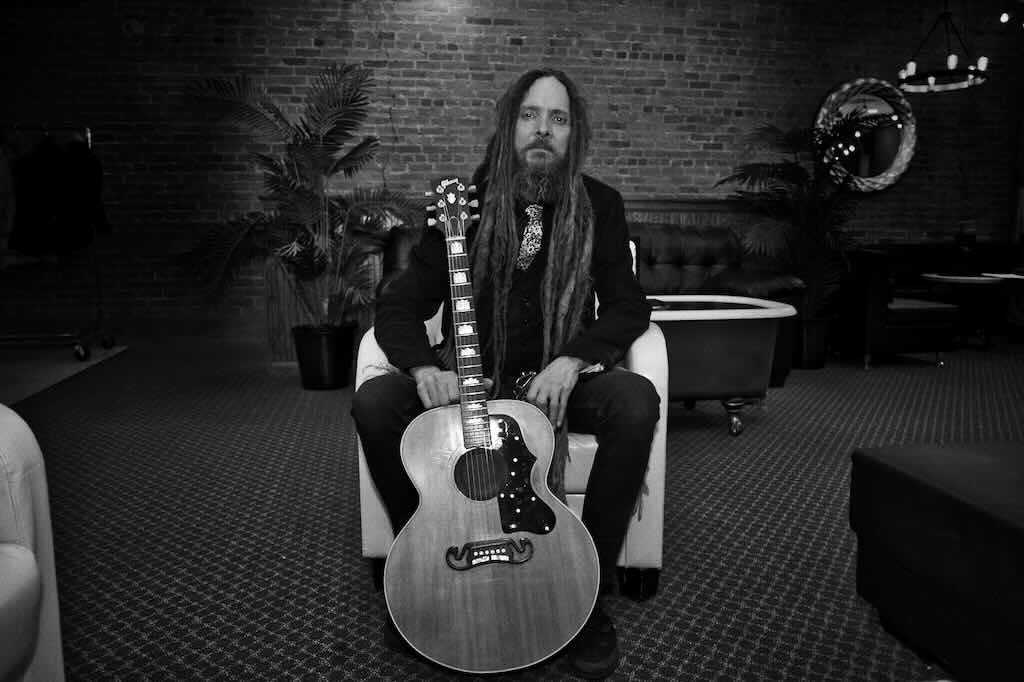
James Dean builds songs from silence. Percussion, guitar, bass, keyboards, and melodic lines are recorded and layered live until a single performer begins to sound like an entire ensemble. He describes the process as “painting with sound” — music assembled in real time, with the audience able to hear each new color enter the arrangement.
WORDS — DIVINE MAGAZINE · 2026
A guitar phrase settles into a loop. Rhythm follows, then bass, melody, and another layer of sound. By the time James Dean reaches the heart of a song, what began with a single instrument has expanded into something closer to a full band.
That gradual transformation is central to Dean’s approach. Working across smooth jazz, soft rock, funk, reggae, R&B, and other influences, the multi-instrumentalist uses live looping to build arrangements in real time. Each part is performed and recorded on stage before being folded back into the music, with no pre-recorded backing tracks filling the spaces between.
The technique makes the creative process unusually visible. Rather than arriving at a finished arrangement, listeners hear its shape emerge: rhythms locking together, melodies finding space, and individual textures becoming part of a larger whole. Dean calls it “painting with sound.” Every new layer changes the picture.
In this Q&A with Divine Magazine, Dean explains how he constructs songs from the first beat onward, what happens when a loop goes wrong, why the Boomerang III sits at the center of his rig, and how working in layers has changed the way he writes music.
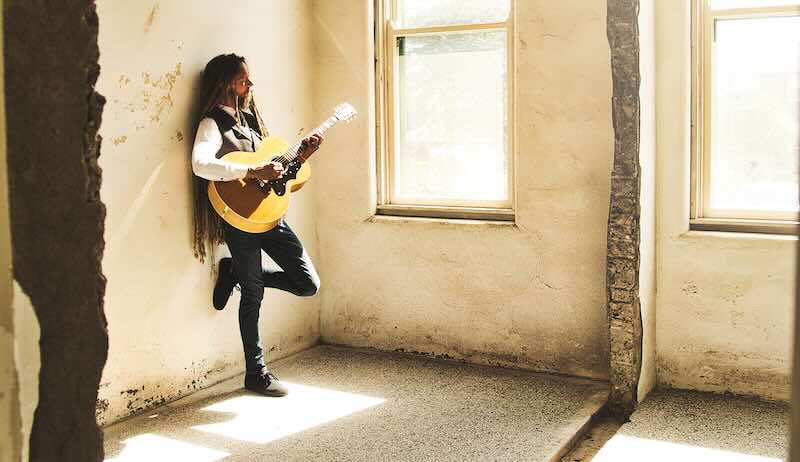
From silence to a complete arrangement
Most people picture a “one-man band” and think novelty act. You call live looping “painting with sound.” Walk us through what actually happens on stage — from the first note to the finished arrangement.
“Painting with sound” means treating silence as a blank canvas and gradually filling it with layers of rhythm, melody, and texture. Everything begins with the first note, and each new sound becomes part of the arrangement.
On stage, I typically start by creating a basic drum pattern by hand on my drum pad, using a kick drum and rim shot. Then I add a shaker, which establishes the foundation and groove of the song. The looper I use has three separate loops; two of them can synchronize with the length of the first loop. This allows me to build different sections of the song—usually something like a verse or bridge and a chorus.
Once the rhythmic foundation is in place, I layer guitar parts onto those sections, followed by bass. From there, I add whatever instrumentation the song needs, such as keyboards, synthesizers, horns, or other textures. The final step is playing melodies over the completed loops, much like a singer performs over instrumental accompaniment or a soloist plays over a rhythm section.
Although it is a single person performing, I’m creating and performing parts that would traditionally be played by multiple musicians. The process is about constructing an entire arrangement in real time, one layer at a time—from a single note to a complete song.
Finding the character of a song
Your sound moves through smooth jazz, soft rock, funk, reggae, and R&B in a single set. How do you decide which genre a song wants to become before you’ve looped a single layer?
Before I loop a single layer, I listen to the song’s natural character—its rhythm, melody, chord progression, and overall mood. These elements help me decide how I want to approach the arrangement and which aspects of the song I want to emphasize.
When I perform an instrumental cover, I try to stay close to the original song’s defining elements so the audience can immediately recognize it. At the same time, I bring my own style through the way I arrange and perform it.
I build the song layer by layer, using percussion, guitar, bass, keyboards, and other sounds to recreate parts that would normally be played by multiple musicians. Because there are no vocals, the instrumental melody becomes especially important. I work to preserve its character while shaping it through my own tone, phrasing, and musical choices.
The original recording provides the blueprint, but live looping gives me room to reinterpret the arrangement. I’m aiming for a balance between honoring the song and adding enough of my own style to make the performance feel personal and fresh. The genre develops naturally through the choices I make while arranging and performing the song.
When a loop goes wrong
There are no pre-recorded tracks and no safety net — every layer is built live in front of the audience. What’s the closest you’ve come to a song falling apart on stage, and how did you recover?
I’ve had a few moments when things have gone awry, both because of technical issues and mistakes in my playing. That’s especially true when I’m performing newer arrangements because I’m still becoming familiar with how all the layers fit together. When that happens, I try to stay calm and keep the song moving. If I record an imperfect layer, I’ll remove it and re-record that part, often turning the mistake into a natural part of the performance rather than allowing it to derail the song.
Live looping is a challenging skill to master. It can look completely seamless from the audience’s perspective, but executing it in real time is a different story. Internally, I may be slightly stressed and thinking, “I hope I get this right,” while trying to make everything appear effortless.
If the problem is technical and I can’t correct it in real time, I may need to restart the song. Thankfully, that’s rare because I follow a disciplined rehearsal schedule and spend a great deal of time preparing for each performance. That preparation is particularly important with newer arrangements, which are naturally more susceptible to mistakes. It helps me stay composed, recover quickly, and maintain a connection with the audience when something doesn’t go exactly as planned.
Ultimately, those mistakes and the process of dealing with them have made me a stronger performer. They’ve taught me to think quickly, stay flexible, and learn from every experience. In live performance, there’s no substitute for preparation, but there’s also no substitute for learning how to recover when things don’t go perfectly.
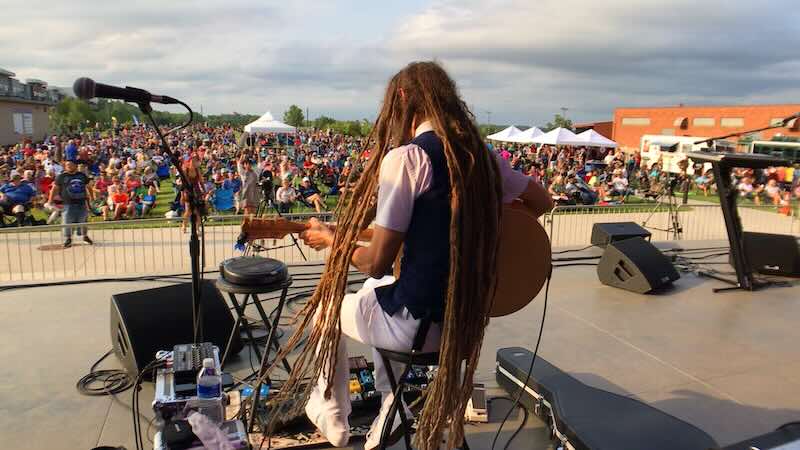
Preparation meets spontaneity
You’ve said no two shows are ever the same. How much of a set is composed in advance versus discovered in real time with the loop pedal?
I prepare the basic structure of each song in advance, but the final performance is shaped in real time through the loop pedal. I know each song’s form, tempo, chord progression, and the layers I want to build. I generally stay within that arrangement rather than removing sections or changing their order.
The setlist can be carefully planned in advance or created spontaneously, depending on the venue, the event, and the audience. When planning ahead, I consider the character of the room and arrange the songs by genre and energy—smooth jazz, soft rock, funk, reggae, R&B, or a combination of styles—to create a natural flow throughout the set. In other situations, I may choose songs in the moment based on the audience’s response and the atmosphere in the room.
Once the performance begins, I pay attention to the audience’s energy. I may adjust the dynamics, phrasing, intensity, and the amount of space between layers while remaining within each song’s rehearsed structure.
There’s a balance between preparation and spontaneity. The individual songs are carefully rehearsed, but the setlist, overall flow, textures, dynamics, and energy can develop live. The audience and the room become part of the creative process, which is why no two shows are ever exactly the same.
The piece of gear at the center of it all
Your “Rig Rundown” video breaks down how a song like “Hide & Seek” gets built from scratch. For a reader who’s never seen live looping up close, what’s the one piece of gear that changed how you write and perform?
The Boomerang III Phrase Sampler is hands down the most important piece of gear in my setup. It completely changed the way I write, arrange, and perform music. Before using it, I primarily thought of a song as a single instrumental performance. The Boomerang opened up the possibility of building an entire arrangement in real time and performing parts that would normally require multiple musicians.
It also expanded the range of genres I could perform. By choosing to focus on instrumental arrangements rather than singing, I’m able to offer a unique alternative to the traditional live-music format. I’m not relying on a lead vocal to carry the performance; instead, the melody, harmony, rhythm, and instrumentation all work together to tell the story of the song.
There’s also something about instrumental music that can wash over an audience in a different and sometimes more immersive way than singing. Without lyrics directing the listener toward a specific message, the music leaves more room for people to interpret it personally. The layers, textures, and melodies can create an atmosphere that people simply settle into and experience.
Before live looping, I was more limited by my vocal range and by the harmonies I could create on my own. With the Boomerang III, I can build the musical foundation and layered harmonies first, then perform melodies over them. That allows me to explore and perform styles that might not have been possible for me previously, including smooth jazz, soft rock, funk, reggae, and R&B.
It also changed the way I think about performing. I’m not simply playing along with a backing track—the arrangement is created live in front of the audience. Every loop has to be played, recorded, and placed at the right moment, which makes the performance active and unpredictable.
For me, the Boomerang III isn’t just another piece of equipment. It’s the central instrument in my rig and the foundation of how I create and share music.
Playing for the room
You play everything from weddings and corporate events to your own shows. Does the looping process change when the room is there to celebrate something specific rather than to watch you build a song?
The core looping process remains the same, but the way I approach the performance changes depending on the purpose of the event. At a wedding or corporate event, the music is there to support the occasion, so I’m more conscious of creating the right atmosphere and complementing what’s happening in the room. I choose songs and arrangements that fit the event, keep the volume and energy appropriate, and remain attentive to the flow of the celebration.
At my own shows, the audience is generally there specifically to experience the live-looping process, so I can place more emphasis on the construction of each song. I may take a little more time to highlight how the layers develop and give the audience a clearer sense of how the arrangement is being built.
For private and corporate events, I still create the music live from the first layer rather than relying on prerecorded tracks. The difference is that the looping is designed to serve the event first. The audience may be watching closely, or they may be socializing, moving around, and participating in the occasion. Either way, the goal is to provide a musical experience that feels natural, engaging, and appropriate to the moment.
The technique doesn’t fundamentally change, but the musical priorities do. At my own shows, the process of building the song may be part of the focus. At weddings and corporate events, the finished atmosphere and the role the music plays in the celebration become more important.
How looping changed the writing process
Because the audience watches the song get built piece by piece, they’re seeing your process, not just the finished product. Has performing this way changed how you write music when you’re off stage?
Yes, absolutely. Live looping has changed the way I write music because the ability to layer parts makes the creative process much more immediate. I can record a groove, chord progression, bass line, or melody, then add another part and hear exactly how they work together.
That allows me to experiment with different combinations of rhythm, harmony, texture, and melody as I write. I can quickly hear what complements the arrangement, what creates contrast, and what may be unnecessary. Instead of imagining the finished song entirely in my head, I can build it piece by piece and respond to what I’m hearing.
It has also made me more aware of how each part functions within the overall arrangement. Every layer needs to contribute something while still leaving space for the parts that follow. That process helps me create music with a stronger sense of development, dynamics, and movement.
Because the audience sees the song being built live, I also think about how each layer affects the listener—not just musically, but emotionally. I want every addition to feel purposeful and help the arrangement evolve naturally.
Live looping has become both a performance technique and a songwriting tool. Being able to hear the parts working together as I create them has made the writing process more experimental, immediate, and creative.
What comes next
What’s next for James Dean Acoustic — new music, new rooms, new directions for the loop rig?
I’m continuing to develop new arrangements and expand the range of music I can perform with the loop rig. I’m interested in exploring more combinations of smooth jazz, soft rock, funk, reggae, R&B, and other instrumental styles while continuing to put my own interpretation on the songs I perform.
I’m also looking for new venues and events where this kind of performance can connect with a wider audience. At the same time, I want to keep my regular gigs fresh by rotating in new songs, arrangements, and musical ideas rather than performing exactly the same set every time. Introducing more people to the possibilities of live looping and instrumental performance is an important part of what I’m working toward.
I enjoy performing in different types of venues because each environment creates a unique connection with the audience. I like adapting the set to fit the atmosphere, whether it’s an intimate listening room, a wedding, a corporate event, or a larger live show.
As for the rig itself, my current setup has been carefully developed over time to provide everything I need. The Boomerang III Phrase Sampler remains the centerpiece, and the rig offers a great deal of depth and flexibility. I can continue discovering new sounds, textures, combinations, and arrangements without adding new gear. At this point, I’m not looking to replace or upgrade anything; I’m more interested in exploring the full creative potential of the equipment I already have.
Ultimately, what’s next is continued growth: writing new music, developing fresh arrangements, reaching new audiences, and finding new ways to demonstrate how much one musician can create live.
Website: https://jamesdeanacoustic.com/
YouTube: https://www.youtube.com/jamesdeanacoustic
SoundCloud: https://soundcloud.com/jamesdeanacoustic
Bandintown: https://www.bandsintown.com/a/15500204-james-dean-acoustic
SDPB No Cover No Minimum: https://watch.sdpb.org/video/james-dean-acoustic-jonnoe/
My website, YouTube channel, and SoundCloud page are the best places to showcase James Dean Acoustic. They provide information about upcoming performances and give listeners the clearest sense of my live-looping performances, original arrangements, and recordings.
My work is also available on:
ReverbNation: https://legacy.reverbnation.com/jamesdeanacoustic
TikTok: https://www.tiktok.com/@jamesdeanacoustic
Apple Music: https://music.apple.com/us/artist/james-dean-acoustic/1618619509
Spotify: https://open.spotify.com/artist/2pQEAWe6gcqENlISEKm6ap
Amazon Music: https://music.amazon.com/artists/B09XKWB64F/james-dean-acoustic