





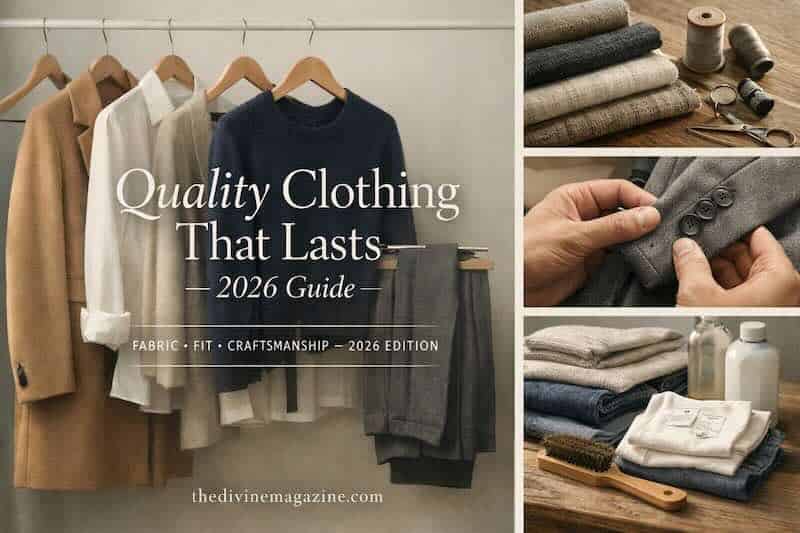
Fast fashion is finally losing its grip. In 2026, more of us are choosing fewer, better pieces — clothing that feels good, fits well, and actually lasts. But with endless marketing buzzwords like “premium”, “sustainable”, and “conscious”, it can be hard to know what quality really looks like in your wardrobe.
- 1. Start With Fabric: What Your Clothes Are Really Made Of
- 2. Inspect Construction: Seams, Stitching, and Structure
- 3. Fit and Cut: The Silent Marker of Longevity
- 4. Choose Timeless Over Trend-Driven
- 5. Consider Brand Ethics and Transparency
- 6. Care Is Part of Quality: Make Your Clothes Last Longer
- Conclusion: Building a Wardrobe for the Long Term
- FAQ: Choosing Quality Clothing That Lasts (2026)
This 2026 guide to choosing quality clothing that lasts will walk you through fabrics, construction, fit, care, and brand ethics, so you can build a wardrobe that looks sharp today and still holds up years from now.
1. Start With Fabric: What Your Clothes Are Really Made Of
Fabric is the foundation of quality. Even the best cut and stitching can’t save a garment made from weak or poorly blended fibers. As a rule of thumb, look for natural or thoughtfully engineered fibers that balance comfort, durability, and care.
For everyday wear, high-quality cotton (especially organic or long-staple), linen, wool, and TENCEL™/lyocell are strong choices. For performance pieces, recycled nylon or polyester can be excellent when used responsibly. Platforms like Good On You’s materials guide offer a clear breakdown of common fabrics and their impact.
- Check the label: Aim for a high percentage of the main fiber (e.g. 95–100% cotton) rather than vague blends.
- Feel the fabric: It should feel substantial, not paper-thin or scratchy (unless intentionally sheer or textured).
- Hold it up to the light: Excessive transparency in non-sheer garments can signal poor density and shorter lifespan.
2. Inspect Construction: Seams, Stitching, and Structure
Quality clothing is as much about what you can’t see at first glance as what you can. Take a moment to turn garments inside out and inspect the details — this is where shortcuts usually show.
- Seams: Look for straight, even seams with no puckering. French seams or flat-felled seams are strong indicators of care and durability.
- Stitch density: Stitches should be small and consistent, not loose or widely spaced. Tug gently — if you see gaps, skip it.
- Buttons and zippers: Buttons should be securely attached with a cross or shank; zippers should glide smoothly and be stitched cleanly.
- Hems: A generous hem allowance (rather than a tiny rolled edge) suggests the garment can be altered and will hang better.
For a deeper dive into garment construction, resources like Threads Magazine and Heddels offer excellent visual guides to quality stitching and finishing.
3. Fit and Cut: The Silent Marker of Longevity
Even the best-made piece will sit in your closet if the fit is off. Quality clothing is designed with thoughtful proportions, allowing for movement, layering, and minor body changes over time.
- Shoulders: On jackets and shirts, shoulder seams should sit at the edge of your shoulder, not droop down the arm.
- Rise and seat: For trousers and jeans, the rise should feel comfortable when sitting and standing, with no pulling across the seat.
- Ease: Look for a bit of ease at key points (hips, chest, thighs) so the fabric isn’t under constant strain.
Many brands now offer detailed size charts and fit notes online. Style and fit guides from sites like Esquire or Who What Wear can help you train your eye for good proportions.
4. Choose Timeless Over Trend-Driven
Clothing that lasts isn’t just about physical durability — it’s also about emotional longevity. A piece that feels dated after one season is unlikely to stay in rotation, no matter how well it’s made.
- Neutral palettes: Navy, black, white, grey, camel, and olive pair easily and age gracefully.
- Classic silhouettes: Think straight-leg trousers, well-cut blazers, simple knitwear, and clean sneakers or boots.
- Subtle details: Avoid overly loud logos or gimmicky features if you want a piece to feel relevant in five years.
Capsule wardrobe resources from platforms like The Good Trade can be helpful if you’re shifting from impulse buys to intentional dressing.
5. Consider Brand Ethics and Transparency
In 2026, quality isn’t just about how long a garment lasts — it’s also about how it was made. Brands that invest in fair wages, responsible sourcing, and repair or take-back programs are more likely to care about long-term value, not just quick sales.
Look for brands that publish factory information, material breakdowns, and care guidance. Tools like the Good On You brand directory and reports from Fashion Revolution can help you evaluate how seriously a label takes ethics and sustainability.
6. Care Is Part of Quality: Make Your Clothes Last Longer
Even the best-made garment will fail early if it’s not cared for properly. Quality clothing and quality care go hand in hand.
- Wash less, wash cold: Over-washing breaks down fibers. Spot-clean when possible and use gentle cycles.
- Air dry when you can: High heat from dryers is tough on fabrics and elastics.
- Learn basic repairs: Replacing a button or fixing a loose seam can add years to a garment’s life.
Many brands now publish care guides — for example, Patagonia’s clothing care tips are a great starting point, even if you don’t own their pieces.
Conclusion: Building a Wardrobe for the Long Term
Choosing quality clothing that lasts in 2026 is less about chasing labels and more about slowing down, paying attention, and asking better questions. What is this made of? How is it constructed? Will I still want to wear it in three years? Can I care for it properly?
When you combine good fabrics, solid construction, thoughtful fit, timeless design, and responsible brands — then back it all up with mindful care — you’re not just buying clothes. You’re building a wardrobe that supports your life, your values, and the planet.
FAQ: Choosing Quality Clothing That Lasts (2026)
1. Is higher price always a sign of better quality?
Not necessarily. While very cheap clothing is often poorly made, some premium-priced items rely on branding more than construction. Always check fabric, stitching, and fit rather than assuming price equals quality.
2. Which fabrics last the longest?
Well-made cotton, wool, linen, and denim are known for durability when properly cared for. Blends with a small amount of elastane can improve comfort and recovery, but avoid overly synthetic, flimsy fabrics for everyday staples.
3. How can I test quality when shopping online?
Read fabric composition, zoom in on product photos, and check reviews that mention feel and longevity. Look for brands that share close-up images of seams and hems, and consult independent reviews on sites like Reddit’s fashion communities or dedicated review blogs.
4. Are “sustainable” collections always better quality?
Not always. Sustainability claims vary widely. Some collections use better materials and construction; others are mostly marketing. Cross-check with third-party resources like Good On You and look for transparency rather than vague buzzwords.
5. How many pieces do I really need?
There’s no universal number, but many people find that a smaller, well-curated wardrobe of versatile, high-quality pieces serves them better than a crowded closet. Start by identifying your most-worn items and upgrading those first.