






For years, the focus in cancer surgery has been on the operation itself — but what happens after the surgeon closes the incision may matter just as much. A growing body of clinical experience suggests that how a wound heals can be the difference between a smooth recovery and months of complications.
- The Overlooked Risk in Surgery
- What’s Actually New: Negative Pressure Wound Therapy
- From Ten Days in Hospital to a Battery Pack at Home
- Levelling the Playing Field for High-Risk Patients
- Beyond the Physical: What Scarring Really Means
- Why Isn’t Everyone Using It Yet?
- A Global Conversation
- Bringing Advanced Recovery Closer to Home
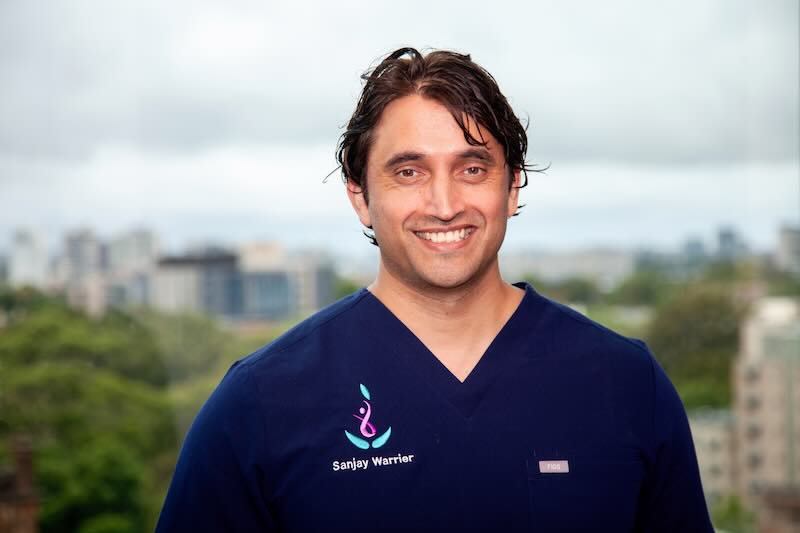
Leading Sydney-based breast cancer surgeon Associate Professor Sanjay Warrier has spent nearly a decade using advanced wound-care technology to change that equation for his patients, and he says the results speak for themselves: faster healing, fewer infections, and less visible scarring. We sat down with him to unpack the science, the patient impact, and why adoption is still catching up to the evidence.
The Overlooked Risk in Surgery
Surgical technique gets most of the attention, but A/Prof Warrier points out that wound complications — infection, delayed healing, wound breakdown — are a persistent and serious risk after any operation. Left unmanaged, they can mean longer hospital stays, extra procedures, permanent scarring, and real emotional toll for patients already going through a difficult diagnosis.
Some patients carry extra risk into surgery. Diabetes, obesity, and smoking all make the body’s natural healing process less reliable, which is exactly why A/Prof Warrier argues that proactive wound care shouldn’t be an afterthought — it should be part of the treatment plan from the start.
Why has this been overlooked for so long? A/Prof Warrier traces it back to how surgery itself is taught. Training and attention tend to gravitate toward the operating theatre — new instruments, new techniques, new technology — while what happens afterward gets far less airtime. Compounding that, he notes that many wound complications don’t surface in front of the surgeon at all; they emerge later, out in the community, which skews how the profession perceives complication rates in the first place. If a problem stays hidden, it’s harder to justify fixing it — even though, as he puts it, multiple studies have now shown a clear benefit to intervening earlier.
What’s Actually New: Negative Pressure Wound Therapy
The technology driving this shift is negative pressure wound therapy, often referred to as “smart dressings.” Rather than simply covering a wound, these systems use a small, portable device to apply gentle, controlled suction directly to the site.
We asked A/Prof Warrier to explain what’s actually happening at a cellular level. His answer reframes the popular understanding of the technology: it’s less about directly accelerating healing and more about calming the wound down. Studies of the fluid around the wound margin show a drop in inflammatory markers — including CSF2, IL-1α, IL-1β and MMP2 — meaning the dressing is dampening inflammation in the surrounding tissue rather than driving healing at the wound site itself.
The mechanism, he explains, is fundamentally mechanical. By reducing swelling, the dressing improves the quality of the surrounding tissue, which in turn improves lymphatic drainage, venous return, and ultimately arterial blood flow — creating better conditions for healing from the outside in. As he puts it, “the dressing is working above, below and beyond the wound.”
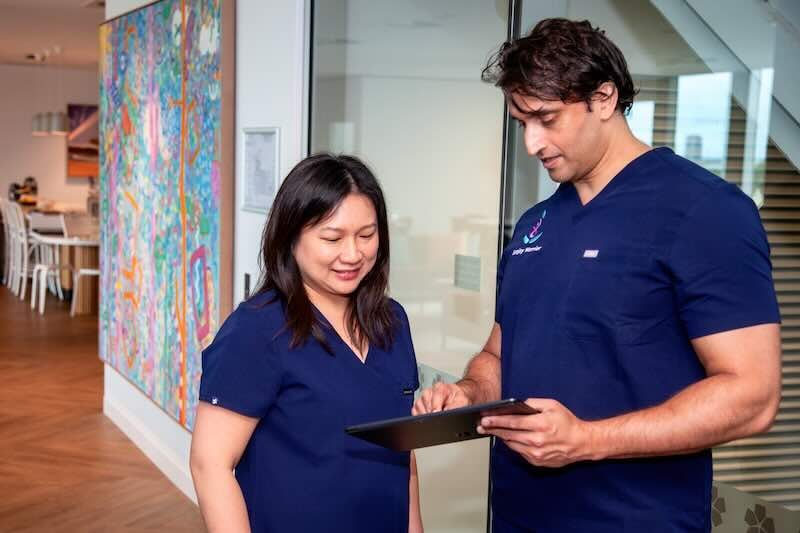
For patients, the day-to-day difference is tangible. Compared with a traditional bandage, A/Prof Warrier says patients using smart dressings simply feel more supported and more mobile — they can shower and stay active almost immediately, rather than being sidelined by their own dressing.
From Ten Days in Hospital to a Battery Pack at Home
Perhaps the biggest shift has been in where recovery happens. A decade ago, high-risk patients were typically managed with VAC dressings that kept them in hospital for up to ten days. Today’s devices are light, portable and battery-powered — recovery has moved from the ward to the living room.
A/Prof Warrier describes the psychological effect of that shift as significant: patients are no longer defined by an extended hospital stay, and the “game” has fundamentally changed simply because the technology fits in a pocket rather than tying them to a bed.
Levelling the Playing Field for High-Risk Patients
Diabetes, smoking and obesity are the risk factors most often cited, but A/Prof Warrier’s own 2017 research goes further, classifying “high risk” across three groups: patients with risk factors in their underlying “protoplasm” (diabetes, smoking, obesity), patients undergoing operations that are inherently higher risk, and — a group he considers just as critical — patients for whom a delay in healing could delay further treatment, as can happen with high-risk breast cancer. Across these groups, he says the data shows something striking: with negative pressure therapy such as pico dressings, outcomes for high-risk patients become equivalent to those of patients without those risk factors.
Beyond the Physical: What Scarring Really Means
A/Prof Warrier is careful to separate a woman’s identity from her body — but he doesn’t downplay how much scarring, shape and symmetry can weigh on a patient’s psychological journey through breast cancer. The goal, he says, is for patients to come through breast surgery with outcomes similar to before, or even improved — turning what could be a purely negative experience into something with an unexpected aesthetic upside. It isn’t the only factor shaping a patient’s journey — fear of recurrence and the broader treatment process matter too — but when reconstruction is involved, he says the aesthetic outcome is huge.
Why Isn’t Everyone Using It Yet?
Despite the evidence, A/Prof Warrier says adoption across surgical disciplines still lags behind where it should be. The single biggest barrier, in his view, is cost — or more precisely, the perception of cost. The technology is cost-effective once you factor in the complications it prevents, but at the point of purchase it looks like an added expense, which breeds hesitancy around routine use in higher-risk patients. Some centres, he adds, simply don’t have full visibility of the evidence and assume their existing techniques are already good enough. Encouragingly, he notes that dressing manufacturers have stepped up education efforts, and adoption is growing as a result — change, he believes, comes from surgeons willing to champion better outcomes and from rising awareness at the community level.
He’d like to see that shift start even earlier — in medical school. Just as antibiotic use and ECG reading are core parts of surgical training, A/Prof Warrier argues post-operative care deserves the same weight, particularly as more specialties move toward “early recovery after surgery” (ERAS) protocols that get patients home sooner by preparing them in advance for pain relief, dressing choice and mobilisation.
A Global Conversation
A/Prof Warrier was recently recognised by the India Australia Business and Community Alliance (IABCA) for his contribution to strengthening research ties between Australia and India — work he sees as part of a broader principle. Operating in a well-resourced country doesn’t mean there’s nothing left to learn, he says; progress comes from working within a bigger global ecosystem, sharing developments openly, and staying receptive to advances coming out of countries like India.
Bringing Advanced Recovery Closer to Home
With his practice now expanding to include newly opened rooms in Campbelltown alongside his existing Sydney locations, A/Prof Warrier is also working to extend access to this level of care beyond the major inner-city hospital hubs — bringing advanced recovery options closer to women who might otherwise have to travel for them.
Associate Professor Sanjay Warrier is a past President and current committee member of Breast Surgeons of Australia and New Zealand (BreastSurgANZ); the views expressed are his own. He practices across four Sydney locations, including Chris O’Brien Lifehouse in Camperdown and newly opened rooms in Campbelltown.