







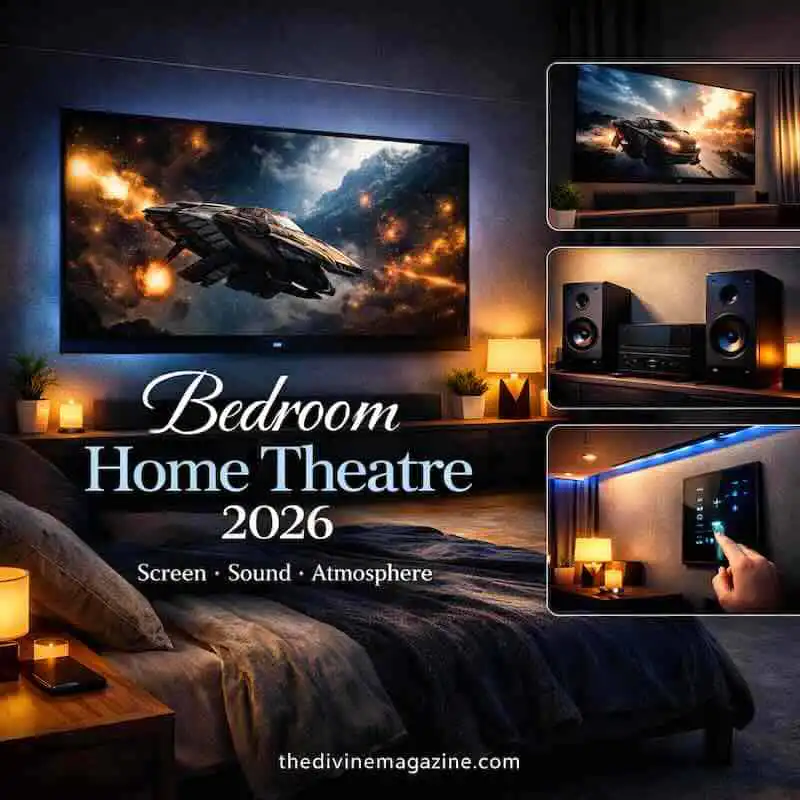

In 2026, creating a home theatre in your bedroom has become easier and more immersive than ever. With advancements in display technology, smart lighting, and compact surround systems, you can now enjoy a cinematic experience without leaving your bed. To achieve this, you’ll need to choose the right TV size, sound setup, and room layout — all tailored to your space and viewing habits.
- Size Matters
- Choose the Right Place for the TV
- Add Volume with a Surround System
- Conclusion
- FAQ: Bedroom Home Theatre 2026
- 1. What TV size is ideal for a bedroom cinema?
- 2. Should I choose OLED or QLED in 2026?
- 3. What’s the best sound system for small spaces?
- 4. How can I reduce glare from windows?
- 5. What lighting setup works best for a home theatre?
- 6. Can I hide my TV when not in use?
- 7. What color should I paint my bedroom cinema?
- 8. How can I improve sound insulation?
- 9. What streaming devices work best in 2026?
- 10. How do I create the perfect cinematic ambiance?
Size Matters
The size of the television remains one of the most critical factors when designing your home cinema. The larger the room, the bigger the screen you’ll need to replicate a true theatre experience. The ideal viewing angle is between 30° and 40°, ensuring comfortable eye movement and full immersion. The distance between your bed and the TV also plays a key role in image clarity and comfort.
Before TV installation, consider resolution and viewing distance. For 1080p HDTVs, sit at least 1.5–2 times the screen width away. For 4K Ultra HD or OLED displays, you can sit closer — around 5 feet from a 55-inch screen — without noticing pixel structure. For guidance, see RTINGS’ TV size-to-distance chart.
Choose the Right Place for the TV
Avoid placing your TV directly opposite windows, as reflections can ruin the viewing experience. If natural light is unavoidable, install blackout curtains or smart blinds like Lutron Serena Shades to control glare. TVs with anti-reflective coatings, such as those from Samsung QLED, also help reduce distractions.
If you prefer a minimalist look, consider motorized lifting devices that hide your TV when not in use. These systems elevate the screen from furniture or the floor at the touch of a button, keeping your bedroom sleek and clutter-free.
Add Volume with a Surround System
Sound defines the cinematic experience. A quality surround system with a subwoofer brings depth and realism to your movies. For medium or large bedrooms, floor-standing speakers provide full-range sound. For smaller spaces, opt for bookshelf speakers paired with a compact subwoofer. Explore setups from Sonos or Bose for balanced acoustics.
Speaker placement matters: the center channel should sit above or below the TV, left and right speakers at ear level, and rear speakers slightly behind you. For advanced calibration, use tools like Audyssey MultEQ or Dirac Live to fine-tune sound distribution.
Control the Light
Lighting sets the mood for your bedroom cinema. Install recessed lights, dimmers, or LED rope lights along soffits for soft ambient glow. Smart lighting systems like Philips Hue let you adjust brightness and color temperature via voice or app. Paint walls in darker matte tones — charcoal, navy, or taupe — to reduce glare and enhance contrast.
Conclusion
In 2026, a bedroom home theatre is more than a luxury — it’s a lifestyle upgrade. With the right TV size, acoustic setup, and lighting design, you can transform your bedroom into a cinematic retreat. Whether you’re streaming the latest blockbuster or revisiting classics, the combination of technology and comfort ensures every viewing feels extraordinary.
FAQ: Bedroom Home Theatre 2026
1. What TV size is ideal for a bedroom cinema?
For small bedrooms, 43–55 inches offers the best balance between immersion and space. Larger rooms can comfortably fit 65–75 inches. Use RTINGS’ viewing distance calculator to determine the perfect size for your setup.
2. Should I choose OLED or QLED in 2026?
OLED TVs deliver deeper blacks and better contrast, ideal for dark bedrooms. QLED models provide brighter visuals and longer lifespan, perfect for rooms with ambient light. Compare the latest models at TechRadar’s 2026 TV guide and CNET’s best TV list.
3. What’s the best sound system for small spaces?
Compact systems like Sonos Beam Gen 2 or Bose Smart Soundbar 900 deliver Dolby Atmos sound without bulky speakers. For larger rooms, consider floor-standing speakers from Klipsch or Polk Audio.
4. How can I reduce glare from windows?
Install blackout curtains or smart blinds like Lutron Serena Shades. Matte wall paint and anti-reflective TV screens also help minimize glare. For design inspiration, see Architectural Digest’s home theatre guide.
5. What lighting setup works best for a home theatre?
Use dimmable LED lights or smart bulbs to create a cinematic glow. Recessed lighting and rope lights along soffits enhance ambiance. Explore Philips Hue’s ambient lighting range and Nanoleaf’s modular light panels for creative setups.
6. Can I hide my TV when not in use?
Yes — motorized lifts or retractable panels elegantly conceal your screen. Check Ultralift Australia and Future Automation for modern lift systems that integrate seamlessly into bedroom furniture.
7. What color should I paint my bedroom cinema?
Dark matte shades like charcoal, navy, or taupe reduce reflection and enhance contrast. Avoid glossy finishes. For color inspiration, visit Benjamin Moore’s 2026 color trends.
8. How can I improve sound insulation?
Use acoustic panels, rugs, and heavy curtains to absorb sound. For professional-grade options, explore Acoustical Surfaces or Soundproof Cow.
9. What streaming devices work best in 2026?
Smart devices like Apple TV 4K, Amazon Fire TV Stick 4K Max, and Chromecast with Google TV offer seamless integration with streaming platforms and voice assistants.
10. How do I create the perfect cinematic ambiance?
Combine smart lighting, acoustic balance, and ergonomic seating. Add a cozy throw and ambient scent diffuser for a multisensory experience. For inspiration, see Houzz’s home theatre bedroom gallery.