







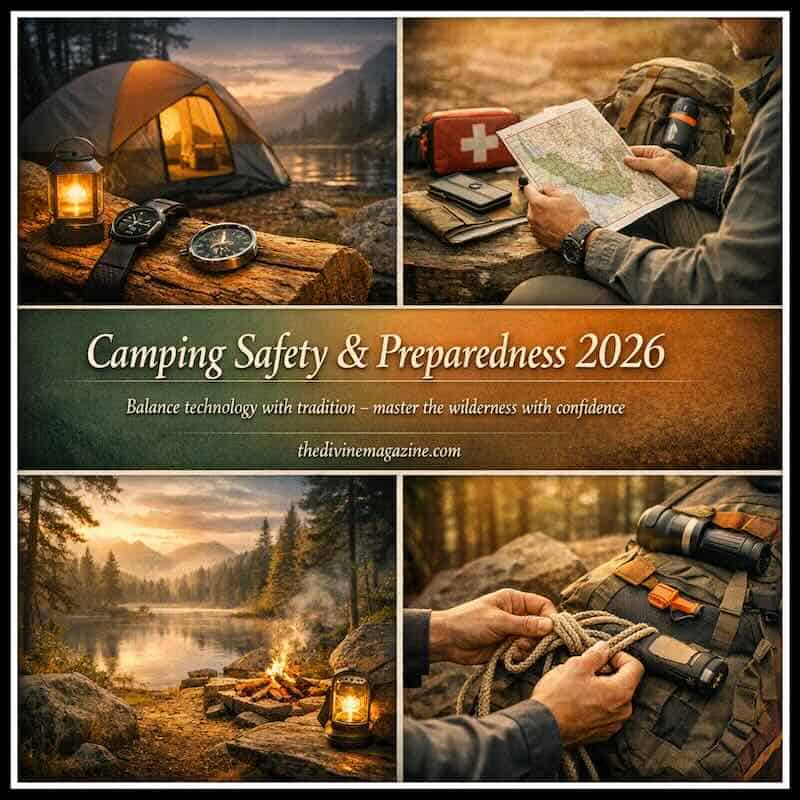
Camping in 2026 remains the ultimate escape into nature, offering profound peace and a much-needed digital detox from our high-speed everyday lives. While modern gear has made the experience more accessible, it is more important than ever to balance technology with traditional safety preparedness. Nature’s beauty is matched only by its unpredictability, and being ready for any scenario is the hallmark of a seasoned camper.
Equipping yourself with foundational outdoor knowledge and emergency protocols allows you to go camping with true peace of mind. Without a plan, small hurdles can quickly compound into dangerous situations. In this guide, we will explore updated camping safety tips to help you master the wilderness with confidence.
Share Your Plans and Sync Your Tech
Before you disappear into the treeline, someone back home must know your itinerary. Share precise details: your specific trailhead, intended campsites, and an “overdue” time—the exact hour they should call for help if they haven’t heard from you. This is a vital habit to adopt before you even begin learning survival skills, which you can read about here.
In 2026, communication has evolved. While cell service is still spotty in deep wilderness, satellite connectivity is now integrated into most modern smartphones. However, for serious backcountry treks, you should still carry a dedicated satellite communicator or a Personal Locator Beacon (PLB). These devices ensure that even in “dead zones,” you can send an SOS or check-in message to loved ones.
Choose a Safe Site and Practice Leave No Trace
Selecting the right spot to pitch your tent is your first line of defense. Avoid “widow-makers”—dead trees that could fall in high winds—and steer clear of dry creek beds that are prone to flash flooding. Always check the National Weather Service for localized mountain forecasts before setting up.
Look for a flat, durable surface to pitch your tent, such as the Lanshan 2 grey. A level site ensures proper drainage if it rains and prevents you from sliding into the tent walls overnight. Avoid slopes, which can lead to poor circulation and a restless sleep.
Distance from water is also key. Per Leave No Trace principles, you should camp at least 200 feet away from lakes and streams. This protects fragile riparian ecosystems and keeps you at a safe distance from wildlife that uses the water source at night.
Smart Fire Safety and Alternatives
A campfire is often the heart of the camping experience, providing warmth and a place to cook. However, with increasing drought conditions in many regions, fire safety is paramount. Always check for local fire bans before you strike a match.
If fires are permitted, use existing fire rings whenever possible. Clear a 10-foot diameter area around the pit of all flammable debris. Keep your fire small and manageable, and never leave it unattended. In 2026, many campers are opting for portable propane fire pits, which offer the “vibe” without the risk of flying sparks or embers.
To extinguish your fire, use the “Drown, Stir, and Feel” method. Pour water until the hissing stops, stir the ashes with a shovel, and ensure the ground is cool to the touch before you head to bed or leave the site.
Conclusion: Respect the Wild
The key to a successful camping trip in 2026 is a blend of modern preparation and deep respect for the environment. By communicating your plans, choosing your terrain wisely, and managing fire with extreme care, you ensure that the wilderness remains a safe haven for both you and the generations of campers to come. Remember: the best camping trip is the one where you leave the land exactly as you found it.
Frequently Asked Questions
Q: What are the “Ten Essentials” for camping safety?
A: These include navigation (map/compass/GPS), light (headlamp), sun protection, first aid, knife/repair kit, fire starter, shelter, extra food, extra water, and extra clothes.
Q: How do I handle an encounter with a bear or large predator?
A: Never store food inside your tent. Use bear-resistant canisters or lockers. If you see a bear, stay calm, speak in a low voice, and slowly back away without turning your back or running. Always carry bear spray in accessible areas.
Q: Is it safe to drink water from a stream if it looks clear?
A: No. Even the clearest mountain water can carry pathogens like Giardia. Always treat your water using a filter, UV purifier, or by boiling it for at least one minute.