







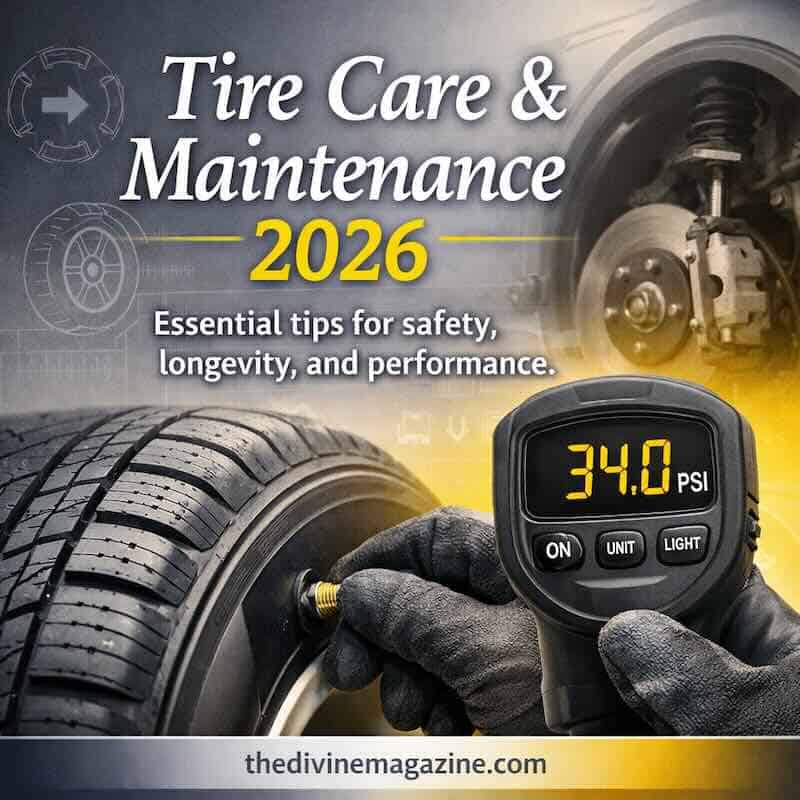
In 2026, proper tire care remains one of the most overlooked yet essential parts of vehicle safety. With modern vehicles becoming heavier, faster, and more tech‑integrated, your tires play an even bigger role in stability, braking performance, and fuel efficiency. Ensuring they are properly maintained is one of the simplest ways to protect yourself on the road.
No matter what you drive—EV, hybrid, SUV, or compact—your tires are the only point of contact between your vehicle and the road. This guide breaks down the most important tire care practices for 2026 so you can stay safe, extend tire life, and avoid costly roadside emergencies.
Ensuring Safety On The Road
Tire care is foundational to road safety. As the NHTSA continues to emphasize in 2026, tires are the most critical safety component on your vehicle. Proper inflation, tread depth, and overall condition directly affect traction, braking distance, and stability.
Underinflated tires reduce traction, stability, and fuel economy while wearing out faster. They are a leading cause of blowouts, contributing to hundreds of accidents each year according to NHTSA*.
Overinflated tires, meanwhile, reduce the tire’s contact patch and make your suspension work harder, resulting in harsher handling and reduced steering control.
Checking your tire pressure monthly is essential. Use a reliable gauge and follow the manufacturer’s recommended PSI—usually found inside the driver’s door or in the owner’s manual.
*National Highway Traffic Safety Administration
Increasing Tire Lifespan
Proper tire maintenance significantly extends tire life. Regular pressure checks, tire rotations, and wheel alignments help ensure even wear and optimal performance.
Under‑inflation or over‑inflation strains your tires and reduces fuel efficiency. Uneven tread wear also increases the risk of hydroplaning or losing control in wet or icy conditions.
Rotating your tires every 6,000–8,000 miles (9,500–12,800 km) helps distribute wear evenly across all four tires, especially on front‑wheel‑drive and all‑wheel‑drive vehicles.
Balancing your tires between rotations reduces vibration, improves ride comfort, and prevents premature wear caused by uneven weight distribution.
Achieving Optimal Performance
In 2026, performance isn’t just about speed—it’s about efficiency, safety, and vehicle longevity. Proper tire maintenance ensures your vehicle handles as intended, especially with modern traction control and stability systems relying heavily on tire condition.
Checking tire pressure monthly and adjusting based on manufacturer recommendations keeps your vehicle responsive and safe. Under‑inflation or over‑inflation can cause premature wear, poor handling, and reduced braking performance.
Rotating tires every 5,000–7,500 miles (8,000–12,000 km) helps maintain even wear, especially for vehicles with front‑heavy weight distribution. This improves steering response and reduces vibration.
Proper Tire Inflation
Correct tire inflation is one of the simplest yet most impactful maintenance habits. Proper PSI improves safety, fuel efficiency, and tire longevity.
The Significance Of Proper Inflation
Underinflated tires increase braking distance, reduce fuel efficiency, and cause excessive wear. According to the U.S. Department of Energy, every 1 PSI drop across all four tires can reduce fuel economy by 0.2%.
Overinflated tires wear faster along the center tread and reduce road grip, especially in wet conditions.
Regular pressure checks ensure optimal performance and prevent premature tire failure.
Recommended Inflation Levels
Recommended PSI varies by vehicle type. Always follow the manufacturer’s guidelines:
Cars: 30–35 PSI (front), 35–40 PSI (rear)
SUVs & light trucks: 32–39 PSI
Heavy‑load trucks: Up to 65 PSI depending on load requirements
Failing to maintain proper PSI increases the risk of blowouts, uneven wear, and poor handling. If you experience a flat or blowout and need towing in Tucson, Towing Tucson offers affordable services.
Tire Rotation, Balancing, And Alignment
Rotating, balancing, and aligning your tires ensures even wear, better fuel efficiency, and a smoother ride.
Understanding Tire Rotation And Its Benefits
Regular tire rotation improves traction, stability, and tread life. It also helps distribute weight evenly across all four wheels, improving handling and reducing the risk of flat spots.
Rotate tires every 6 months or 8,000 km (5,000 miles), adjusting for seasonal changes or harsh driving conditions.
Importance Of Proper Balancing
Balancing reduces vibration, improves steering control, and prevents premature wear. It also reduces the likelihood of needing vehicle towing due to tire‑related breakdowns.
Proper balancing ensures each tire rotates smoothly, improving ride comfort and extending tire life.
Common Tire Problems And Solutions
Many tire issues can be prevented with regular inspections. Here are the most common problems and how to address them.
Uneven Wear
Uneven wear occurs due to improper inflation, misalignment, worn suspension components, or irregular rotation patterns. Signs include cupping, bald patches, flat spots, or bulges.
Maintaining proper PSI and alignment prevents uneven wear and reduces the risk of blowouts.
Bulges Or Separations
Bulges indicate impact damage, while separations often result from aging or UV exposure. Regular inspections help catch these issues early.
Punctures Or Leaks
Punctures from debris, potholes, or sharp objects require immediate attention. Inspect tires regularly and avoid driving on soft or damaged areas.
If you’re in Tucson or Las Vegas and need a tow truck, Towing Tucson and their Vegas branch can assist with tire emergencies.
Conclusion
In 2026, tire care is more important than ever. With heavier vehicles, advanced safety systems, and rising fuel costs, maintaining your tires is one of the smartest investments you can make. Regular inspections, proper inflation, and timely rotations ensure safety, performance, and long‑term savings.
By staying proactive, you reduce the risk of breakdowns, improve your driving experience, and extend the life of your tires—keeping you safer on every journey.
FAQ: Tire Care & Maintenance 2026
1. How often should I check my tire pressure?
At least once a month, and before long trips. EVs and hybrids may require more frequent checks due to heavier battery weight.
2. How do I know if my tires need replacing?
Replace tires when tread depth reaches 2/32″, or if you notice bulges, cracks, or persistent vibration. Use the penny test or a tread gauge.
3. Do EVs wear out tires faster?
Yes. EVs are heavier and deliver instant torque, which increases tire wear. Regular rotation is especially important for EV owners.
4. Should I use nitrogen instead of air?
Nitrogen maintains pressure slightly better, but for most drivers, regular air is perfectly fine. Consistent pressure checks matter more.
5. How often should I rotate my tires?
Every 5,000–8,000 miles (8,000–12,800 km), or every 6 months. EVs may require more frequent rotations.