






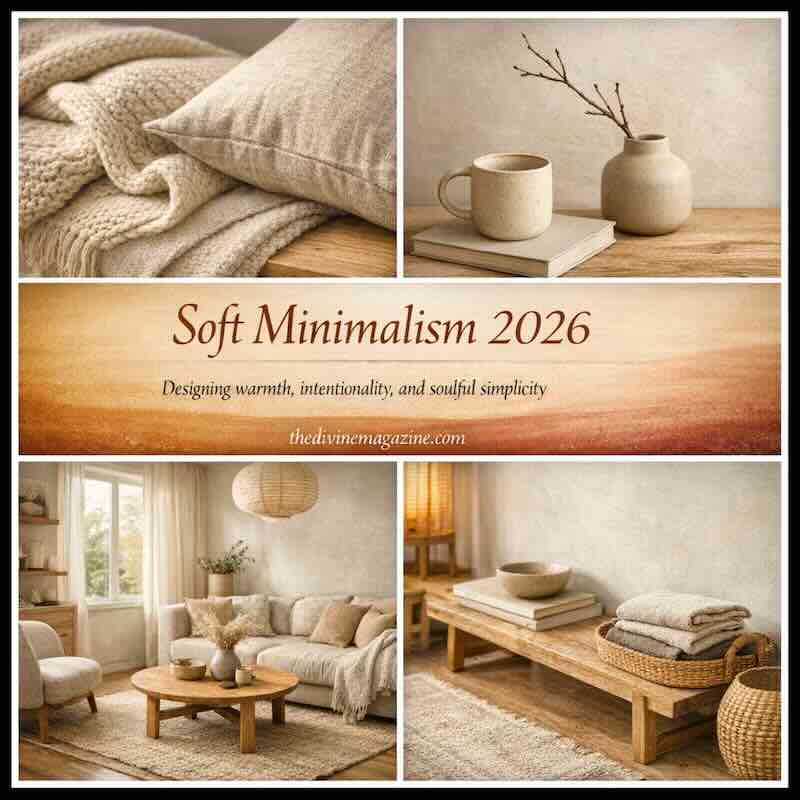
The days of stark, cold “gallery-style” minimalism are fading. In 2026, we are embracing Soft Minimalism—a design philosophy that strips away the clutter without stripping away the soul. It’s about creating a home that feels like a deep breath, focusing on intentionality, warmth, and tactile comfort.
What is Soft Minimalism?
Soft minimalism is the bridge between rigid modernism and cozy living. While traditional minimalism often prioritizes “less is more” to the point of emptiness, soft minimalism asks: “How does this space make me feel?” It replaces sharp edges with curves, cool whites with warm beiges, and synthetic surfaces with natural textures.
Key Elements of the 2026 Aesthetic:
- The Warm Palette: Move away from stark grey. Think oatmeal, mushroom, terracotta, and soft sand.
- Tactile Textures: Bouclé, raw linen, brushed lime wash walls, and untreated light woods.
- Biophilic Connection: Not just a plant in a corner, but an integration of natural light and organic shapes.
1. Curate with Intentionality
In a soft minimalist home, every object has a “reason for being.” This doesn’t mean your home must be empty; it means it must be considered. Ask yourself if an item serves a functional purpose or provides genuine emotional value.
For those looking to declutter sustainably, the Becoming Minimalist community offers excellent frameworks for letting go of the excess to make room for the essential.
2. Focus on “Living” Materials
To create warmth without adding “stuff,” let the materials do the talking. 2026 design trends favor “living finishes”—materials like unlacquered brass or natural stone that patina over time. These materials tell a story of a life lived in the space.
“Sustainability is no longer a feature; it is the foundation. Choose pieces made from reclaimed wood or recycled textiles to add depth and consciousness to your sanctuary.”
3. Layering Soft Lighting
Nothing kills a minimalist vibe faster than harsh overhead LED lighting. To achieve a soft glow, use the “Three-Layer Rule”:
- Ambient: Soft, dimmable ceiling lights.
- Task: A focused, elegant desk or reading lamp.
- Accent: Warm floor lamps or candles (scented with natural essential oils like sandalwood or cedar).
Explore ArchDaily’s lighting guides to see how professional architects use “invisible” light to transform spaces.
4. Embrace Organic Curves
Soft minimalism moves away from the aggressive “boxiness” of the early 2000s. To invite warmth, introduce sculptural furniture—think arched doorways, round dining tables, and kidney-bean-shaped sofas. Curves mimic the natural world and subconsciously make a room feel more welcoming and less “clinical.”
5. Master the Art of Negative Space
In 2026, “white space” isn’t wasted space; it’s breathing room. Resisting the urge to fill every corner allows the eye to rest and highlights your intentional pieces. Negative space acts as a frame, turning a simple chair or a single vase into a curated work of art.
6. Deepen the Biophilic Connection
Beyond just adding a potted plant, soft minimalism integrates the outdoors through biophilic design. Use sheer curtains to let natural light dance across the floor, or choose stone-effect plaster for walls to bring earthy textures indoors. For inspiration on connecting with nature through architecture, check out Dezeen’s Biophilic Design gallery.
7. Engage the Senses (Sensory Design)
True warmth isn’t just visual; it’s sensory. A warm minimalist living space uses sound and scent to ground the inhabitant. Consider a high-quality wood-wick candle for a subtle crackling sound or the use of heavy, noise-dampening wool rugs to create a quiet, meditative acoustic environment.
Conclusion: A Sanctuary for the Soul
Soft minimalism isn’t about achieving a “perfect” look for social media; it’s about reclaiming your mental bandwidth. By reducing visual noise and surrounding yourself with warmth and intentionality, your home becomes a battery-charger for your spirit. Start small: clear one surface, swap one lightbulb, and feel the immediate shift in your environment.
FAQ: Soft Minimalism
Q: Won’t a warm-toned minimalist house look “cluttered” or “dirty”?
A: Not at all. The “warmth” comes from the undertones of your colors (creams instead of blue-whites) and the quality of light. As long as the surfaces remain clear, the space will feel expansive and clean.
Q: Is soft minimalism expensive to achieve?
A: It can actually be more affordable because you are buying less. Focus on quality over quantity. Thrift stores are also goldmines for the organic wooden bowls and stone vases that define this style.
Q: How do I handle sentimental items?
A: Soft minimalism welcomes sentiment! Instead of hiding them, give them a “stage.” A single heirloom vase on a clean wooden sideboard looks like art. If you have too many, try rotating them seasonally.