
Betty Moon remembers the beginning in sharp detail: Toronto, studios, bands, early fans, and a version of herself that was “absolutely fearless.” There was no backup plan. Music was the plan.
INTERVIEW
MAGAZINE
In Conversation
Betty Moon
From signing with A&M Records in the ’90s to building Evolver Music on her own terms, Betty Moon has seen the music industry from both sides of the machine. In this Q&A, she talks about creative control, the realities of independence, sync placements, reinvention after three decades, and the late-night mood behind “A Taxi Ride.”
INTERVIEW — DIVINE MAGAZINE · 2026
Three decades later, the surroundings have changed. Moon has moved from the major-label structure of A&M Records to running Evolver Music, building an independent catalogue, navigating sync placements, and releasing new work without surrendering creative control. The instinct underneath it all has remained remarkably consistent.
Her current chapter centers on Strangely Beautiful, with “A Taxi Ride” carrying a nocturnal alt-pop pulse and “Hunger Pain” reaching radio audiences nationally. In this Q&A with Divine Magazine, Moon looks back at the machinery of the ’90s music industry, the reality of independence, and what reinvention means when there is enough history behind you to recognize what is worth keeping.
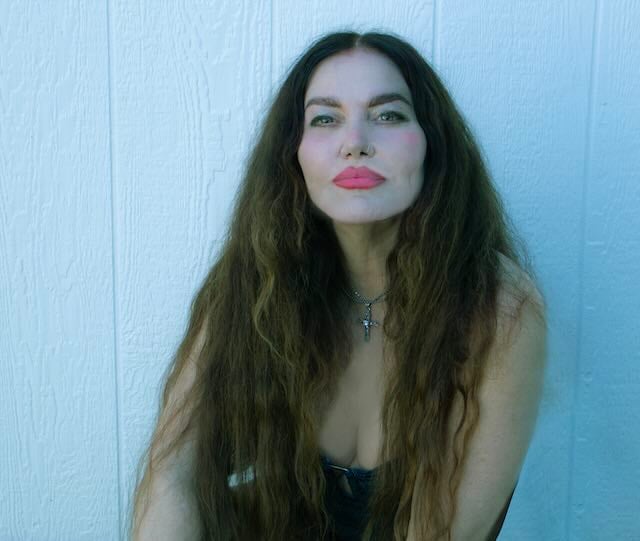
On Toronto, A&M, and Where It Started
Divine Magazine: You came up in Toronto’s music scene before signing to A&M Records in the ’90s. What do you remember most about that version of yourself — the one just starting out?
Betty Moon: I remember being absolutely fearless, confident, excited, curious, and probably a little more intense than I realized at the time. There was no backup plan, I knew I wanted to make music, build out my own sound, and create a world around it with my bandmates, friends and early fans. Toronto had such a great energy then, and I was surrounded by studios, artists, bands, and people who were really into the same stuff I was. I was young, but I already had strong instincts about who I was. I cared about the music, but I also cared about the look, the attitude, the whole experience.
Divine Magazine: Signing to a major label in the ’90s meant a very different industry than the one artists navigate today. Looking back now, what did that chapter teach you that you still carry into how you work?
Betty Moon: Being a musician in the 90’s taught me a lot about discipline, pressure, and how much work it takes to turn talent into an actual career. At that time there were so many gatekeepers, it wasn’t anything like how the industry is today. You had to fight to be heard, and a major label could open doors, but it could also make things very complicated. If you weren’t signed to a label, it was really hard to make things happen. What I still carry with me is the importance of having a real point of view and the experience from the hustle back then. Great songs matter, but so does identity and relationships. You have to know who you are, because plenty of people will try to tell you who they think you should be.
Divine Magazine: Was there a specific moment during your A&M years when you realized the industry’s version of your career and your own version weren’t going to be the same thing?
Betty Moon: Absolutely, once someone gets a preview of how the major label machine works, it’s like getting cold water splashed on your face. There are exciting, necessary parts of that system, but a lot of it is just about profit and creating the most likely scenarios for success. Ultimately, I don’t know if it was one dramatic movie-scene moment, but there were definitely times when I realized my instincts and the label’s expectations were not always aligned.
I’ve never been someone who fits neatly into a box, and that can be tricky in a system that loves categories. I wanted freedom to experiment, to evolve, and to make decisions based on the music and the vision. Eventually, I understood that if I wanted that kind of control, I was going to have to build it myself. The major label relationship didn’t work out, but I’m sure glad it didn’t since I was able to create my own world without having to answer to execs and managers.

On Going Independent
Divine Magazine: What made you decide to leave the major-label structure behind and build Evolver Music instead of chasing another deal?
Betty Moon: Creative freedom and ownership. Simple as that. I had already experienced what a major-label machine could do, and I’m mostly grateful for that education, but I didn’t want to spend any more time chasing a system that I didn’t vibe with. Evolver Music gave me the ability to write, record, release, and publish on my own terms. That freedom changed everything for me. It made the work feel more honest, and it allowed me to build a career that actually belonged to me.
Divine Magazine: Independence sounds appealing in theory, but building your own label is a completely different job than being an artist. What was the hardest part of that transition, practically speaking?
Betty Moon: The hardest part was realizing that independence does not mean less work and an easier path. It means all the work. You become the artist, the producer, the decision-maker, the businesswoman, the problem-solver, and sometimes the person putting out fires before anyone else even knows there is a fire. Practically speaking, you have to learn publishing, distribution, sync, marketing, budgets, timelines, and how to keep the creative side alive while managing the business side. It is not for the faint of heart, but I like having control over my world.
Divine Magazine: Your music has ended up in Californication, Dexter, The Walking Dead, and more — all without a major label pushing for those placements. How did you build that side of your career on your own?
Betty Moon: A lot of it came from building relationships, understanding the value of my catalog, and being persistent. Some of it, well most of it, is learning as you go. Syncs in film/tv do not happen magically and it’s a very niche, interesting part of the industry. You have to make sure the music is ready, the rights are clear, the business side is organized, and people know how to reach you. Having my own label and publishing structure helped because I could move quickly and make decisions without a lot of red tape. It also comes down to having songs that create atmosphere. I’ve always loved music that feels visual, so it makes sense that certain songs found homes in film and television.
Divine Magazine: Three decades in, what’s the biggest myth about “making it” in music that you no longer believe?
Betty Moon: People think there is one big moment where everything suddenly becomes easy. That does not exist, flat out. You can have great moments, great placements, great press, great releases, and then you still have to wake up and keep building. “Making it” is not one finish line. It is staying in the game, staying creative, owning your work, and still being excited by the next song. That is the real win.

On Reinvention, Then and Now
Divine Magazine: Strangely Beautiful is described as an EP shaped by reinvention. How is the reinvention you’re doing now different from the reinvention you did earlier in your career, when you were younger and had less to look back on?
Betty Moon: When you are younger, reinvention can feel more like discovery. You are trying things on, pushing boundaries, seeing what sticks, and figuring out who you are. Now, reinvention feels deeper because I have more life behind it. I am not trying to become someone else. I am revealing different sides of who I already am. Strangely Beautiful came from reflection, change, desire, and a lot of personal experience. It feels less like chasing a new identity and more like owning the whole picture.
Divine Magazine: If you played your younger self, the one signing to A&M, a song like “A Taxi Ride,” what do you think she’d make of it?
Betty Moon: I think she would get it, honestly. She might be surprised by the restraint and the confidence in leaving more space, but she would recognize the mood, the attitude, and the independence in it. I believe I’ve consistently been myself throughout my whole life, so it wouldn’t be a shock. “A Taxi Ride” still has that sense of motion and edge, but it is not trying too hard to prove anything. I think my younger self would probably say, “Okay, she still has it, but she’s cooler and more confident now.”
On the New Music
Divine Magazine: “A Taxi Ride” leans into late-night nostalgia and a ’90s-inspired energy. Was revisiting that sound a deliberate choice, or did it come out of you naturally given where you started?
Betty Moon: It came out naturally and I wasn’t really trying for anything specific. That ’90s alt-pop and rock energy is part of my DNA and that’s when I was the busiest as a writer and touring artist, so I don’t really have to force it and that’s when my sound/vibe was locked in. With this song, I was thinking more about mood than a specific era, but those influences were always there. I love songs that feel like they are moving through a city at night, with a little nostalgia, a little mystery, and a pulse underneath.
Divine Magazine: The song sits in that space between where someone’s been and where they’re headed — a pretty fitting theme for an artist thirty years into a career. Was that connection intentional?
Betty Moon: I think it became intentional once I heard it back and understood what the song was really doing for me personally. The song can mean different things to different people, and I like leaving room for that. For me, it does connect to this point in my life and while I know what the song is about, I don’t want to give that all away since listeners like to make the song their own.
Divine Magazine: “Hunger Pain” is reaching radio audiences nationally right now. Does that kind of reach feel different to you today than it did earlier in your career, or does independence mean tuning that out?
Betty Moon: It always feels great. I don’t think artists ever stop appreciating that people are hearing the music. The difference now is that I don’t let outside validation control how I feel about the work. When I was younger, radio or press could feel like this huge defining thing. Now I see it as part of the bigger picture. I am grateful for it, but I also know the value of the song before anyone else confirms it. That is one of the gifts of being independent for this long.
Divine Magazine: What do you want “A Taxi Ride” to be playing during — is there a specific moment you picture it landing in for a listener?
Betty Moon: I picture it during a late-night drive, when you are looking out the window and thinking about everything you probably have not had time to process during the day. It could be after a night out, after a breakup, before a new beginning, or just one of those moments where life feels a little cinematic. But I do not want to define it too much. The best songs leave space for people to put their own memories inside them.
Explore Betty Moon’s current music and catalogue through her official website and read more about her career and background and follow her on Instagram
Listen on Spotify | Apple Music | Youtube
Your tailored reading list
More stories chosen for their mood, aesthetic and point of view.
 Empowering Evolution
The Return of a Cult Icon: Betty Moon’s “Strangely Beautiful” Evolution
Read story Creative Journey
TAYDEM: From Psychological Horror to Self-Produced Indie Music
Read story Introspective