







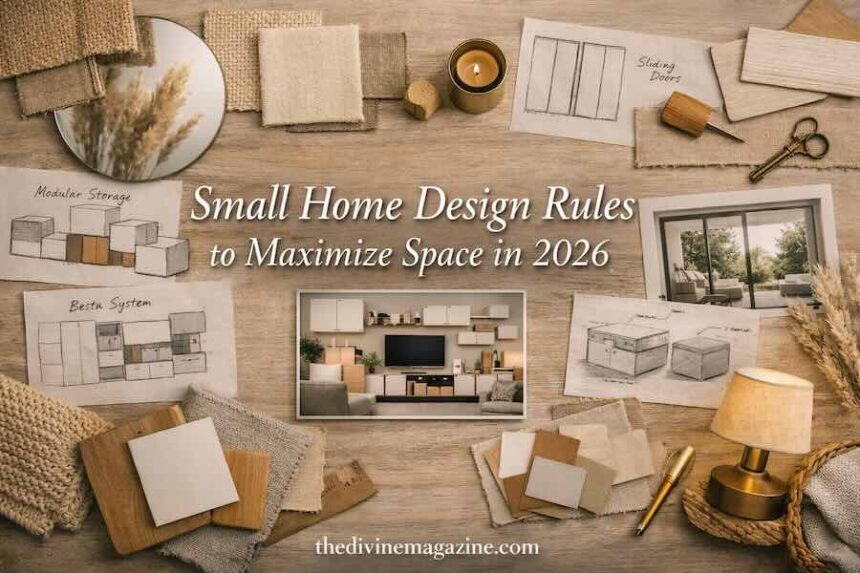
Small home living continues to inspire creative design solutions that blend comfort, efficiency, and modern aesthetics. In 2026, smart interiors are all about maximizing every inch while maintaining a sense of openness and personality.
Over the years, compact living has evolved from necessity to lifestyle. Whether you’re designing a studio apartment or a tiny home, the key lies in balancing functionality with style. This guide explores 12 unbreakable design rules to help you create a space that feels expansive, organized, and uniquely yours.
Key Takeaways:
- Prioritize Functionality: Assess your daily habits and allocate space for essential activities like work, rest, and entertainment.
- Utilize Vertical Space: Install shelves, tall cabinets, and wall-mounted storage to free up floor area and create visual height.
- Choose Adaptable Furniture: Opt for multi-functional pieces such as Murphy beds, nesting tables, and modular sofas to enhance usability.
Prioritize Your Needs
Start by identifying what matters most in your daily routine. Whether it’s a home office, a workout corner, or a cozy reading nook, design your layout around these priorities. This approach ensures every area serves a purpose while maintaining harmony. For inspiration, explore Apartment Therapy’s small-space living ideas for practical examples.
Enhance Space with Mirrors
Mirrors remain one of the most effective tools for expanding visual space. Position them opposite windows to reflect natural light and create depth. Experiment with different shapes and heights to add character. For more ideas, visit House Beautiful’s Clever Small Home Ideas and Architectural Digest’s small-space guide.

Furniture Arrangement Strategies
Begin with your largest piece — typically a sofa or bed — and build around it. Keep sightlines open by choosing low-backed furniture and avoiding clutter. Define zones for dining, relaxing, and working to maintain flow. For layout inspiration, check IKEA’s Living Room Design Ideas and Houzz Living Room Layouts.
Maximizing Storage Solutions
Smart storage is the backbone of small-space living. Choose furniture with built-in compartments — gas-lift beds, ottomans, and benches with hidden drawers. Use vertical shelving and wall-mounted niches to keep surfaces clear. Explore IKEA’s BESTÅ modular storage system and Dezeen Interiors for modern storage inspiration.
Connecting Indoor and Outdoor Spaces
Sliding or bi-fold doors can visually expand your home and invite natural light. They create a seamless transition between indoor and outdoor areas, enhancing air flow and openness. Installation costs typically range from $4,000–$7,000, depending on materials. For design ideas, explore Architectural Digest’s indoor-outdoor living trends.

Managing Noise Levels
Sound management is essential in compact homes. Position TVs and speakers on external walls or away from bedrooms to reduce noise transfer. Use rugs, curtains, and upholstered furniture to absorb sound. For more acoustic design tips, see Divine’s Bedroom Decorating Guide.
Emphasizing Sightlines and Scale
Clear sightlines make small spaces feel larger. Arrange furniture to maintain open pathways and allow light to travel freely. Choose compact, low-profile pieces that don’t block views. For inspiration, check Houzz’s small-space design stories.
Conclusion
In 2026, small home living is about intentional design — blending creativity, technology, and sustainability. By following these 12 unbreakable rules, you can transform limited square footage into a stylish, functional retreat. Prioritize your needs, embrace vertical storage, and invest in adaptable furniture to make your home feel spacious and serene.
Explore more: IKEA Living Room Inspiration | Apartment Therapy | Architectural Digest | Dezeen Interiors
FAQ: Small Home Living in 2026
A: Use multi-functional furniture like ottomans, benches, and gas-lift beds. Incorporate vertical shelving and modular systems such as BESTÅ to keep clutter under control while maintaining a clean aesthetic.
Q: What are the best color schemes for small homes?
A: Stick to light, neutral tones like beige, soft gray, and off-white to create an airy feel. Add warmth with natural wood accents or muted pastels. For inspiration, explore House Beautiful’s neutral color guide.
Q: How can lighting improve small-space design?
A: Layer your lighting — combine ambient, task, and accent lights to create depth. Use wall sconces and floor lamps to save surface space. Check Architectural Digest’s lighting design tips for expert advice.
Q: What are affordable ways to make a small home feel luxurious?
A: Focus on texture and detail — add plush throws, metallic accents, and statement lighting. Choose quality over quantity and keep decor minimal. Explore Apartment Therapy’s luxury small-space ideas for inspiration.
Q: How do I maintain a clutter-free environment long-term?
A: Adopt a “one in, one out” rule — for every new item you bring home, remove one. Schedule monthly decluttering sessions and use labeled baskets or boxes for organization. For minimalist living tips, visit Dezeen’s minimalist home features.
Small-space living in 2026 is all about intentional design — combining creativity, sustainability, and comfort to make every square foot count.