






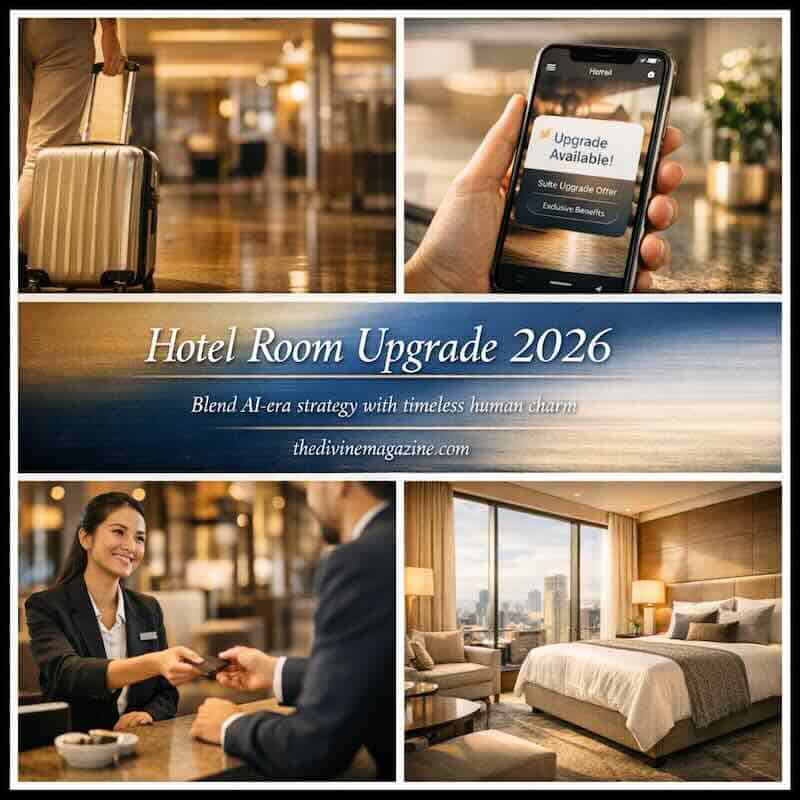
The allure of a hotel room upgrade is undeniable. In 2026, as travel technology becomes more personalized, securing a “bump” in room class can elevate your travel experience from a standard stay to something truly exceptional.
While there’s no guaranteed button for a free upgrade, the landscape has shifted. AI-driven revenue management now dictates room availability, but there are still effective human-centric strategies you can use to increase your chances without paying a premium.
In this 2026 edition of our guide, we’ll explore proven tactics, from leveraging new digital loyalty ecosystems to the timeless art of the polite request, all designed to help you secure that coveted room upgrade.
1. Understanding the 2026 Upgrade Game
Scoring a hotel room upgrade is part science, part psychology. In today’s market, upgrades aren’t just handed out; they are allocated based on complex algorithms and real-time data. By understanding these pillars, you can position yourself at the top of the list.
Hotel Occupancy & AI Revenue Management
Modern hotels use dynamic pricing and occupancy forecasting. If a hotel sees a 20% vacancy in their “Executive Suites” for your stay dates, they are more likely to move a loyal guest up to free up a “standard” room for last-minute bookers. Traveling during mid-week windows or shoulder seasons remains your strongest statistical advantage.
Guest Lifetime Value (GLV)
Hotels now look at your “Guest Lifetime Value” rather than just a single stay. Loyal guests or members of hotel loyalty programs are prioritized because the cost of retaining you is lower than acquiring a new guest. Joining a loyalty program is the single most important “paperwork” you can do to boost your chances.
The “Sweet Spot” Check-in
Timing is everything. Arriving between 4:00 PM and 6:00 PM is often the “sweet spot.” By this time, the front desk knows exactly which guests have failed to show up (no-shows) and which premium rooms will remain empty for the night.
2. Leveraging Hotel Loyalty Programs
Loyalty programs are the currency of the hospitality industry. If you aren’t a member, you’re essentially invisible to the upgrade algorithm.
- Status Match: Many chains, like Marriott Bonvoy or Hilton Honors, allow you to “status match” if you have elite standing with an airline or another hotel group.
- Prioritized Allocation: Even the lowest tier of a loyalty program puts you ahead of someone who booked via a discount travel site.
- Digital Check-in Perks: In 2026, many apps allow you to see available upgrades 24 hours in advance. Sometimes, a “free” digital upgrade appears in the app that isn’t offered at the desk.
3. The Power of Direct Booking
While third-party sites like Expedia or Booking.com are convenient for price comparison, they are the “enemy” of the free upgrade. When you book via a third party, the hotel pays a commission (often 15-25%).
Why Direct is King: Hotels prefer direct bookers because the profit margin is higher. If they have one suite left, they will give it to the person who booked directly on their website over the person who used a discount aggregator. Additionally, many hotels now offer a “Best Price Guarantee,” meaning you won’t pay more for booking direct.
4. Mastering the Art of the Request
Technology aside, the person behind the front desk still has the power to override the system. Mastering human interaction is vital.
The 3-Step Social Strategy
1. Be Polite and Discreet: Never ask for an upgrade if there are other guests within earshot. If the clerk gives you a freebie, they don’t want the person behind you demanding one too.
2. Mention Milestones: Are you celebrating a 10th anniversary or a 40th birthday? Mention it in the “special requests” box during booking and again at the desk. Hotels love being part of a success story.
3. The “Kindness Dividend”: Front desk staff deal with grumpy travelers all day. A genuine smile and a “How is your shift going?” can build enough rapport to make them want to check the system one last time for you.
“In a world of automated kiosks, a little human kindness remains the most effective ‘hack’ for a room upgrade.”
5. Optimizing Timing and Appearance
First impressions in the lobby often dictate the quality of your room assignment.
The 2026 Presentation Standards
You don’t need a tuxedo, but looking “business casual” or “polished traveler” suggests you will respect a high-end suite. Furthermore, your social media presence can be a tool. If you have a following on travel platforms, tagging the hotel in a “just arrived” post on Instagram or TikTok can sometimes trigger a proactive upgrade from the marketing team monitoring the tags.
6. Details and Flexibility
- Book One Level Below: If you want a suite, book a “Deluxe” room rather than a “standard.” It’s a smaller jump for the hotel to move you up one tier than five.
- Stay Length Matters: It is much easier for a hotel to upgrade a 1-night stay than a 7-night stay. If you’re on a long trip, try for an upgrade during the shortest leg.
- Note the Floor: Sometimes, an upgrade isn’t a bigger room but a better floor. Asking for a “high floor with a view” is often granted more easily than a “suite.”
Conclusion
While there is no “magic code” for a free hotel room upgrade in 2026, the combination of loyalty status, direct booking, and strategic timing creates the perfect environment for a “yes.” By understanding the balance between hotel AI and human rapport, you can maximize your chances of turning a standard trip into a luxury experience. Give these tactics a try on your next adventure, and remember: the worst they can say is no!
Frequently Asked Questions (FAQ)
Q: Does the “sandwich trick” (tipping the front desk) still work?
A: In 2026, this is becoming less common as many hotels have strict anti-bribery policies. It is better to use a genuine compliment and mention a special occasion than to lead with cash.
Q: If I see a better room available on a site like Expedia, can I ask for it at check-in?
A: Yes! You can politely say, “I noticed online that you still have Executive Suites available tonight; is there any chance of an upgrade for a loyalty member?” This shows you’ve done your homework.
Q: Do upgrades include free breakfast?
A: Not necessarily. A room upgrade usually only changes the physical room. Amenities like breakfast or lounge access are typically tied to your loyalty status or the specific rate you paid.
Q: What is the best day of the week for an upgrade?
A: Sunday nights are statistically the best. Business travelers have gone home, and leisure travelers haven’t arrived for the work week yet, leaving more premium inventory empty.
Happy travels!