







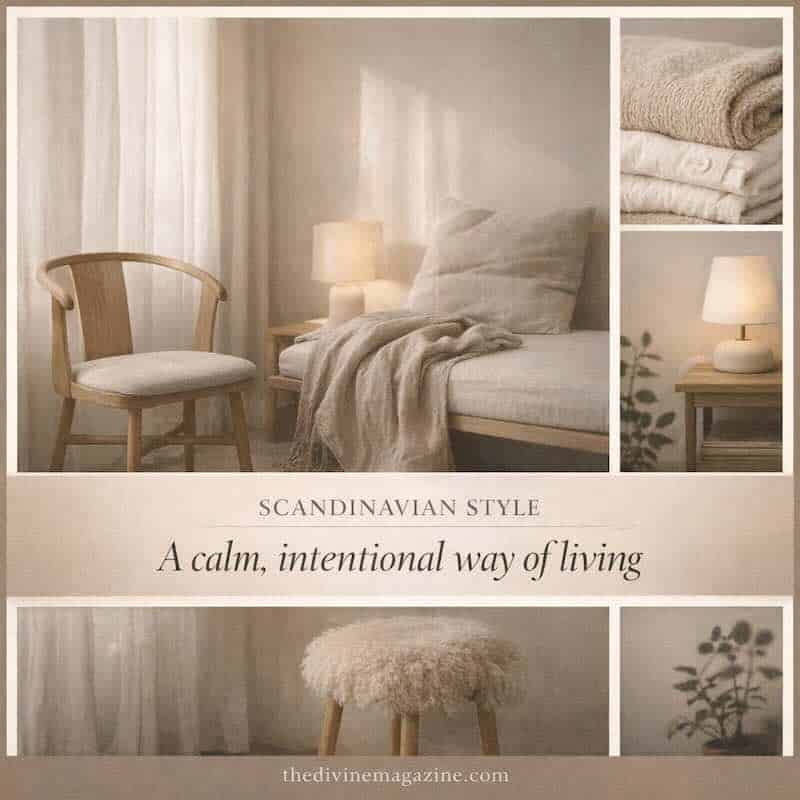
An original Divine Magazine editorial inspired by the principles of Scandinavian design
Scandinavian style has become a global shorthand for calm — a way of shaping a home that feels soft around the edges, grounded in nature, and quietly functional. It’s an aesthetic born from long winters, short days, and a cultural devotion to crafting beauty from simplicity. But more than a look, it’s a way of living: intentional, warm, and deeply human.
A Design Language Rooted in Nature
At the heart of Scandinavian interiors is a reverence for natural materials. Pale woods, wool, linen, stone, and tactile finishes bring the outdoors inside—not as decoration, but as a reminder of rhythm and season. These materials age gracefully, gathering character rather than clutter. For deeper insight into Nordic material culture, Visit Finland offers an excellent overview.
Scandinavians have always understood that a home should feel lived‑in, not staged. A wooden chair with softened edges, a ceramic mug that warms the hands, and a sheepskin throw over a bench—these are objects chosen for touch as much as for sight.
The Philosophy of Hygge and Lagom
To truly understand the Nordic home, one must look toward two untranslatable concepts: Hygge and Lagom. While Hygge (Danish) represents the pursuit of coziness and the “warmth of the soul,” Lagom (Swedish) translates roughly to “not too much, not too little—just right.” For a cultural deep dive, Visit Denmark explains Hygge beautifully.
This balance ensures that a room never feels starkly empty or overwhelming crowded. It is about sustainable contentment. By following the principles of Hygge, homeowners focus on emotional well-being through tactile comfort, while Lagom encourages us to invest in long-lasting, ethically made furniture that serves a specific purpose without excess. Sweden’s official tourism site also explores Lagom in depth at Visit Sweden.
Light as a Daily Ritual
In the Nordic countries, winter light is fleeting. Homes are designed to honor it. Large windows, sheer curtains (or none at all), and pale surfaces help natural light travel through a space. Instead of relying on a single overhead lamp, Scandinavians create “islands of light”—small pools of warmth from table lamps, floor lamps, and candles. For inspiration, IKEA Sweden showcases lighting solutions rooted in Nordic tradition.
Sustainability and Ethical Craft
In an era of “fast furniture,” the Scandinavian ethos remains a bastion of sustainability. The focus is on quality over quantity. Iconic designs from mid-century masters like Arne Jacobsen or Alvar Aalto were built to last decades, not seasons. Modern Nordic design continues this legacy by utilizing recycled plastics, FSC-certified timber, and non-toxic finishes, ensuring the home is healthy for both the inhabitant and the planet. For sustainability standards, see FSC International.
The Beauty of Functional Simplicity
Scandinavian design is often described as minimal, but it’s not minimalism for its own sake. It’s clarity. It’s purpose. Every object earns its place. Every piece of furniture is designed to be used daily, comfortably, and without fuss. This philosophy emerged from a post‑war desire for accessible, well‑crafted objects that improved everyday life. For a historical perspective, the Design Museum offers excellent resources.
A Palette That Breathes
Soft whites, muted greys, warm beiges, and natural wood tones create a sense of calm. These hues act as a quiet backdrop for texture: wool blankets, woven baskets, leafy plants, and ceramics with imperfect glazes. The palette is intentionally restrained so the home feels open, airy, and emotionally uncluttered.
Conclusion: A Space for the Soul
In a world that moves quickly and demands constant attention, Scandinavian design offers a much-needed counterpoint: a home that invites you to slow down. It is a style that prioritizes the human experience over trends, proving that a space doesn’t need to be loud to be beautiful. By stripping away the unnecessary and embracing the natural, we create more than just an interior; we create a sanctuary that supports our well-being. Scandinavian style endures because it feels good—not just to look at, but to live in.
FAQ
What defines Scandinavian interior style?
Scandinavian style blends calm simplicity with natural materials, soft light, and functional design. It creates a home that feels warm, intentional, and uncluttered.
Is Scandinavian design the same as minimalism?
Not exactly. Minimalism removes excess; Scandinavian design focuses on comfort, texture, and purposeful simplicity. It’s minimal, but never cold.
What colors are used in Scandinavian interiors?
Expect warm whites, pale woods, muted greys, and soft beiges. These tones reflect natural light and create a serene, breathable atmosphere.
How can I make my home feel more Scandinavian?
Use natural textures like linen, wool, and raw wood. Add soft, layered lighting, keep décor intentional, and choose furniture with clean, timeless lines.
Is Scandinavian style expensive to achieve?
It doesn’t have to be. The philosophy values fewer, well‑chosen pieces. A simple wooden chair, a linen throw, or a warm lamp can shift the entire mood.
Can Scandinavian style blend with other aesthetics?
Absolutely. It pairs beautifully with Japandi, warm minimalism, and modern organic interiors—as long as the palette stays soft and the materials natural.