






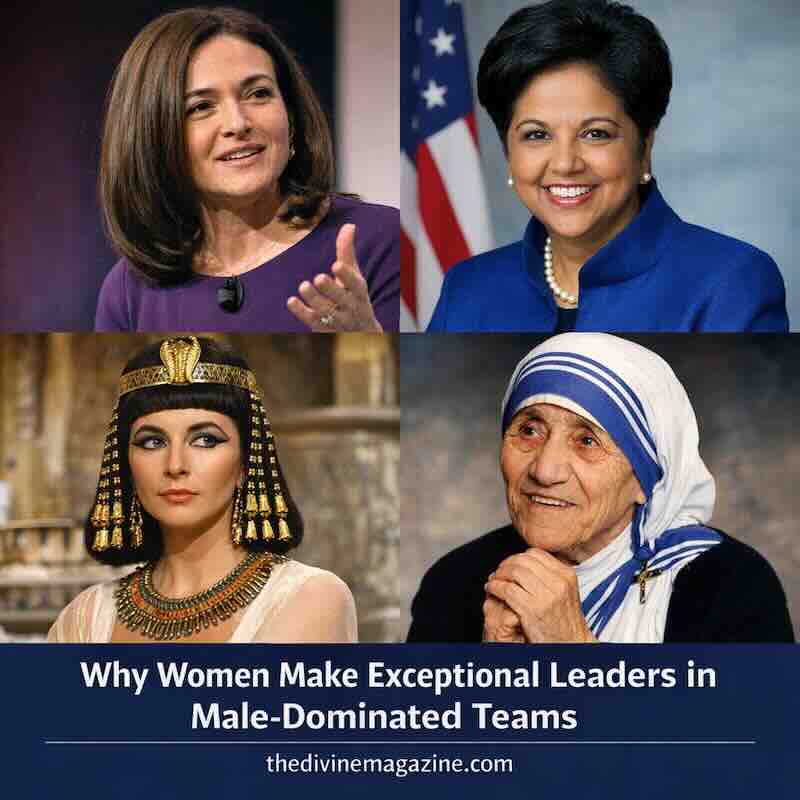

From Cleopatra to Indira Gandhi, and from Sheryl Sandberg to Indra Nooyi, women have consistently reshaped leadership across history. These trailblazers have challenged stereotypes and proven that women not only belong in leadership—they thrive in it. In 2026, their impact continues to redefine how we view power, collaboration, and success.
Studies consistently show that women excel in leadership roles, fostering inclusive, results-driven environments. According to Forbes, women often outperform men in key leadership competencies such as initiative, collaboration, and relationship-building.
Modern Icons of Leadership
Sheryl Sandberg, former COO of Facebook, helped scale the company globally while advocating for women in tech through her book Lean In. Her legacy includes empowering women to take charge of their careers and challenge workplace bias.
Indra Nooyi, former CEO of PepsiCo, transformed the company’s portfolio and culture. Her journey—from a conservative upbringing in Chennai to leading a Fortune 500 company—embodies resilience and strategic brilliance. Read more about her story on PepsiCo’s leadership archive.
Why Women Excel in Male-Dominated Teams
- Curiosity Drives Innovation
Women leaders are naturally inquisitive, constantly seeking to improve processes, understand competitors, and elevate team performance. - Fearless Risk-Takers
They combine intuition with logic, embracing challenges and learning from failure to drive bold decisions. - Passionate and Compassionate
Women lead with heart and purpose, balancing fierce ambition with empathy and emotional intelligence. - Lifelong Learners
Driven by curiosity and passion, women continuously seek growth—personally and professionally. - Relationship Builders
Women excel at building trust, nurturing client relationships, and fostering team cohesion.
Conclusion
Women leaders are not just breaking barriers—they’re building better teams, companies, and communities. Their curiosity, resilience, and emotional intelligence make them uniquely equipped to lead in male-dominated environments. As we move deeper into 2026, embracing diverse leadership is not just progressive—it’s essential.
Frequently Asked Questions
Are women better leaders than men?
Leadership isn’t gendered, but studies show women often excel in collaboration, empathy, and adaptability.
Why is it important to have women in leadership?
Diverse leadership improves innovation, decision-making, and organizational culture.
What challenges do women face in male-dominated industries?
Bias, lack of mentorship, and unequal opportunities are common—but many women overcome these with resilience and support.
How can companies support women leaders?
By offering mentorship, flexible policies, equal pay, and inclusive cultures.
Where can I learn more about women in leadership?
Explore resources like Lean In, Forbes Power Women, and UN Women.
Guest Post by 9ightout
This article was contributed by 9ightout, an app guiding users to nightlife experiences and offers. It’s part of Divine Magazine’s initiative to support emerging travel and lifestyle writers.