




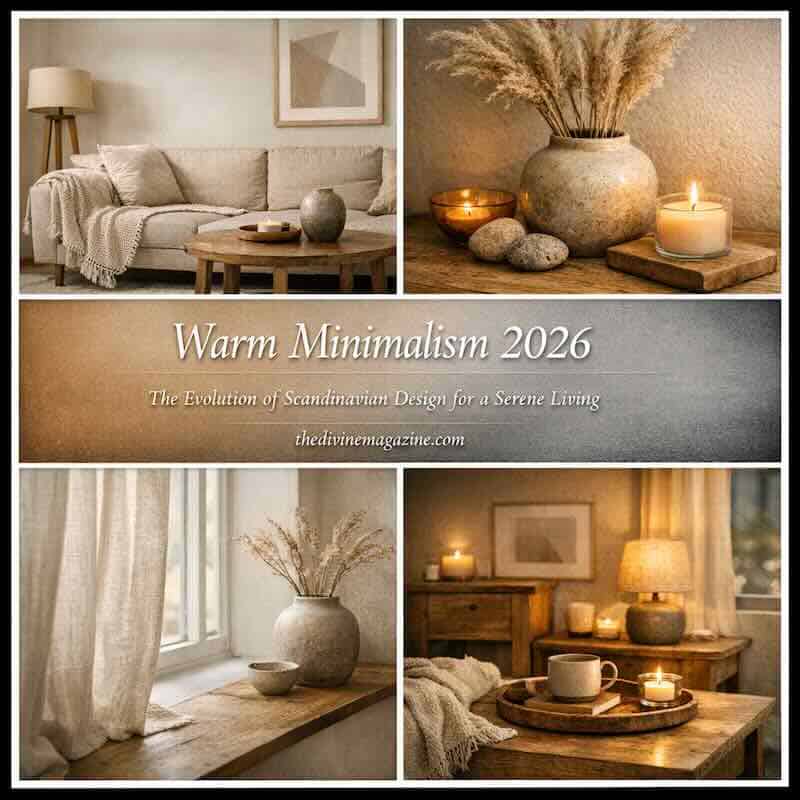
In a world that feels increasingly fast-paced, our homes have become our ultimate sanctuaries. While Scandinavian design has long been synonymous with “minimalism,” the 2026 evolution of this aesthetic—often called Warm Minimalism—focuses less on stark emptiness and more on emotional well-being and sensory comfort.

1. Light as a Healing Element
Scandinavian design was born out of a need to capture light during long, dark winters. In 2026, we are seeing a shift from simple “brightness” to circadian lighting. This involves maximizing natural light during the day using sheer fabrics and reflective surfaces, then transitioning to warm, low-level amber light in the evening to trigger the body’s natural “wind-down” sequence.
“Lighting isn’t just about visibility; it’s about mood regulation. By mimicking the setting sun, we foster true daily renewal.”
— 2026 Wellness Design Insight
2. Haptic Materiality: Design for Touch
The “sterile” look is out. 2026 is the year of Haptic Design—creating spaces that feel as good as they look. This principle encourages the use of diverse textures to provide sensory grounding. Think bouclé fabrics, fluted wooden cabinetry, and matte finishes over high-gloss surfaces.
- Sustainable Fibers: Look for agave, bamboo, and recycled wool.
- Earthy Palettes: Move away from cool greys toward “clay,” “sand,” and “sage.”
- Soft Geometry: Rounded furniture edges and arched motifs replace sharp, clinical angles.
3. The Power of ‘Friluftsliv’ Indoors
The Norwegian concept of friluftsliv (open-air living) is integrated into the home through biophilic design. This goes beyond just adding a few houseplants; it’s about creating a flow between the indoors and outdoors. Using materials like cork and untreated wood helps reduce cortisol levels and improves focus.
Conclusion: Simplicity as a Service
Scandinavian design in 2026 isn’t about following a set of strict rules; it’s about a human-centric approach to living. By prioritizing light, texture, and nature, you transform your home into a restorative sanctuary that supports your mental health. For more inspiration on the intersection of design and well-being, explore the research on Sensory Architecture or visit IKEA’s sustainable design initiatives.
Frequently Asked Questions
Q: Is Scandinavian design still popular in 2026?
A: Yes, though it has evolved. The current trend is “Warm Minimalism,” which trades cold, white spaces for earthy tones and cozy, tactile layers.
Q: How can I make my home look Scandi on a budget?
A: Focus on decluttering first. Use multi-functional furniture and bring in natural elements like branches or stones to add “organic depth” without spending much.
Q: What are the key colors for this style?
A: The 2026 palette is grounded in nature. Use terracotta, rust, olive green, and soft beiges as your primary colors to create a “cocooning” atmosphere.